Kīlauea Seismic Activity
Kīlauea Magma Intrusion Triggers Nearly 100 Earthquakes and Rapid Ground Inflation
Anonymous
Key Points
1
Summit pressurization had been elevated since early September, but high lava fountaining had not occurred since episode 54 ended on August 25. The USGS describes this as part of an episodic pattern at Halemaʻumaʻu that has been occurring since December 2024.
2
Six new vents erupted on and near Halemaʻumaʻu’s northwest wall from September 14–16, producing small flows on the crater floor without high fountaining. The USGS said the vents appeared to use existing crack systems rather than being preceded by earthquake swarms or major ground-deformation changes.
3
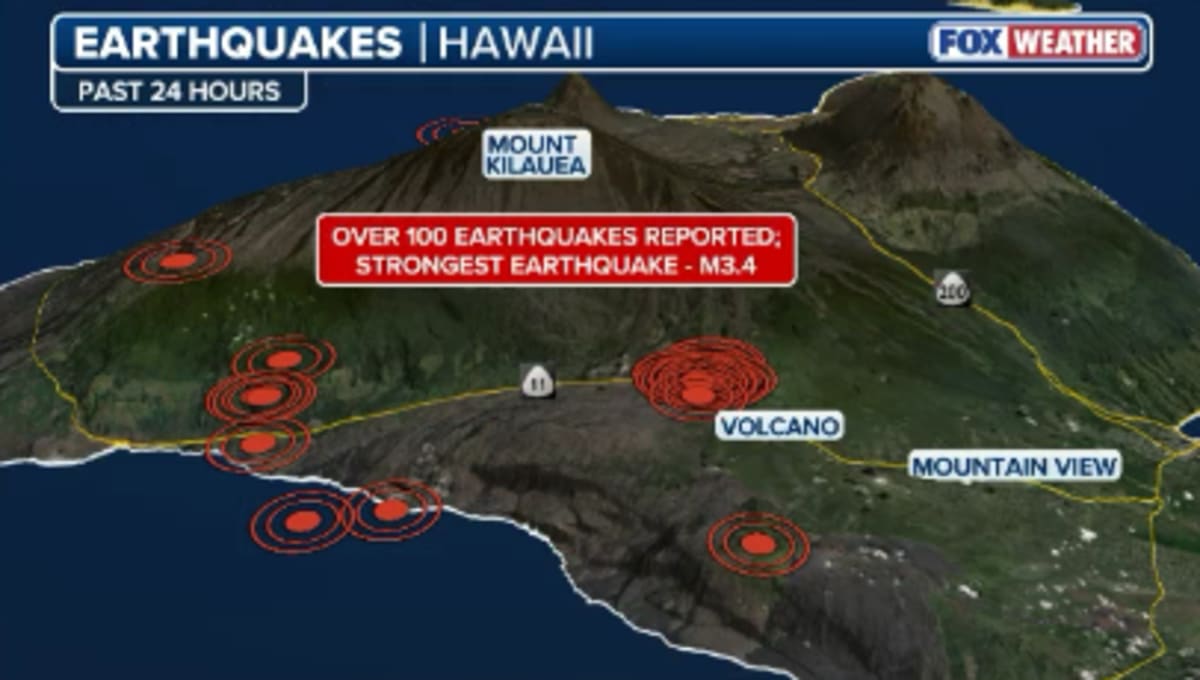
The later earthquake swarm shifted northeast of the active vents around 8 p.m.; that cluster was near an area where satellite imagery had shown ground changes between September 11 and 27. The magnitude 3.4 quake prompted 30 felt reports.
4
Before the intrusion, north-vent overflows had resumed on September 22 after about 10 days of quiet, while south-vent overflows began September 27. By September 28, the south vent was cycling through brief overflows and lava drainback, with overflows lasting roughly two to five minutes.
Nearly 100 earthquakes shook Kīlauea's summit between September 30 and October 1, triggered by a shallow magma intrusion beneath the volcano. The strongest quake measured magnitude 3.4 and prompted 30 felt reports across the island USGS. Ground inflation spiked rapidly during the swarm, but the intrusion appears to have subsided, with monitoring showing no new cracks or lava eruption outside existing vents AOL.
The U.S. Geological Survey warns that high summit pressure could trigger renewed lava fountaining or open a new vent at any moment Fox Weather. Hawaiʻi Volcanoes National Park temporarily closed Old Crater Rim Drive, the Keanakākoʻi overlooks, and the nearby Crater Rim Trail due to the volcanic unrest Fox Weather.
Summit Pressure Builds Since Early September
Kīlauea's summit has remained under intense pressure since early September, though major lava fountaining had paused since August 25 USGS. The volcano follows an episodic eruption pattern at Halemaʻumaʻu that began in December 2024, cycling between active and quiet phases USGS. The latest earthquake swarm marked a significant pressurization event as magma pushed upward from below the summit region Big Island Video News.
New Vents Opened Without Warning Signs
Six new vents erupted on and near Halemaʻumaʻu's northwest wall between September 14 and 16, producing small lava flows on the crater floor USGS. Unusually, the vents did not follow typical warning signs like earthquake swarms or major ground deformation USGS. Instead, they tapped existing crack systems in the volcanic rock, allowing magma to escape without dramatic precursors.
Overflow Activity Continues at Multiple Vents
North-vent overflows resumed on September 22 after about 10 days of quiet, while south-vent overflows started September 27 USGS. By September 28, the south vent cycled rapidly through brief overflows and drainage, with lava spilling over for only two to five minutes at a time USGS. This intermittent spattering pattern continues as magma seeks pressure relief through existing openings.
Earthquake Swarm Shifts Northeast of Active Vents
Around 8 p.m. on September 30, the earthquake swarm shifted northeast of the main eruption site USGS. The shifted cluster occurred near an area where satellite imagery had shown ground changes between September 11 and 27 USGS. This spatial movement suggests magma was pushing through different pathways beneath the summit, testing the volcano's underground plumbing system for potential new rupture points.
Sentiment
Mostly NegativeNEGATIVENEUTRALPOSITIVE
Publishers
11
Articles
13
Reach
24
Topics
A
AnonymousAuthor


