Probing Neutrino Physics
MIT Researcher Helps Expand Ricochet Neutrino Experiment to Eighteen Detectors
Anonymous
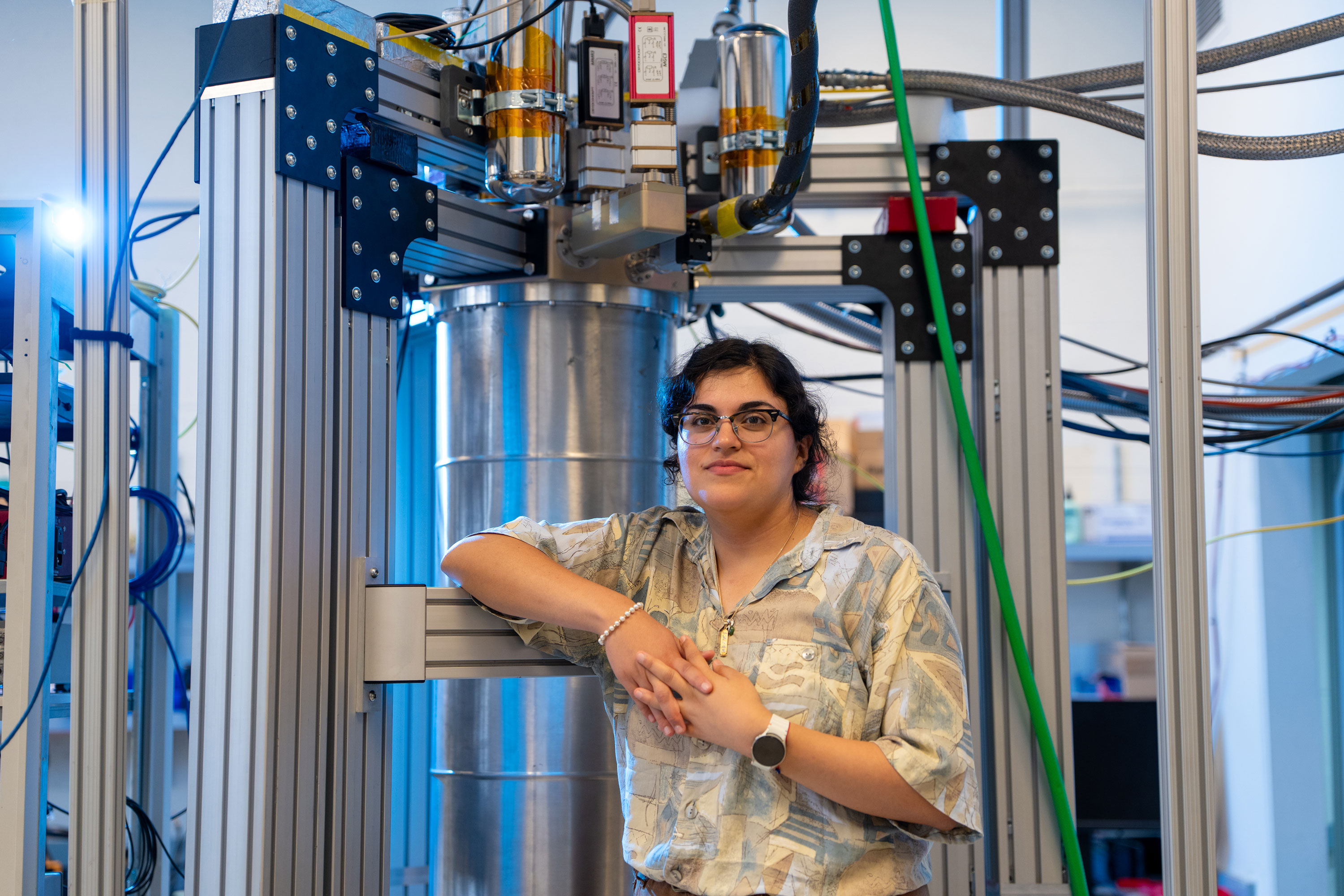
MIT doctoral researcher Faith Reyes is helping the international Ricochet experiment in Grenoble, France, study coherent elastic neutrino-nucleus scattering, a rare interaction that could sharpen understanding of neutrinos and test the limits of the Standard Model. After a planned MIT project fell behind schedule, Reyes shifted to Ricochet, where she began by learning detector operations and maintenance. As the experiment grew from two detectors to 18, she and a colleague developed software to automate monitoring and data analysis, and she took on a growing role guiding the collaboration’s work. Reyes also supports undergraduate physics students as a tutor and teaching assistant.
Key Points
1
Ricochet must measure the tiny recoil energy transferred to a nucleus while distinguishing that signal from background noise, a key experimental challenge in detecting coherent elastic neutrino-nucleus scattering.
2
The measurements could bear on unresolved questions that the Standard Model does not answer, including the origin of neutrino mass and the nature of dark matter.
3
Reyes said the Standard Model is “extremely accurate and describes most of everything that we see,” but “it’s not complete.”
4
Reyes described the trust she earned from collaborators as meaningful: “It felt like my collaborators trusted me, and I had something of value to give to the collaboration.”
Sentiment
Mostly NegativeNEGATIVENEUTRALPOSITIVE
Publishers
5
Articles
8
Reach
13
A
AnonymousAuthor


