Iran Nuclear Threat
Trump Threatens Possible Strike on Iran's Pickaxe Mountain Nuclear Facility
Anonymous
Key Points
1
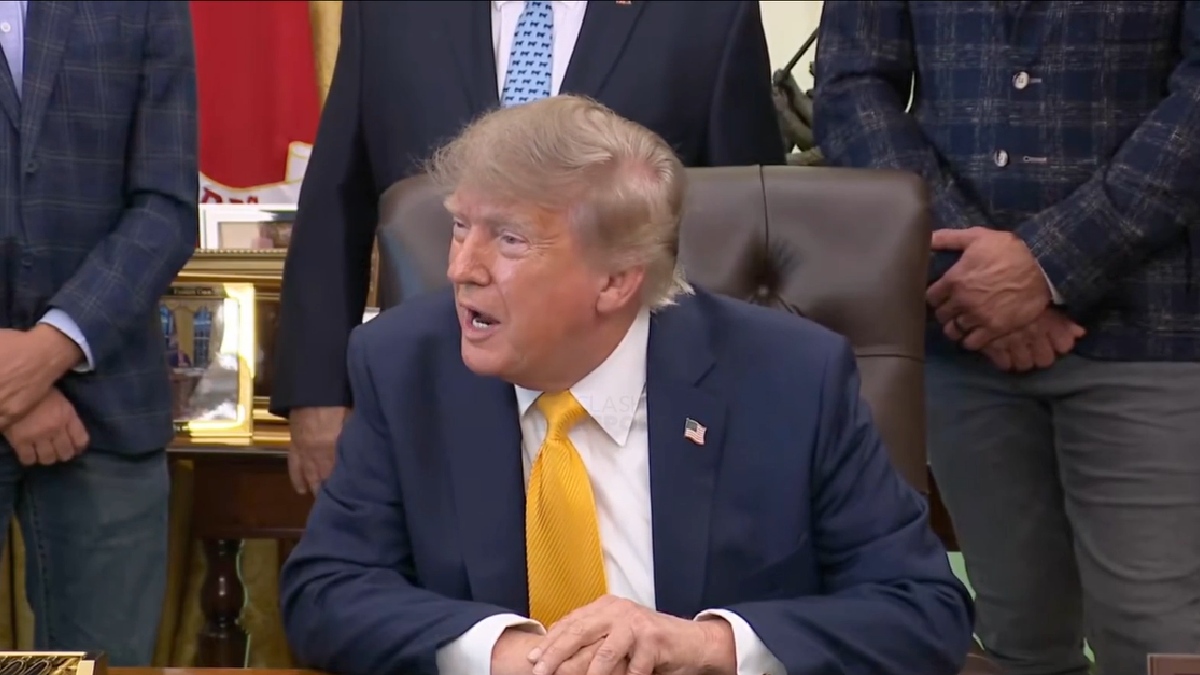
Trump warned, “We know everybody that's moving at Pickaxe,” adding, “If anything goes bad, we hit them; we hit them hard.”
2
Pickaxe Mountain reportedly contains two deeply buried tunnel systems, and Israeli intelligence believes Iran has moved thousands of centrifuges there, potentially making the site more difficult to destroy through conventional airstrikes.
3
U.S. forces reportedly targeted nearly 60 Iranian positions around the Strait of Hormuz, including air-defense and radar sites, mine-laying capabilities and communications facilities.
4
An alleged U.S. strike on a wedding party in Iran’s Hormozgan province killed at least five people and injured more than 60, according to Iranian state media.
5
The U.S. military is investigating leaks involving sensitive information about weapons and ammunition shortages related to the Iran campaign; about 50 Joint Staff personnel reportedly underwent polygraph tests, although officials said no one failed.
President Donald Trump threatened to strike Iran's Pickaxe Mountain, an underground nuclear site buried under 300 to 450 feet of solid rock near Natanz, saying the U.S. may hit it "very soon" if conditions worsen CCTV. Trump said, "We know everybody that's moving at Pickaxe. If anything goes bad, we hit them; we hit them hard," while dismissing the broader conflict with Iran as "small potatoes" for America Daily Jagran.
The site reportedly houses thousands of uranium-enrichment centrifuges relocated there after earlier airstrikes damaged Iran's primary nuclear facilities. U.S. forces have targeted nearly 60 Iranian positions around the Strait of Hormuz in recent months, but Senate Minority Leader Chuck Schomer rejected Trump's downplaying, citing 18 U.S. service member deaths and the conflict's economic toll AAJ.
Why Pickaxe Mountain Matters to U.S. Planners
Pickaxe Mountain sits 2 kilometers from the Natanz nuclear complex and 220 kilometers south of Tehran. The site's tunnel systems go deeper than other Iranian facilities—buried 90 to 137 meters under granite Newsy Today. Israeli intelligence believes Iran moved 400 to 450 kilograms of 60%-enriched uranium there, making it a critical hub for rebuilding nuclear capacity after the 2025 air campaign damaged Natanz, Fordow, and Isfahan WSJ via Daily Jagran.
The IAEA confirmed Iran told inspectors in 2021 it planned nuclear activities at the site, but Tehran has barred IAEA access for years. Fortified tunnel networks were designed to withstand conventional bunker-buster bombs—a major challenge for military planners considering any strike CCTV.
Escalating Strikes on Iranian Military Targets
Since February 2026, U.S. and Israeli forces have waged a months-long campaign against Iran's nuclear and ballistic missile capabilities. American forces struck nearly 60 Iranian positions around the Strait of Hormuz, including air-defense systems, radar sites, mine-laying capability, and communications facilities Daily Jagran.
One airstrike in Iran's Hormozgan province hit a wedding party, killing at least 5 civilians and injuring more than 60, according to Iranian state media Gujarat Samachar. The escalation underscores tensions between Trump's characterization of conflict as limited and critics' view of a costly, unapproved military operation stretching across the region.
Internal U.S. Military Investigation Into Classified Leaks
The Pentagon is investigating leaks of sensitive military information related to the Iran campaign, including details about weapon and ammunition shortages Daily Jagran. About 50 Joint Staff personnel underwent polygraph tests as part of the inquiry, though officials stated no one failed the examinations.
The leaked information appeared in media reports and raised alarm within the military and Congress about operational security. The investigation reflects internal friction over the campaign's scope, costs, and casualties among U.S. forces.
Political Clash Over "Small Potatoes" Rhetoric
Trump claimed the U.S. has "already won the big thing: there's not going to be a nuclear weapon" and minimized the confrontation as limited in scope Daily Jagran. But Senate Minority Leader Schumer strongly rejected this framing, pointing to 18 U.S. service member deaths and mounting economic costs from disruptions around the Strait of Hormuz.
Non-proliferation experts warn that airstrikes alone cannot eliminate a nation's nuclear knowledge or prevent underground rebuilding efforts. Meanwhile, Iranian officials declared readiness for further confrontation while condemning U.S. actions as violations of sovereignty targeting civilian infrastructure CCTV.
Sentiment
Mostly NegativeNEGATIVENEUTRALPOSITIVE
Publishers
28
Articles
119
Reach
147
A
AnonymousAuthor


