Tankers Struck in Hormuz
Three tankers struck by unidentified projectiles in the Strait of Hormuz.
Anonymous
Key Points
1
Kpler data showed the tankers had recently carried energy cargoes in the region: Al Ruwais discharged diesel off Sohar, Oman; Mersin Prosperity transferred about 2 million barrels of Iraqi Basrah crude there; and Sinbad loaded refined products at Saudi Arabia’s Jubail port.
2
The UK Maritime Trade Operations agency had also issued delayed reports of attacks on Sept. 28 and 29. One involved the Kuwaiti VLCC Al Funtas, where an unknown projectile caused a fire that was later extinguished; UKMTO said the crew was safe.
3
ADNOC Logistics & Services, manager of Al Ruwais and Mersin Prosperity, declined to comment, while Sinbad manager Anglo-Eastern Tanker Management did not immediately respond to requests for comment.
4
The tanker incidents coincided with a U.S. military reinforcement in the Middle East: the Pentagon announced the deployment of a third aircraft-carrier strike group and an amphibious ready group, involving roughly 9,000 to 10,000 troops. Brent crude rose back above $100 per barrel.
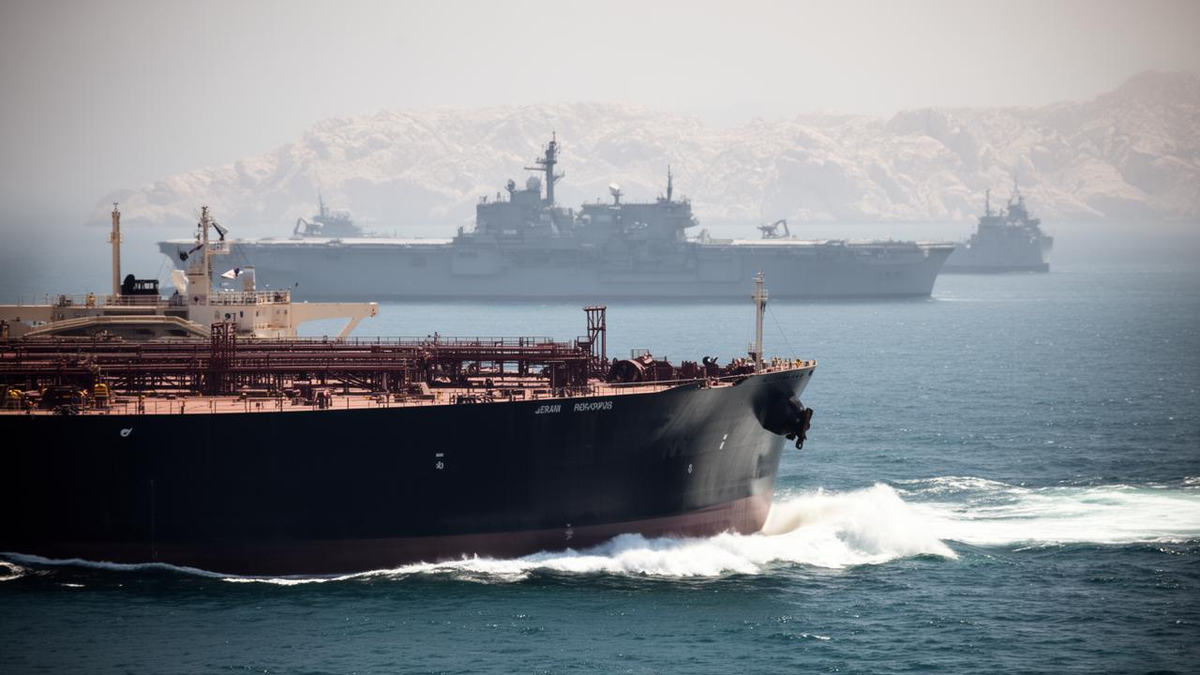
Three oil tankers were struck by unidentified projectiles while transiting the Strait of Hormuz on Tuesday, according to Marisks maritime intelligence. The Liberian-flagged vessels—Al Ruwais, Mersin Prosperity, and Sinbad—had switched off their tracking systems during transit. The incidents mark the latest in an escalating series of attacks that have raised global oil prices above $100 per barrel.
The strikes coincide with a major U.S. military buildup in the Middle East. The Pentagon announced deployment of a third aircraft-carrier strike group and an amphibious ready group, involving roughly 9,000 to 10,000 troops. Brent crude rose 4.37% to $102.31 per barrel following the incidents.
Four Vessels Hit in 24 Hours of Attacks
Tuesday's strikes on Al Ruwais, Mersin Prosperity, and Sinbad followed an earlier attack on Monday. UK Maritime Trade Operations confirmed that the Kuwaiti tanker Al Funtas was struck by an unknown projectile north of Khasab, Oman, causing a fire that crew members later extinguished. All four attacks occurred with vessels' transponders disabled, making independent verification difficult.
Oil Cargoes Recently Moved Through the Waterway
Kpler data shows the three tankers had carried significant energy shipments before the strikes. Mersin Prosperity had transferred approximately 2 million barrels of Iraqi Basrah crude off Sohar, Oman. Al Ruwais discharged diesel at the same location. Sinbad had loaded refined products at Saudi Arabia's Jubail port days earlier.
ADNOC Logistics & Services, which manages Al Ruwais and Mersin Prosperity, declined to comment on the incidents. Reuters reported that Sinbad's manager, Anglo-Eastern Tanker Management, did not immediately respond to requests for comment about the strike on their vessel.
Iran's Persian Gulf Authority Cites Transit Rule Violations
National Security Journal reported that Iranian authorities positioned the strikes as enforcement of maritime regulations. The Persian Gulf Strait Authority stated that the Liberian-flagged tankers attempted repeated transits while violating Tehran's navigation protocols. An Islamic Revolutionary Guard Corps spokesman asserted that vessels transiting without permission would face targeting.
The U.S. and Western maritime bodies view the attacks differently. UKMTO characterized the incidents as hostile acts against commercial shipping in international waters. The contrasting positions underscore deepening tensions over who controls passage through the world's most critical oil chokepoint, through which roughly 20% of global oil flows daily.
U.S. Rushes Reinforcements Amid Oil Market Shocks
The Pentagon's announcement of 9,000 to 10,000 additional troops raises total U.S. military personnel in the Middle East above 60,000. A third aircraft-carrier strike group, including the USS Theodore Roosevelt, is heading to the region. The military buildup reflects Washington's determination to protect shipping lanes from further attacks.
Energy markets reacted sharply to the tanker strikes. Brent crude jumped 4.37% to settle at $102.31 per barrel, reclaiming the $100 threshold. The price spike reflects trader concerns that further attacks could disrupt supplies through the Strait of Hormuz, a waterway where any sustained closure would trigger a global energy crisis.
Sentiment
Mostly NegativeNEGATIVENEUTRALPOSITIVE
Publishers
28
Articles
34
Reach
62
A
AnonymousAuthor