Expanded Replay Transparency
Big Ten Expands Live Replay Transparency to All 2026 Games Following Controversial Finish
Anonymous
Key Points
1
The enhanced review system will not apply to Michigan’s game against Oklahoma because that matchup is being officiated and reviewed by SEC crews; Michigan State–Eastern Michigan is among seven nonconference games scheduled to use the feature on opening Saturday.
2
The Big Ten’s replay center said the decisive Western Michigan play was reviewed as a touch by a defender who had already established position out of bounds, with one second remaining on the in-stadium clock.
3
The expanded access covers 21 nonconference games officiated by Big Ten on-field and replay crews, and Nebraska’s upcoming games against Bowling Green and North Dakota are among the contests covered.
4
The Big Ten released audio and video of its replay ruling several hours after the Michigan-Western Michigan game, but that material was not available to NBC viewers during the original broadcast.
5
The Big Ten’s live-review presentation follows similar efforts elsewhere: the ACC completed its first full season with comparable access in 2025, while the Big 12 is introducing a similar system this season; the format was also popularized by the United Football League.
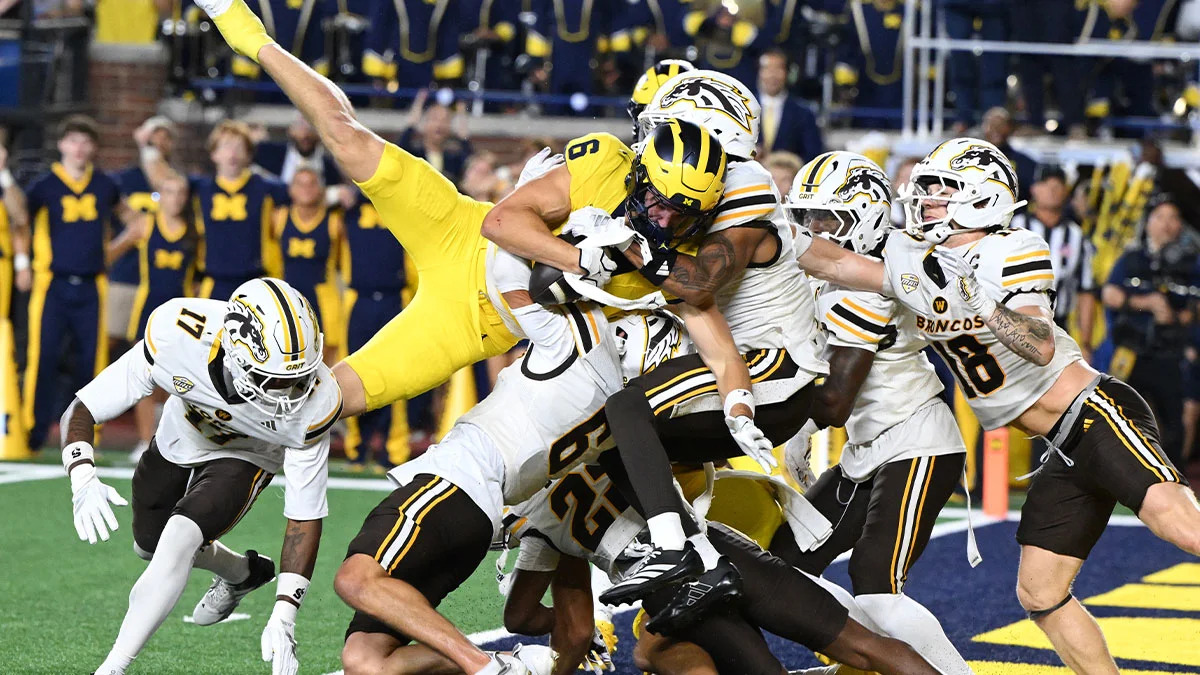
The Big Ten will show live replay decisions on all 2026 conference games and qualifying home nonconference games starting Saturday, September 12. Broadcasts will include referee-replay official conversations, footage under review, and views from the Big Ten Replay Center. Oregon Live reports the expansion follows Michigan's controversial 13-12 win over Western Michigan, when replay officials restored one second after the broadcast clock hit zero, enabling a game-winning 47-yard Hail Mary.
The Western Michigan and Mid-American Conference appealed the result, but the NCAA cannot overturn plays once officials declare them final. Yahoo Sports notes the NCAA then directed conferences to use the embedded game clock in broadcast feeds for timing adjustments—a standard that might have changed the Michigan outcome.Yahoo Sports
How the Controversial Play Forced Big Ten's Hand
Michigan defeated Western Michigan on a final play that drew immediate controversy. East Idaho News explains that replay officials ruled the ball was touched by a defender already out of bounds with one second remaining on the stadium clock. The Big Ten released audio and video of the decision hours later, but NBC viewers during the broadcast never saw this explanation.
The Mid-American Conference and Western Michigan formally appealed, arguing replay procedures were not followed correctly. However, NCAA rules prevent overturning any decision after officials declare it final. The incident accelerated the Big Ten's rollout of a transparency system originally planned only for select Friday games.
Seven Games Launch Transparency System This Saturday
The enhanced replay access launches September 12 across 21 nonconference games officiated by Big Ten crews. El Dorado News reports Michigan's matchup against Oklahoma will not use the system because SEC crews handle that game's officiating and replay review. Nebraska's games against Bowling Green and North Dakota are among the contests covered.
Viewers will see live audio between referees and replay officials, the reviewed footage itself, and camera angles from the Big Ten Replay Center. The system applies to all conference games and home nonconference contests where Big Ten on-field and replay crews control the game.
NCAA Clock Standard Aims to Prevent Future Disputes
Following the Michigan incident, the NCAA directed all conferences to use a specific clock protocol for replay timing adjustments. WMTV 15 News explains officials must use the embedded game clock in the broadcast feed when possible, or the broadcast clock graphic if needed. This creates a standardized technical reference that could have prevented the Western Michigan controversy.
Transparency alone does not guarantee consistent officiating. Broadcasts will expose officials' reasoning, but the clock standard ensures all replay crews follow the same timing protocol. Meanwhile, the ACC completed its first full season with similar broadcast access in 2025, and the Big 12 is introducing comparable transparency this season.
Competitive Imbalance When Opponents' Crews Run the Game
Enhanced replay transparency applies only when Big Ten crews officiate and review plays. If another conference controls the game—like the SEC handling Michigan versus Oklahoma—broadcast transparency and replay procedures may differ significantly. This creates potential competitive advantages based on which conference's officials are assigned to a matchup.
The Big Ten's expansion addresses fan frustration over hidden replay decisions but does not solve the larger problem of conference-specific officiating protocols. Comparable nonconference games may receive different levels of broadcast access depending on who controls the officiating crew, raising fairness questions across otherwise similar contests.East Idaho News
Sentiment
Mostly NegativeNEGATIVENEUTRALPOSITIVE
Publishers
22
Articles
140
Reach
162
A
AnonymousAuthor


