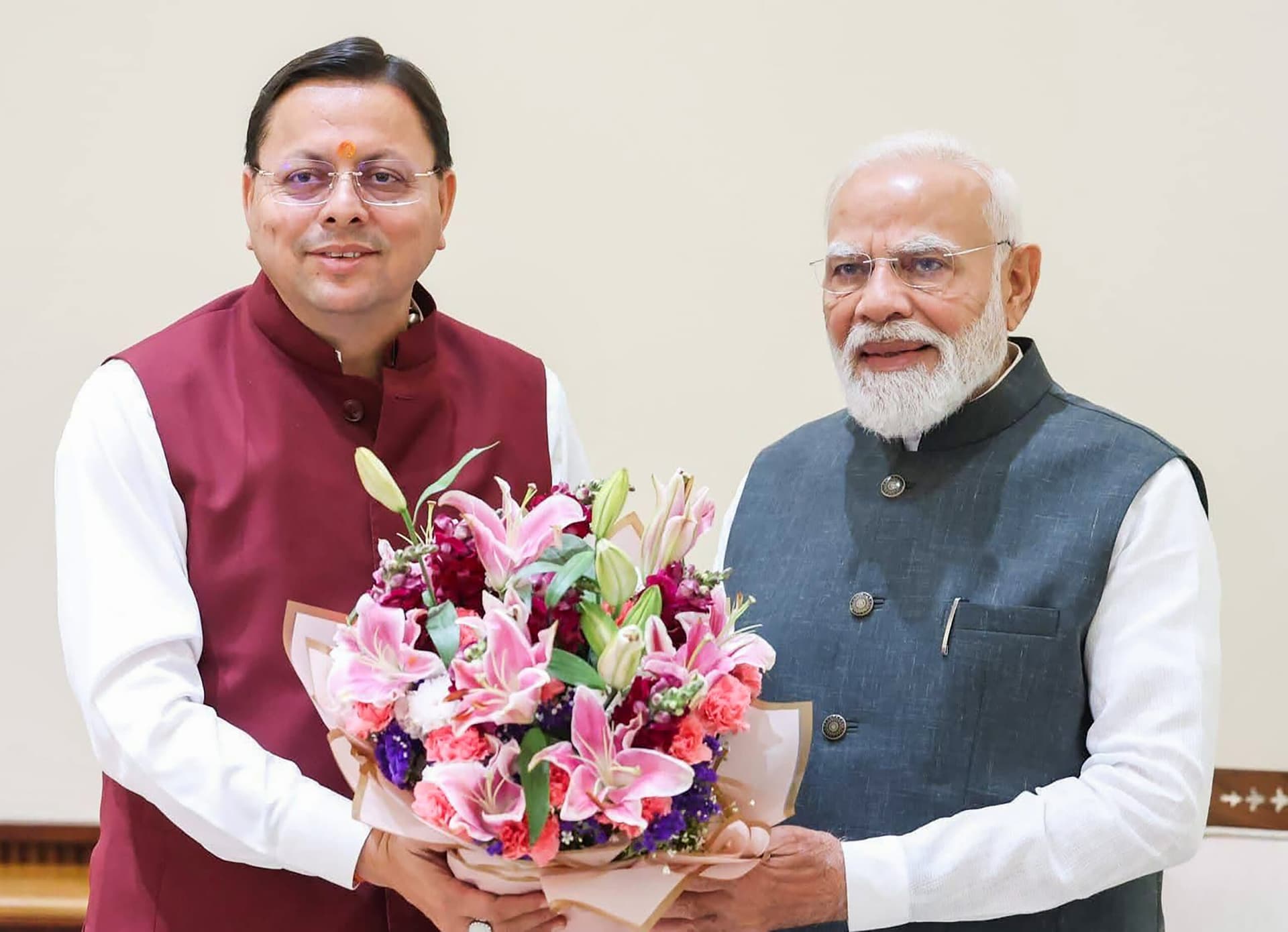
Bringing Governance to Borders
Uttarakhand Holds Its First Cabinet Meeting Outside Dehradun in Champawat
Anonymous
Key Points
1
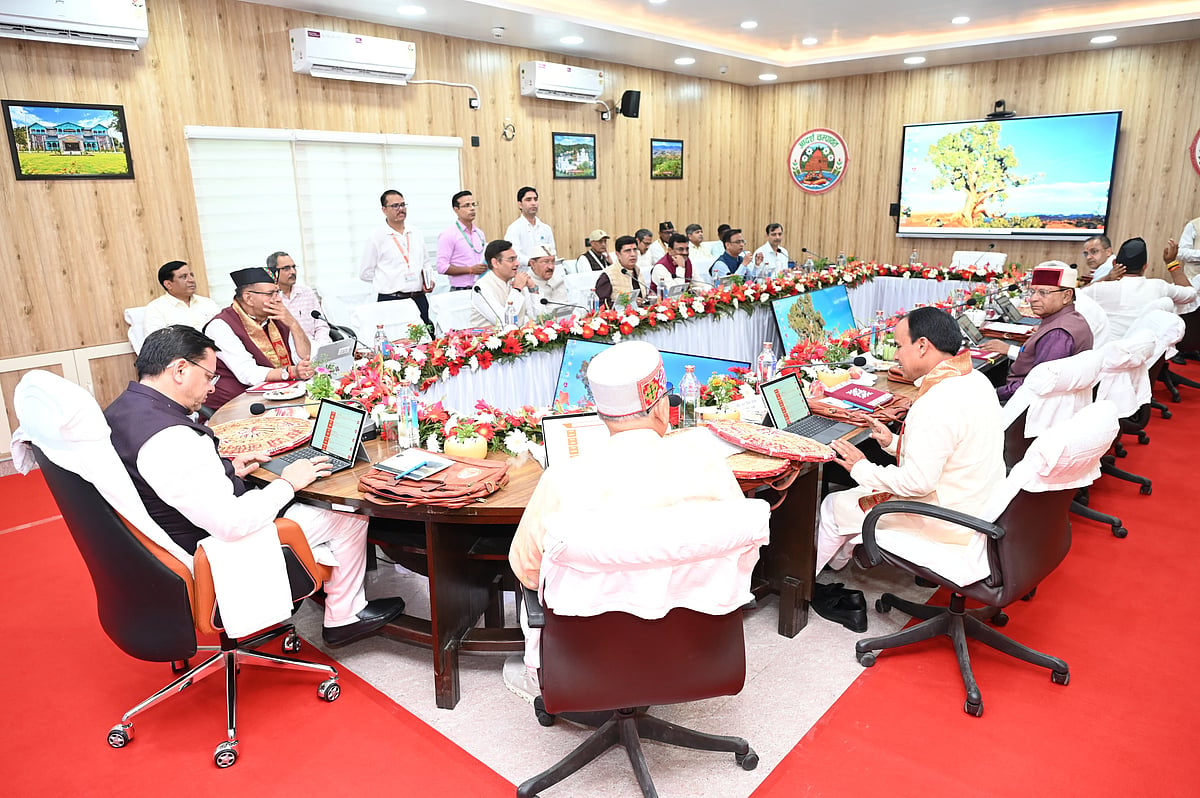
The meeting was held on October 4 at the NHPC complex in Banbasa, Champawat.
2
After the meeting, Dhami posted on X that the initiative was intended to help the government understand local problems and development priorities more closely and make effective decisions; he added that equitable development in every sector and reaching every individual were priorities.
3
Dhami said development would advance at an equal pace from border villages to the plains.
Uttarakhand held its first-ever Cabinet meeting outside the state capital on October 4, with Chief Minister Pushkar Singh Dhami leading the session in Banbasa, Champawat, near the India-Nepal border. Newsable reported that the government approved 24 key proposals, including Rs 66.29 crore in funding for development corporations. The move signals a shift toward decentralized governance, with Dhami pledging to hold Cabinet meetings across districts to address local needs directly.
Dhami said Cabinet meetings will rotate through districts to bring government decision-making closer to residents and help officials grasp local problems, development opportunities, and priorities. ANI News noted he emphasized the strategic and cultural importance of border communities. Development will advance equally from border villages to the plains, he said, with balanced growth across all sectors a top priority.
Breaking Dehradun's Governance Monopoly
For the first time in Uttarakhand's history, Cabinet deliberations took place outside Dehradun. The NHPC complex in Banbasa hosted the session, putting state power within reach of a remote border district. Newsable reported this marks a deliberate departure from centralized administration, where decisions were made far from the communities they affect most.
Two Dozen Proposals Approved for Border Development
The Cabinet cleared 24 key proposals during the Banbasa meeting. New Indian Express reported that Rs 66.29 crore was released to Uttarakhand SIDCUL and Tarai Development Corporation for assets that had been transferred. These funds aim to unlock infrastructure and economic opportunities in the border region, which has historically lagged behind state development efforts.
A New Model for Reaching Remote Communities
Dhami's announcement signals a policy shift toward peripatetic governance. By rotating Cabinet meetings across districts, the government aims to shrink the distance between power and people. ANI News highlighted his commitment to understanding local problems firsthand rather than relying on reports from state offices. Officials will encounter development challenges, tourism potential, and connectivity gaps directly.
Border villages in Champawat stand to gain from this new approach. Daily Hunt reported that equitable development across every sector and reaching every individual are now stated priorities. The government promises that growth will not concentrate in the plains, but will accelerate equally from the borders inward.
Sentiment
Mostly PositiveNEGATIVENEUTRALPOSITIVE
Publishers
10
Articles
13
Reach
23
A
AnonymousAuthor