Kishau Dam Revival
Six States Discuss Kishau Dam and Yamuna Revival with Amit Shah
Anonymous
Key Points
1
The project has been stalled for about eight years because of disagreements among the stakeholder states over water allocation and the sharing of project costs.
2
The Kishau project involves states in the Upper Yamuna basin and is designed to provide benefits including water storage, irrigation and hydroelectric power.
3
The meeting was conducted in hybrid mode, with most chief ministers expected to attend in person alongside the six states’ chief secretaries and other officials, including Union Home Secretary Govind Mohan.
4
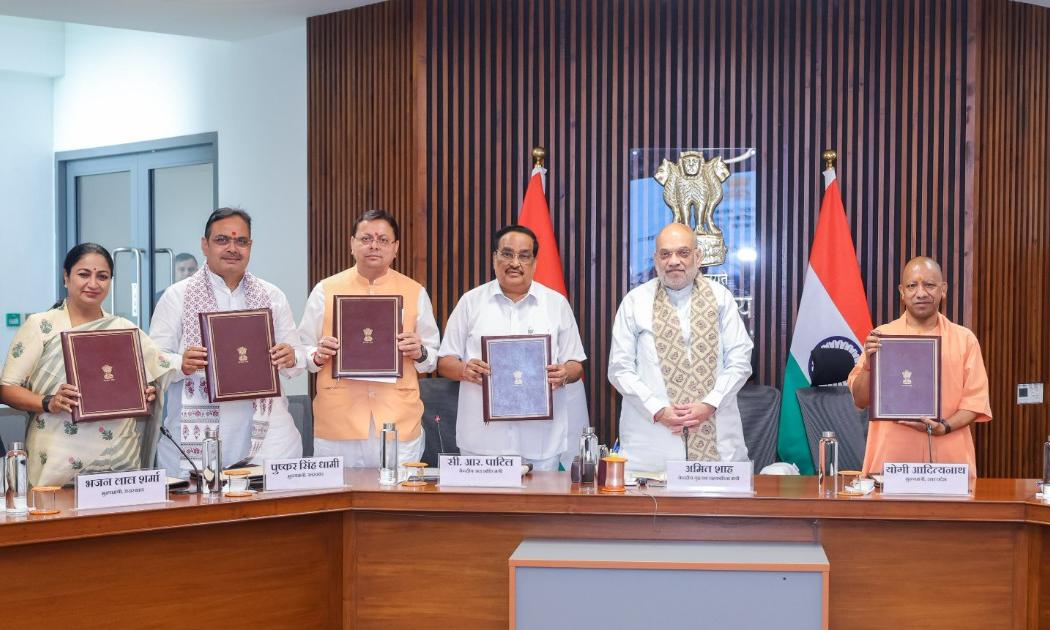
The proposed memorandum of understanding was scheduled to be signed in New Delhi on September 15 in the presence of Union Home Minister Amit Shah, formally advancing the project toward implementation.
5
The meeting included senior central officials and ministers beyond the six chief ministers, including Power Minister Manohar Lal, Jal Shakti Minister C.R. Patil, the Union Water Resources Secretary, Prime Minister’s Office representatives and Ministry of Jal Shakti officials.
Six Indian states have finally agreed to build the long-stalled Kishau Dam after eight years of deadlock over money and water. The Statesman reported that chief ministers from Himachal Pradesh, Uttarakhand, Uttar Pradesh, Haryana, Rajasthan, and Delhi signed the agreement on September 15 in the presence of Union Home Minister Amit Shah. The 232.6-meter-high concrete dam on the Tons River will store water, generate 422 megawatts of electricity, and help revive the polluted Yamuna River.
The breakthrough came after the Union government agreed to pay 90 percent of the water project's cost, while states split the remaining 10 percent. Times of India noted that Himachal Pradesh negotiated a deal where downstream states would cover its share of the power costs—saving the state ₹800 crore. The project is now headed to the Union Cabinet for final approval before construction begins.
Why This Dam Matters for Six States
The Kishau project sits on the Tons River, a major tributary of the Yamuna in the Upper Yamuna basin. The Daily Jagran explained that the dam will provide drinking water and irrigation to six states while cleaning up the severely polluted Yamuna. Delhi and Rajasthan—facing acute water shortages—will receive Himachal Pradesh's water allocation under the agreement.
The project will generate 1,476 million units of clean electricity annually and irrigate 97,000 hectares of farmland. Daijiworld reported that 25 percent of stored water will be released to maintain natural Yamuna flows, helping restore the river ecosystem. The total project cost is estimated at ₹15,000 to ₹15,624 crore ($1.8 to $1.87 billion).
Eight-Year Standoff Over Cost and Water Rights
Since August 2018, the six states quarreled over who would pay for what and how much water each state deserved. The Federal noted that disagreements centered on power production financing and water distribution among upstream and downstream beneficiaries. The 1994 water-sharing framework required a separate agreement for each storage dam, but negotiations stalled for nearly a decade.
The breakthrough came in June 2026 when Amit Shah convened a high-level meeting where states reached a consensus. The key shift: the Union government would absorb 90 percent of water component costs, drastically reducing individual state burdens. Himachal Pradesh, the upstream state, secured a major win by having downstream beneficiaries—particularly Rajasthan and Delhi—cover its electricity share.
Cabinet Approval and Construction Ahead
The signed memorandum of understanding now moves to the Union Cabinet for formal approval and financial clearance. Once approved, construction on the 232.6-meter-high concrete gravity dam can begin. The Statesman reported that Kishau Corporation Limited, a joint venture between Himachal Pradesh and Uttarakhand, will execute the project.
Union Home Minister Amit Shah called the agreement a "historic" achievement and the 10th inter-state water dispute resolved under the Modi administration. Himachal Pradesh Chief Minister Sukhvinder Singh Sukhu highlighted that his government renegotiated better terms than the previous administration had offered. The project promises ₹1,000 crore annually in electricity revenue for power-producing states.
Sentiment
Mostly PositiveNEGATIVENEUTRALPOSITIVE
Publishers
27
Articles
32
Reach
59
Topics
A
AnonymousAuthor