Chess Olympiad Start
Defending champions India open the Chess Olympiad in Uzbekistan with strong dual wins.
Anonymous
Key Points
1
India made a deliberate lineup change by placing world champion D Gukesh on board four, with R Praggnanandhaa on the top board, Arjun Erigaisi on board two and Nihal Sarin on board three; Vidit Gujrathi was the reserve.
2
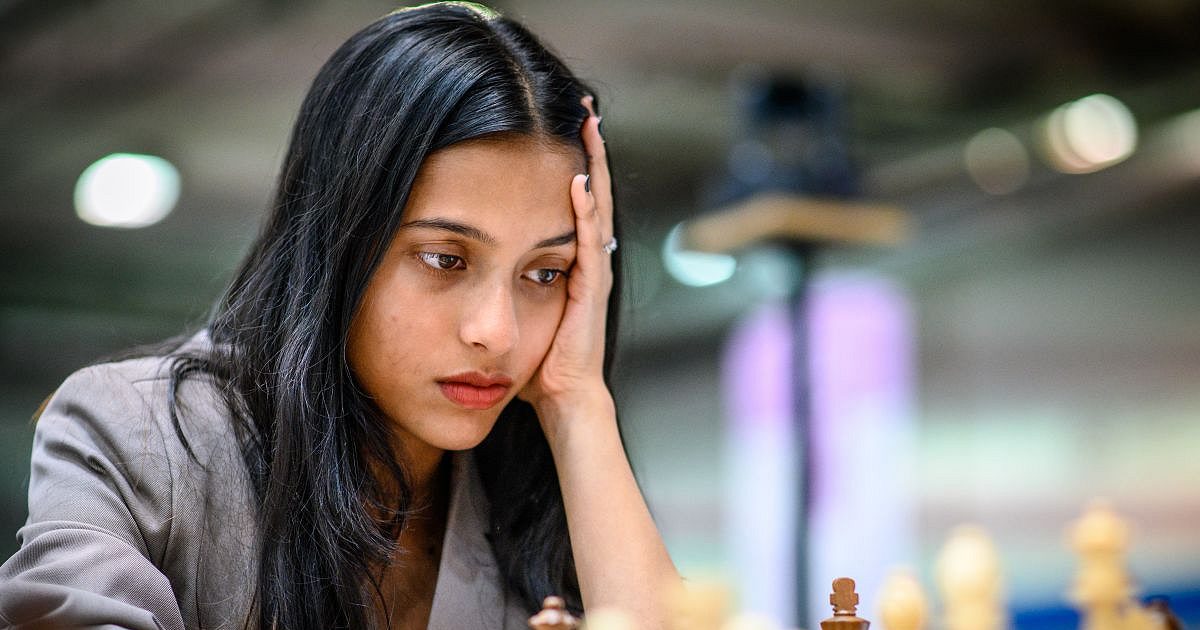
In the women’s lineup, R Vaishali was assigned board two, Divya Deshmukh board three and Vantika Agrawal board four, while reserve Savitha Shri made her Olympic debut with a victory in the opening round.
3
India’s second-round open-section win over Indonesia was secured after a 79-move rook-and-pawn battle: Praggnanandhaa had an extra pawn against Susanto Megaranto but could not create realistic winning chances before agreeing to a draw.
4
The United States narrowly defeated Mongolia 2.5-1.5 in the second round, while hosts and 2022 champions Uzbekistan beat Peru 3.5-0.5, keeping both potential challengers near the top of the open-section standings.
India's chess teams opened the 2026 Chess Olympiad in Samarkand, Uzbekistan, with commanding victories in both sections. The men defeated Thailand 3–1 and Indonesia 2.5–1.5 in the first two rounds, while the women swept the Dominican Republic 4–0 and stayed unbeaten ChessBase India. The defending champions are hunting a historic double-title defense at what FIDE calls the largest Olympiad ever, with 208 teams from 205 nations competing.
India made a tactical lineup shift, placing world champion D Gukesh on board four instead of his usual position. This move shields Gukesh while using his elite strength against lower-ranked opponents. The strategy paid off early, though Thailand's Prin Laohawirapap pulled off a stunning upset, defeating world No. 4 Arjun Erigaisi in round one ChessBase India.
A Shock Loss and Strong Recovery
Prin Laohawirapap, rated 2363, executed a mating attack against 2759-rated Arjun Erigaisi on board one—a stunning 396-point upset ChessBase India. Thailand's International Master told reporters: "I just tried to play my best against a 2700+ GM; taking down Arjun on Board 1 is a dream start for Thai chess." Despite the opening-round stumble, Gukesh, Nihal Sarin, and Vidit Gujrathi won their games to secure India's 3–1 victory ChessBase India.
In round two against Indonesia, R Praggnanandhaa battled Susanto Megaranto in a grueling 79-move rook-and-pawn endgame. Praggnanandhaa held an extra pawn but could not force a win, settling for a draw ChessBase India. Nihal Sarin delivered the decisive point with a victory, securing another 2.5–1.5 win and keeping India undefeated.
Women's Team Dominates Opening Matches
India's women delivered a flawless 4–0 sweep against the Dominican Republic in round one ChessBase India. Koneru Humpy led the squad alongside R Vaishali, Divya Deshmukh, Vantika Agrawal, and reserve Savitha Shri. Shri made her Olympiad debut and scored an immediate victory, signaling strong depth across all boards ChessBase India.
The women maintained momentum in round two, staying atop the standings. Their lineup balance and consistency have become India's chief advantage over rival teams like the United States and host nation Uzbekistan, both of which face tighter margins as the Swiss-system rounds intensify ChessBase India.
Gukesh Sharpens Form Before World Title Defense
D Gukesh, the reigning world champion, drew his round-two match against Indonesia's Cahaya Satria. The board-four placement allows Gukesh to test novelties and regain rhythm under classic time controls before his upcoming world championship title defense ChessBase India. Analysts view the Olympiad as a crucial warm-up tournament for the 17-year-old phenom.
Gukesh's deliberate lower-board assignment reflects a strategy to balance team stability with individual preparation. After Laohawirapap's stunning upset of Erigaisi, team management recognized the value of distributing elite strength across multiple boards rather than stacking firepower at the top ChessBase India.
Rivals Circle as Standings Tighten
The United States narrowly defeated Mongolia 2.5–1.5 in round two, staying near India's undefeated pace ChessBase India. Host nation Uzbekistan, the 2022 champions, dominated Peru 3.5–0.5 and remain serious contenders for the title. Tight margins across the field signal a competitive tournament where small board-point differentials will determine late-round pairings ChessBase India.
With 11 Swiss-system rounds ahead, India faces increasingly stronger grandmaster density as the pairing algorithm elevates them against mid-tier European contenders in round three and beyond. The tournament's historic scale—208 teams across 205 nations—means India must navigate unpredictable talent pools to defend both titles FIDE.
Sentiment
Mostly PositiveNEGATIVENEUTRALPOSITIVE
Publishers
48
Articles
46
Reach
94
A
AnonymousAuthor