Saudi Nuclear Agreement
Trump Sends Saudi Nuclear Deal to Congress Tied to Israel Normalization
Anonymous
Key Points
1
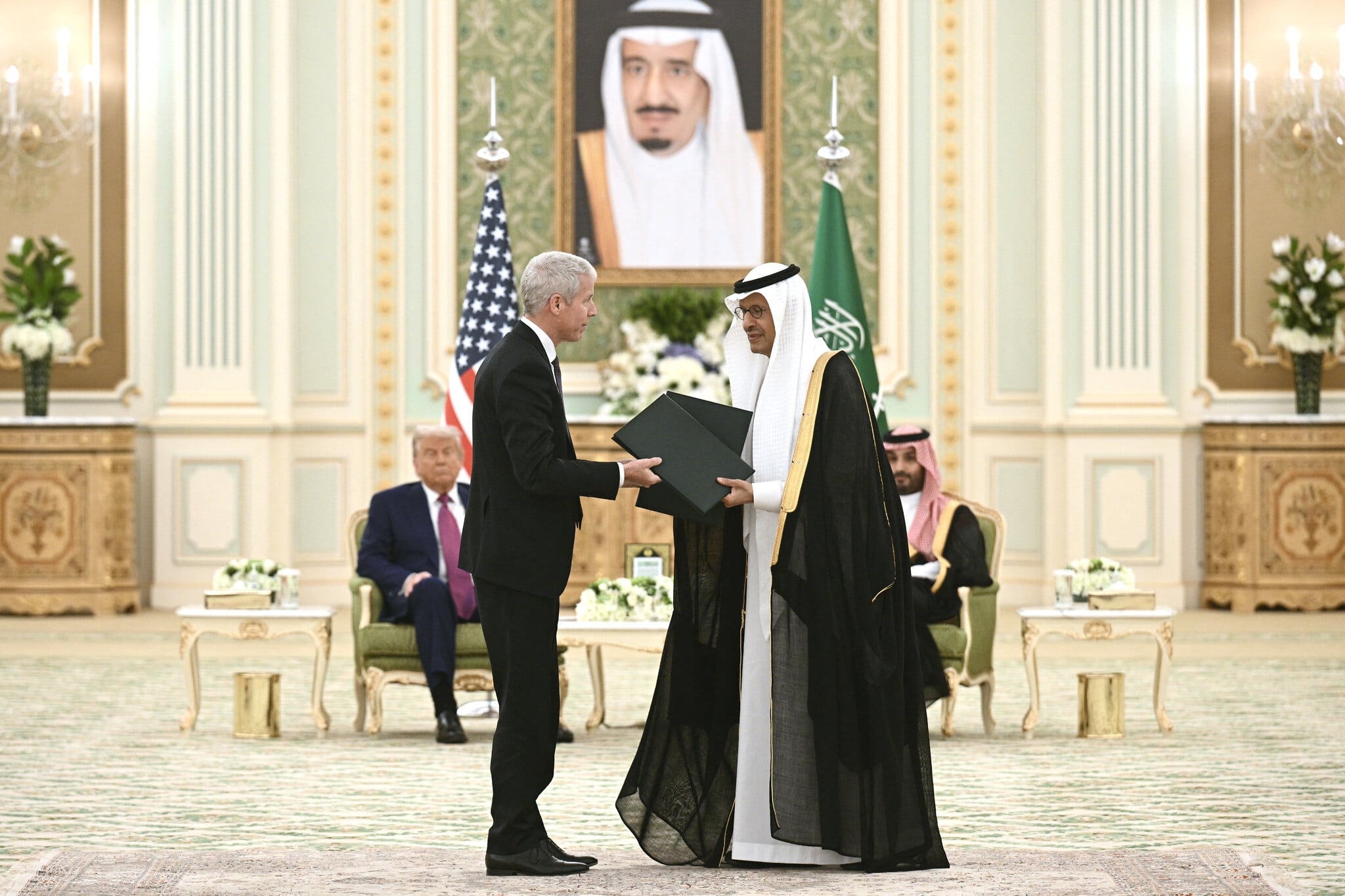
The nuclear cooperation pact with Saudi Arabia is described as a '123 agreement' and includes a bilateral safeguards agreement; it was signed in July by U.S. Energy Secretary Chris Wright and Saudi Energy Minister Abdulaziz bin Salman and has been sent to Congress for a 30-year term.
2
Administration officials indicate the deal would give U.S. companies a central role in developing Saudi Arabia’s nuclear infrastructure, effectively excluding foreign competition.
3
The agreement has raised nonproliferation concerns because it could potentially enable uranium enrichment to take place on Saudi soil.
4
Congress will have a 90-session-day window to review the pact, and the move is expected to trigger intense debate on Capitol Hill over its strategic and nonproliferation implications.
President Trump has sent a civil nuclear agreement with Saudi Arabia to Congress, but he's attaching a major condition: Riyadh must formally recognize Israel as part of the Abraham Accords. Times of Israel reported the deal, signed in July by U.S. Energy Secretary Chris Wright and Saudi Energy Minister Abdulaziz bin Salman, would allow American companies to lead development of Saudi nuclear infrastructure for 30 years.
The move ties two of Trump's biggest Middle East priorities together — nuclear cooperation and Israeli regional normalization. Congress now has 90 session days to review the pact, but the pathway forward hinges on Saudi Arabia's willingness to join the Abraham Accords, a step the kingdom has resisted amid the Gaza conflict and Palestinian statehood concerns.
U.S. Nuclear Deal Excludes Foreign Competitors
The agreement gives American firms exclusive access to build Saudi Arabia's nuclear sector. Under the '123 agreement' — a standard U.S. nuclear cooperation framework — U.S. companies would control major contracts for reactors, infrastructure, and technology. GV Wire noted Trump's administration views this as a way to strengthen economic ties while locking out rival nations like Russia and China from Saudi energy development.
Saudi Arabia has signaled interest in civilian nuclear energy for decades. The deal makes that ambition reality — but only with American partners leading the charge. This arrangement effectively reshapes Middle East energy partnerships and boosts U.S. industry influence in the region for three decades.
Uranium Enrichment Raises Major Nonproliferation Fears
Critics warn the deal could enable Saudi Arabia to enrich uranium on its own soil. Free Malaysia Today highlighted the nonproliferation risks embedded in the agreement, since enrichment technology sits at the heart of weapons development concerns. Allowing a kingdom without a long nuclear history to master this capability domestically breaks from decades of U.S. policy limiting such activities.
Congress will debate whether the safeguards in the pact are strong enough. Opponents fear uranium enrichment could escape international oversight or become a stepping stone toward weapons capability. Supporters counter that the agreement includes bilateral safeguards and that blocking the deal pushes Saudi Arabia toward less trustworthy partners.
Israel Recognition Becomes Dealmaker or Dealbreaker
Trump has explicitly linked nuclear cooperation to Saudi normalization with Israel. Head Topics reported the White House conditioned final approval on Riyadh joining the Abraham Accords. This leverage could accelerate regional peace talks — or stall the nuclear pact if Saudi Arabia refuses to move on Israeli recognition.
Saudi Arabia's position has shifted with the Gaza war. Before October 2023, Riyadh moved closer to normalization. Now, Palestinian statehood demands and regional tensions complicate the calculus. The kingdom faces pressure: accept Israel recognition to unlock nuclear benefits, or resist and risk losing American partnership and influence over its energy future.
Congress Faces 90 Days to Decide a Geopolitical Gamble
The deal lands on Capitol Hill amid deep partisan division over Trump's Middle East strategy. Lawmakers must weigh economic gains — U.S. nuclear companies win contracts worth billions — against risks of spreading enrichment technology and appearing to reward weapons proliferation concerns. The 90-session-day clock creates urgency but also pressure for swift, incomplete review.
Both hawks and doves find fault with the pact. Some warn it destabilizes the region and enables Iran's rivals to build nuclear muscle. Others fear it abandons nonproliferation principles for commerce. Trump's conditional approach — linking nuclear cooperation to Israeli relations — adds another political wildcard that could determine whether Congress blesses the deal or blocks it outright.
Sentiment
Mostly NegativeNEGATIVENEUTRALPOSITIVE
Publishers
12
Articles
90
Reach
102
A
AnonymousAuthor


