Boeing 3.1M FAA Penalty Paid
Boeing 3.1M FAA Penalty Paid
Anonymous
Key Points
1
The penalty was precisely $3,139,319—the maximum civil penalty allowed by law—and it was not publicly disclosed until Reuters prompted the matter; the FAA confirmed the amount on Sept. 2, 2026, with Boeing acknowledging the payment that day.
2
Investigators found the Alaska Airlines 737 MAX 9 door plug was installed with four bolts missing, a finding that helped trigger a temporary production cap of 38 jets per month for Boeing’s 737 line; the FAA later allowed Boeing to self-certify airworthiness for 737 MAX and 787 jets by July 2025, with the cap lifted in October 2025.
3
Spirit AeroSystems—originally a Boeing division sold in 2005—was re-acquired by Boeing in 2025, highlighting how the supplier landscape around Boeing’s 737 program has shifted even as penalties were assessed.
4
In addition to quality-control lapses, investigators found that a Boeing employee not part of the FAA’s Organization Designation Authorisation (ODA) program pressured an ODA representative to approve a 737 MAX for delivery despite the representative’s own assessment that it did not meet requirements.
5
Senate scrutiny and whistleblower accounts of manufacturing shortcomings at Boeing were highlighted in a Senate panel report, with Democrats like Senator Richard Blumenthal arguing that the penalties were insufficient deterrents.
Boeing paid $3.1 million to the FAA in January 2026 for hundreds of safety and quality violations at its 737 production line and a supplier facility, Reuters confirmed in September 2026. The penalty, the maximum allowed by law, remained secret until the news outlet's investigation exposed it. The violations span September 2023 to February 2024 and include a Boeing employee pressuring an FAA inspector to approve an unsafe aircraft—a direct breach of safety protocols.
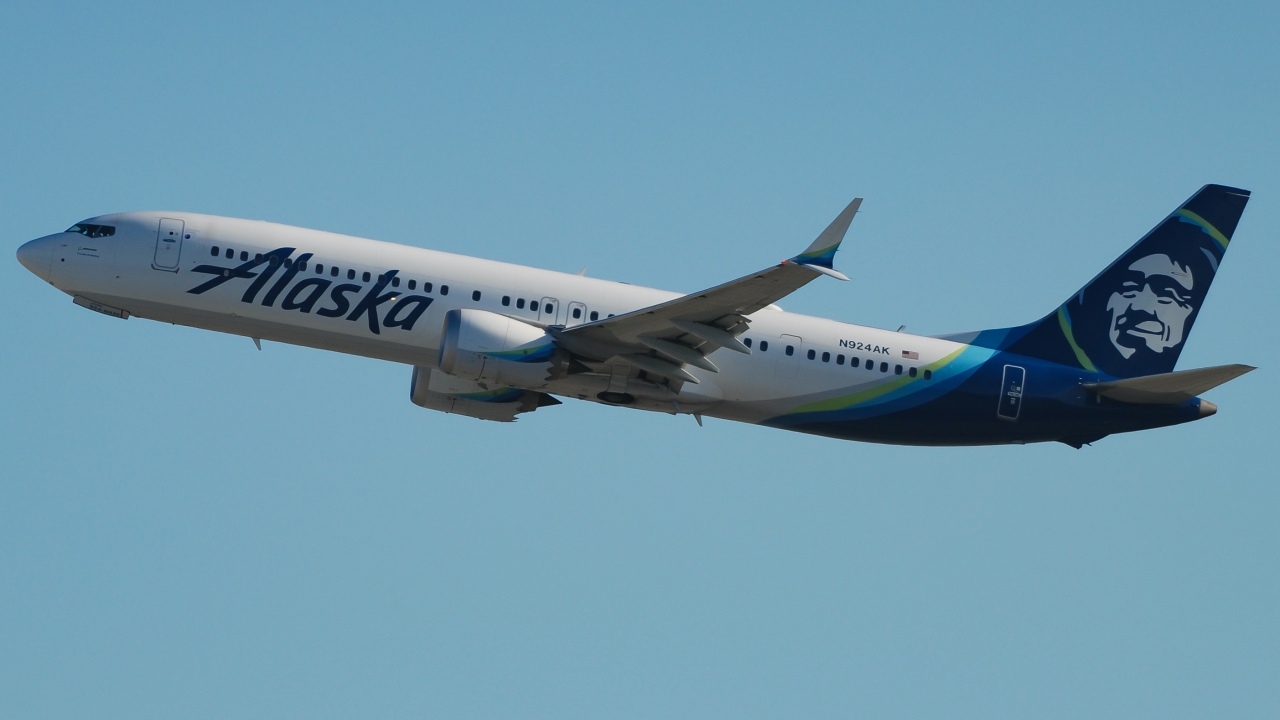
The violations trace directly to the Alaska Airlines 737 MAX 9 door-plug blowout in January 2024, which killed no one but terrified passengers and triggered a temporary production cap. Investigators discovered four bolts were missing from the door plug. The incident exposed systemic failures in Boeing's quality control and self-certification authority, leading to the FAA stripping some of Boeing's inspection privileges before gradually restoring them through 2025 and 2026.
The Violations Behind the $3.1 Million Penalty
Boeing submitted two aircraft for certification that did not meet airworthiness requirements, according to FAA findings. More damaging: a Boeing employee who was not part of the FAA's Organization Designation Authorisation (ODA) program pressured an ODA-delegated inspector to sign off on a 737 MAX for delivery. The inspector had already determined the jet did not meet safety standards. This interference directly violated the FAA's oversight framework.
The violations occurred across Boeing's Renton, Washington 737 line and Spirit AeroSystems' Wichita facility. Spirit, originally a Boeing division spun off in 2005, was re-acquired by Boeing in 2025—placing the supplier fully back under Boeing's control as the company faced intensifying regulatory scrutiny.
How the Door-Plug Blowout Exposed Quality Failures
On January 5, 2024, an Alaska Airlines 737 MAX 9 lost its door plug at 16,000 feet near Portland, Oregon. Investigators found the plug was installed with four bolts completely missing. Aero News reported that Boeing had already paid the $3.1 million fine for safety lapses tied to this and related incidents. The blowout triggered immediate action: the FAA capped 737 production at 38 jets per month and suspended Boeing's authority to certify its own aircraft as airworthy.
The production cap lasted nine months. By July 2025, the FAA allowed Boeing to resume self-certification for 737 MAX and 787 jets. The cap itself was lifted completely in October 2025. But the damage to Boeing's reputation—and to public trust in its safety culture—proved far harder to repair than regulatory restrictions.
Critics Say the Fine Does Not Fit the Crime
Yahoo Finance noted that $3.1 million represents a pittance for Boeing, a company with annual revenues in the tens of billions. Senate Democrats, including Senator Richard Blumenthal, argued the penalty is insufficient to deter future violations. "This is the cost of doing business for Boeing," critics contend. The fine barely registers as a rounding error in the company's quarterly earnings.
Whistleblowers and Senate panel reports documented widespread manufacturing shortcomings at Boeing facilities. Quality inspectors complained of pressure to approve aircraft without complete paperwork. Engineers raised concerns about rushed timelines. Yet the maximum civil penalty—$3.1 million—remains the only financial consequence imposed so far. No criminal charges have been filed against individuals or the company itself.
Boeing Gradually Regains Self-Certification Authority
Boeing's loss of ODA privileges in early 2024 meant the FAA had to inspect and approve every 737 and 787 before delivery. This slowed production dramatically and cost the company billions in lost revenue. By mid-2025, the FAA began restoring limited self-certification rights as Boeing demonstrated improved quality systems. By October 2025, production caps were lifted entirely, signaling the FAA's confidence that Boeing had corrected course.
Yet the regulatory pendulum remains fragile. The FAA continues enhanced oversight of Boeing's facilities. Safety advocates warn that premature restoration of full self-certification authority could invite new violations. Boeing's track record—from the 737 MAX crashes of 2018–2019 to the 2024 door-plug incident—suggests the company's safety culture requires sustained external scrutiny, not just financial penalties.
Sentiment
Mostly NegativeNEGATIVENEUTRALPOSITIVE
Publishers
13
Articles
57
Reach
70
A
AnonymousAuthor


