Apple Releases M5 Max, Ultra Mac Studios
Apple Releases M5 Max, Ultra Mac Studios
Anonymous
Key Points
1
Federico Viticci tested the M5 Ultra Mac Studio with 256GB of RAM against both an M3 Ultra system with 512GB and a desktop gaming PC equipped with an RTX 5090, emphasizing the machine’s performance relative to both Apple’s previous generation and high-end PCs.
2
The M5 Ultra Mac Studio includes six Thunderbolt 5 ports, giving the professional model unusually extensive high-speed connectivity.
3
The M6 Mac mini uses a 2nm chip with a 12-core CPU and GPU, plus a dual 16-core Neural Engine; its connectivity is also supported by Apple’s custom N1 chip.
4
Tom’s Guide says the Mac mini M6 retains the design and port layout introduced with the M4 generation, including front-facing ports and three rear Thunderbolt ports for video output.
5
MacStories’ review process included testing how local AI models could support an iOS and iPadOS 27 review, providing a concrete example of the Mac Studio being used as part of a broader professional workflow.
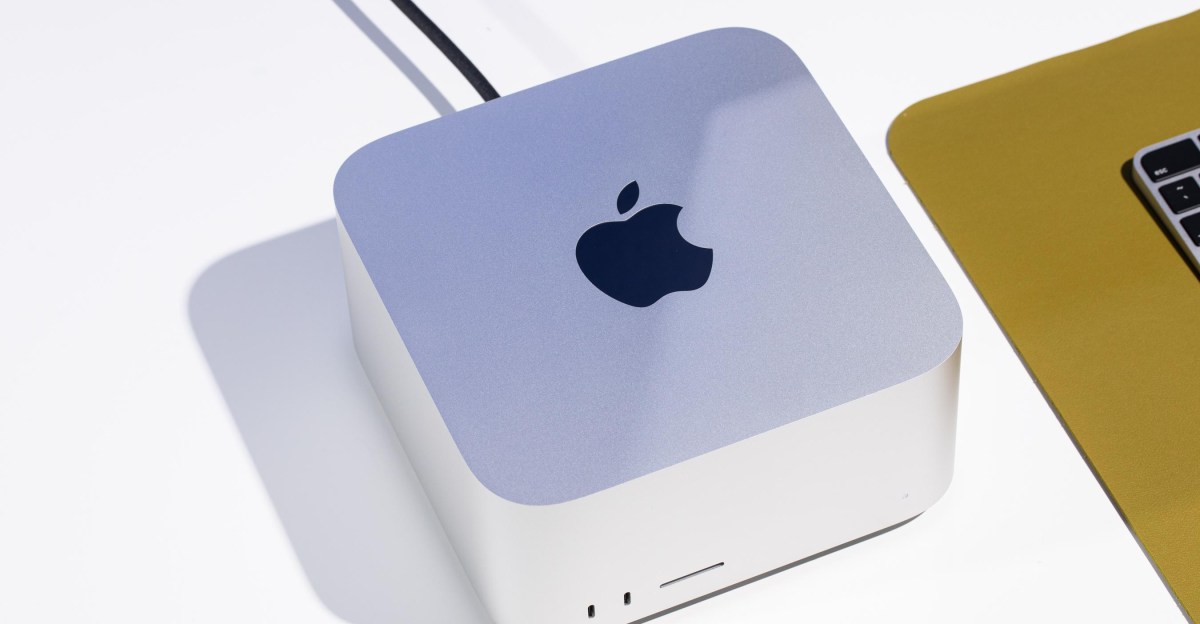
Apple's new Mac Studio with M5 Ultra and M5 Max chips delivers a significant performance jump, with the M5 Ultra achieving Metal GPU scores of 350,000–360,000 compared to 250,000 for the previous M3 Ultra MacStories. The machine excels at graphics, AI, and running local models quickly, potentially cutting reliance on cloud services. However, at $5,499 for the M5 Ultra model, it remains a premium choice for professionals in video editing, 3D rendering, and photography BigGo Finance.
For everyday users, Apple's newly updated M6 Mac mini offers a more practical entry point. Starting at $899 without additional memory or storage, the M6 mini features a 12-core CPU, dual 16-core Neural Engine, and strong local AI performance Tom's Guide. Both machines represent Apple's latest push to deliver desktop power for professional workflows and casual computing alike.
M5 Ultra Crushes Benchmarks, Trades Blows With Gaming PCs
Federico Viticci tested the M5 Ultra Mac Studio with 256GB RAM against an M3 Ultra with 512GB and a desktop gaming PC with an RTX 5090 MacStories. The M5 Ultra's OpenCL results trail Nvidia's RTX 5080, but it substantially outperforms the M3 Ultra generation. Its 36-core CPU and 80-core GPU deliver exceptional performance for demanding creative tasks. Reviewers consistently praise its ability to handle heavy workloads without throttling.
The machine runs local AI models and agents rapidly, reducing token fees and cloud dependency BigGo Finance. This capability appeals to professionals who need instant inference speeds for AI-assisted workflows. The compact design stays cool and quiet despite heavy loads, making it suitable for professional studios where noise matters.
Thunderbolt 5 Connectivity Provides Flexibility for Pros
The M5 Ultra Mac Studio includes six Thunderbolt 5 ports, giving the professional model unusually extensive high-speed connectivity Daily Guardian. This abundance of ports simplifies complex studio setups with multiple external drives, displays, and peripherals. Thunderbolt 5 offers double the bandwidth of Thunderbolt 4, supporting multiple 6K or 8K displays simultaneously. The connectivity architecture helps justify the machine's premium price for professionals managing large media libraries.
M6 Mac mini Brings Local AI and Gaming to Budget Builders
The M6 Mac mini uses Apple's 2nm chip with a 12-core CPU, GPU, and dual 16-core Neural Engine iPhone in Canada. The machine retains the design and port layout introduced with the M4 generation, including front-facing ports and three rear Thunderbolt ports for video output Tom's Guide. Starting at $899, it delivers strong performance for everyday work without the Mac Studio's premium.
The M6 mini supports local AI model execution, making it practical for testing and running small language models without cloud costs Sound on Sound. Reviewers identify it as the smarter choice for users who need desktop AI capability and occasional video editing without justifying a $5,499 investment. Its compact footprint and quiet operation appeal to home offices and creative studios.
Professional Workflows Benefit From Integrated AI Power
MacStories used the M5 Ultra to support testing of iOS and iPadOS 27 while running local AI models simultaneously MacStories. This real-world example shows how the machine fits into broader professional workflows, handling AI-assisted review processes without switching between devices. The ability to run capable AI locally speeds up iteration and reduces dependence on external API services. Professionals in content creation find this seamless integration particularly valuable.
Sentiment
Mostly PositiveNEGATIVENEUTRALPOSITIVE
Publishers
59
Articles
28
Reach
87
A
AnonymousAuthor


