Safety Versus Privacy
Do AI-powered license plate readers provide public protection or create privacy risks?
Anonymous
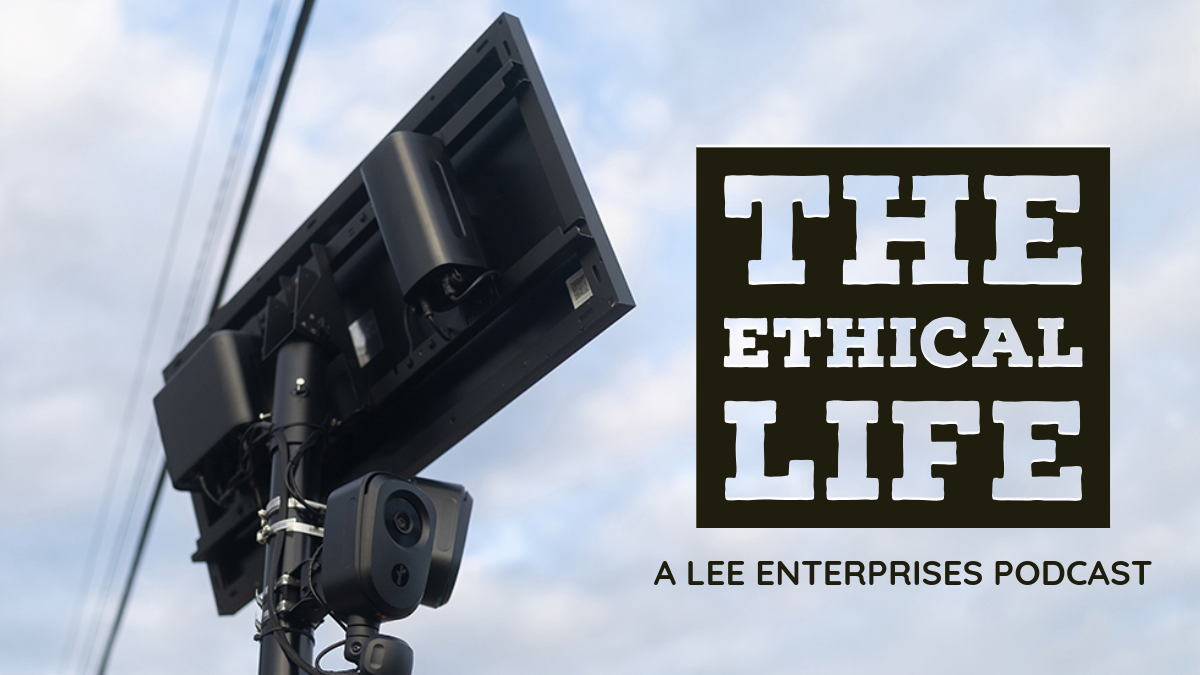
Flock cameras — AI-powered license plate readers installed across U.S. neighborhoods — are sparking a major debate about safety versus privacy. The Ethical Life podcast hosts Richard Kyte and Scott Rada dig into whether these devices actually protect communities or create dangerous risks of misuse and mass surveillance.
The tension is real: police say the cameras help catch criminals and recover stolen vehicles. But critics worry about who controls the data, how it gets used, and whether ordinary people's movements are being tracked without real oversight.
How License Plate Readers Actually Work
Flock cameras automatically photograph passing vehicles and scan their license plates using artificial intelligence. The system then cross-references those plates against databases of stolen cars, missing persons cases, and vehicles linked to crimes. The Ethical Life hosts explain that officers can query the system to find when and where a suspect's car appeared.
The technology is growing fast. Thousands of these cameras now operate in cities and towns nationwide, creating a massive searchable database of vehicle movements. Each camera captures millions of plate images over time, building a detailed record of where people drive.
The Safety Argument: Catching Criminals Fast
Supporters say Flock cameras deliver quick wins. Police departments report using them to solve hit-and-run cases, recover stolen vehicles, and locate suspects fleeing crime scenes. According to advocates, the technology cuts investigation time dramatically compared to manual lookups.
The pitch is appealing: fewer resources needed to solve crimes. Communities get faster results. Stolen cars get returned to owners faster. For law enforcement, the cameras represent a force multiplier — letting a small team cover vast areas.
Privacy Risks and Power Imbalances
Critics raise a hard question: who watches the watchers? Once a Flock database exists, anyone with access can search it. Police officers could track a romantic rival's movements. Vindictive neighbors could monitor each other. A government could suppress protesters by tracking their cars.
There's no guarantee of equal treatment. Researchers have documented how surveillance systems often get used more heavily in low-income and minority neighborhoods. People have no way to know when their car's location gets logged or which agencies can access the data. That concentration of power troubles many ethicists.
The Unanswered Question: Is Safety Real or Imagined?
The core debate The Ethical Life explores is whether Flock cameras actually make communities safer or just feel that way. Some cities have deployed them without rigorous data on whether crime actually dropped or just shifted elsewhere.
Kyte and Rada push both sides to answer hard questions: Can we measure safety gains against privacy losses? Do innocent people's constant tracking justify occasional criminal catches? There's no easy answer — and that's why the debate matters for every community deciding whether to install these cameras.
Sentiment
NeutralNEGATIVENEUTRALPOSITIVE
Publishers
16
Articles
16
Reach
16
A
AnonymousAuthor


