Festivals Go Green
Massive Attack's Decarbonisation Legacy Transforms Major UK Festivals With 100% Renewable Energy
Anonymous
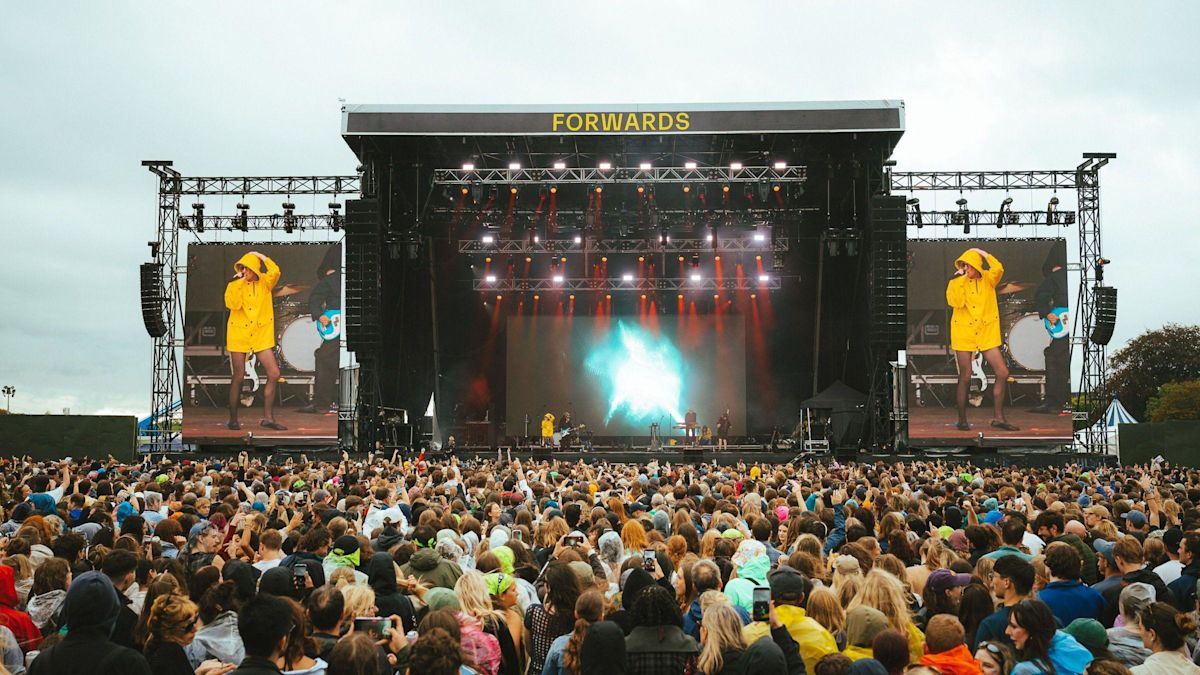
Major UK festivals are ditching diesel generators for renewable energy, following the model set by Massive Attack's ACT 1.5 event in Bristol. BBC reports that Forwards Festival and Love Saves the Day will now power every stage with green technology for the first time in their histories. The shift marks a turning point in how the UK's biggest music events tackle their carbon footprint.
Massive Attack's 2024 festival proved the viability of clean energy at scale, cutting power-related emissions by 98% through battery-only power and 100% vegan food. Yahoo News notes that the success has inspired other major events, including Bristol International Balloon Fiesta, to abandon fossil fuels entirely. Band member Robert Del Naja said the movement shows "systemic change" is now taking root across the festival circuit.
Massive Attack's 2024 Festival Sets New Carbon Standard
Massive Attack's ACT 1.5 event in Bristol became a proof-of-concept for zero-carbon festivals. BBC confirms the festival ran entirely on battery power and achieved a stunning 98% reduction in power-related emissions compared to traditional diesel-powered shows. Every meal served was vegan, eliminating another major source of festival waste.
The success matters because major festivals typically consume enormous amounts of energy over multi-day runs. By showing battery systems and renewable sources could handle the demand, Massive Attack demonstrated that green festivals aren't a niche experiment but a scalable model.
UK Festivals Now Adopt Renewable Power Across the Board
The ripple effects are immediate and wide-ranging. Yahoo News reports that Forwards Festival and Love Saves the Day are switching to 100% renewable-powered stages for the first time ever. Bristol International Balloon Fiesta has also abandoned diesel generators in favor of green alternatives, showing the shift extends beyond music events.
This transformation represents a major industry pivot. Festivals draw tens of thousands of visitors and run for days, making them high-impact targets for decarbonization. By committing to renewable energy, these events reduce their carbon footprint dramatically while sending a signal to the broader event industry.
Massive Attack's Vision for Systemic Change Takes Hold
Robert Del Naja, Massive Attack's member, framed the movement as proof that environmental action can become permanent. He told BBC that seeing "systemic change" in how festivals operate vindicates the band's original goal—not just to run one green event, but to reshape the entire sector. The band's influence extends beyond music into climate action.
What began as a single festival's experiment is now reshaping industry standards. Yahoo News shows that major UK venues recognize that audiences expect sustainability and that green technology is now economically feasible. The legacy isn't just environmental—it's a blueprint for how large-scale events can operate without diesel and fossil fuels.
Sentiment
NeutralNEGATIVENEUTRALPOSITIVE
Publishers
4
Articles
3
Reach
4
Topics
A
AnonymousAuthor


