Fed Raises Rates to 4%, Warsh Signals Shift
Fed Raises Rates to 4%, Warsh Signals Shift
Anonymous
Key Points
1
President Donald Trump said interest rates should be set at 1% or lower after the Fed’s decision, and had threatened trade penalties against countries running a trade deficit with the United States if rates were not cut.
2
The quarter-point increase was the Fed’s first rate hike since July 2023 and was approved unanimously by the Federal Open Market Committee.
3
Warsh said the Fed would work to prevent a war-related oil-price shock from spreading through the broader economy, saying that doing so would protect people most affected by a lack of price stability.
4
The dot plot was created in late 2011 under Chair Ben Bernanke and then-Deputy Chair Janet Yellen to give the public a view of policymakers’ expected interest-rate path beyond the immediate policy decision; it can include up to 19 projections from the Board of Governors and regional Reserve Bank presidents.
5
Because Warsh again withheld a dot, the September projection chart contained 18 forecasts rather than the usual 19, leaving markets unable to associate a specific anonymous rate projection with the new chair.
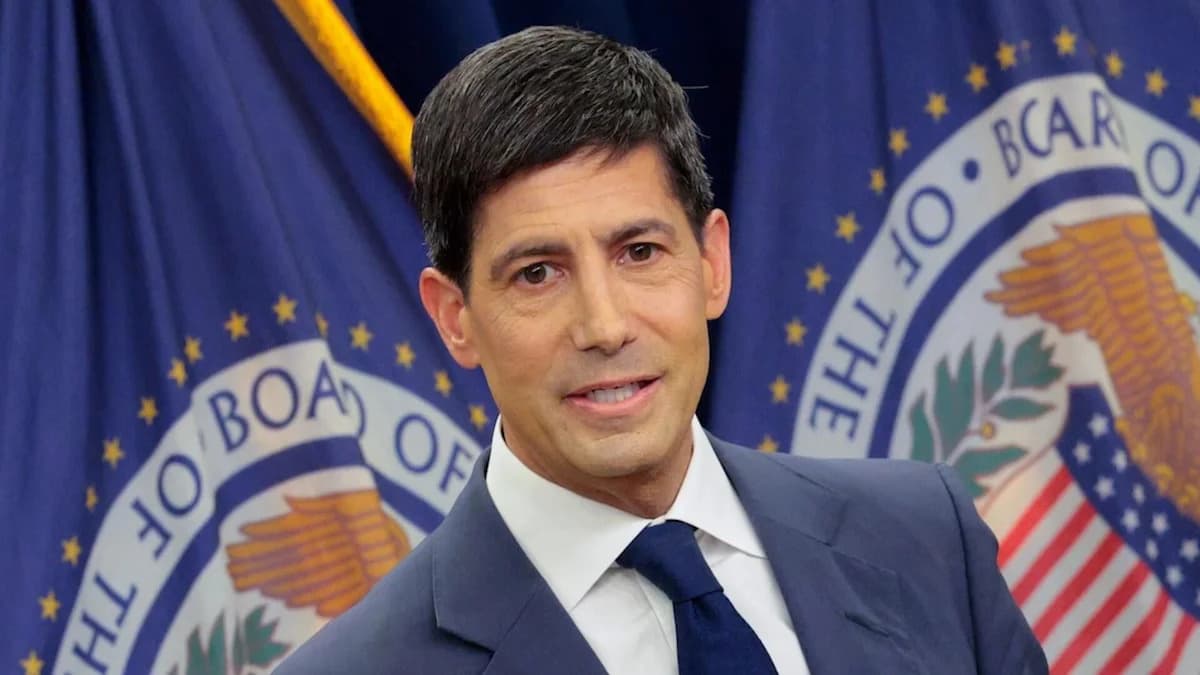
Federal Reserve Chair Kevin Warsh raised interest rates by a quarter point to 3.75%–4%, defying President Donald Trump's demands for cuts to 1% or lower. Barron's reported that Warsh signaled a shift toward monetarist ideas, emphasizing money supply and banking conditions as central to controlling inflation. The unanimous decision marks the Fed's first rate hike since July 2023.
Warsh said price stability remains the Fed's overriding concern and inflation is still too high. Policymakers' projections left open the possibility of another rate increase. In a notable break from tradition, Warsh again withheld his inflation projection from the anonymous dot plot, leaving markets unable to identify his specific rate forecast.
Warsh Embraces Monetarist Framework for Policy
Warsh is signaling a departure from Jerome Powell's approach by emphasizing monetarist economics. Mainstream economists' limited focus on money supply contributed to failures anticipating the 2008 financial crisis and post-pandemic inflation surge. Barron's noted that Warsh views money and banking conditions as central drivers of asset prices and inflation.
This shift reflects growing criticism that the Fed underestimated inflation risks after 2021. Warsh's framework prioritizes monitoring how much money circulates through the economy. Commentators argue this approach could fundamentally reshape how the Fed communicates policy to markets and the public.
Trump Demands Cuts Despite Rate Hike Decision
President Trump responded swiftly to the Fed's decision, stating rates should be 1% or lower. He had previously threatened trade penalties against countries with trade deficits if the Fed failed to cut rates significantly. Warsh emphasized the Fed acts independently on inflation, not political pressure.
The quarter-point increase directly contradicts Trump's monetary policy wishes. The Federal Open Market Committee voted unanimously to raise rates, signaling broad agreement among policymakers that price stability justifies tighter policy despite economic headwinds.
Warsh's Mystery Dot Plot Again Puzzles Markets
Warsh withheld his rate projection from the dot plot for a second consecutive meeting, leaving the September chart with 18 forecasts instead of the standard 19. Barron's explained the dot plot was created in 2011 to show policymakers' expected interest-rate path beyond immediate decisions. Each chart normally includes up to 19 anonymous projections from Board governors and regional Fed presidents.
Markets cannot now associate any specific rate forecast with Warsh's position. This communication strategy has fueled questions about how the new chair plans to signal policy direction. Some analysts view the omission as deliberate ambiguity; others see it as Warsh distancing himself from explicit rate commitments.
Fed Ready to Shield Economy From Oil Shocks
Warsh signaled the Fed will work to prevent war-related oil-price spikes from spreading through the broader economy. Rising energy costs can fuel inflation across supply chains. Barron's reported that Warsh framed this as protecting people most hurt by price instability.
The Fed's approach balances two competing risks: allowing inflation to drift higher if energy shocks prove temporary, or tightening policy prematurely if oil prices reverse. Warsh's priority on price stability suggests the Fed will err toward maintaining rate pressure until inflation clearly moves toward the 2% target.
Sentiment
Mostly NegativeNEGATIVENEUTRALPOSITIVE
Publishers
17
Articles
59
Reach
76
A
AnonymousAuthor