Shusha: Rebuilding for Return
President Aliyev Reviews Extensive Reconstruction Progress in Shusha, Accelerating Resident Returns
Anonymous
Key Points
1
The Digital Development Council held its first meeting under the chairmanship of First Vice President Mehriban Aliyeva, signaling a broader governance push beyond Shusha’s reconstruction.
2
In Kichik Galaderesi, 15 families (51 people) have already returned in the initial resettlement phase, with a further 11 families (45 people) expected to relocate by the end of the year.
3
Kichik Galaderesi lies about 40 kilometers southwest of Shusha and was occupied by Armenian forces in 1992, with restoration of Azerbaijani control following anti-terror measures conducted in 2023.
4
During the visit, President Ilham Aliyev visited the home of local resident Asad Asadov and later met with returning villagers, underscoring a direct engagement with families resettling in the area.
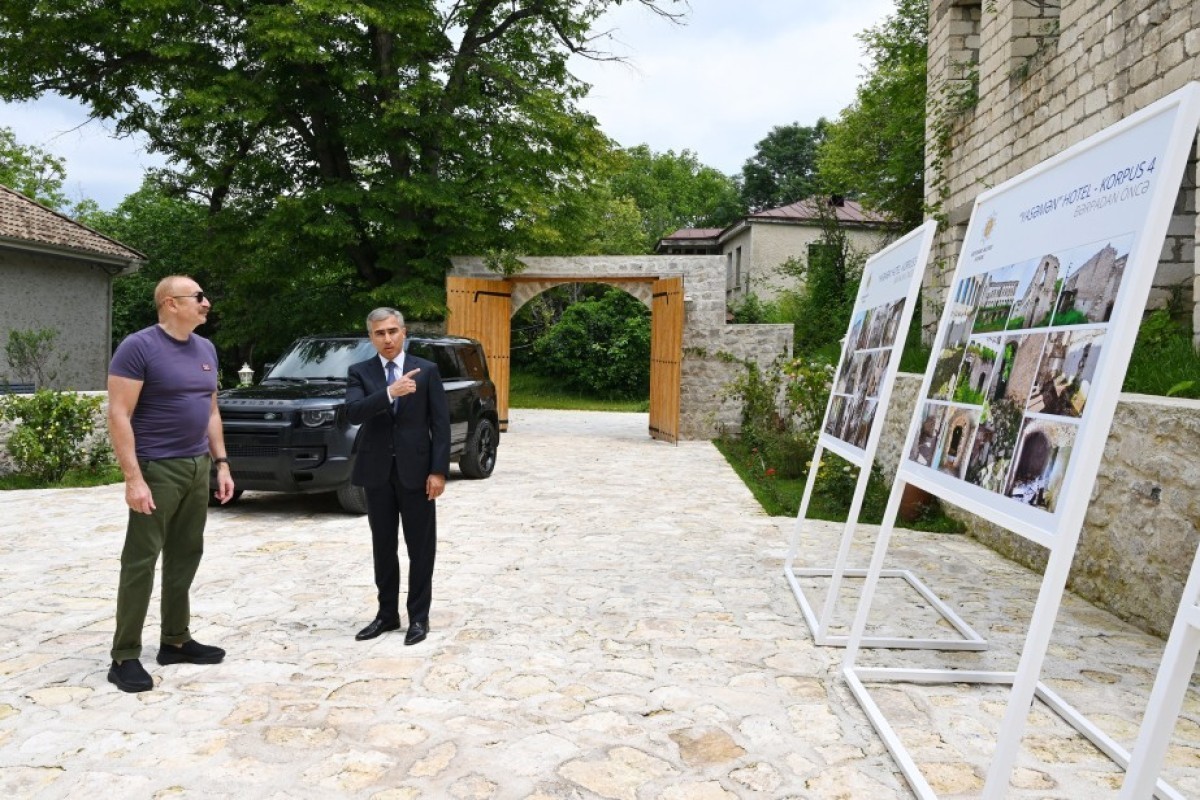
Azerbaijani President Ilham Aliyev traveled to Shusha on July 11 to personally check on two major reconstruction projects — a mixed-use development on Garabagh Street and housing restoration in the nearby village of Kichik Galaderesi. Today.az reported that the visits showed clear, measurable progress in the government's push to rebuild the region and bring displaced families home.
The trips come as Azerbaijan continues a sweeping effort to restore Shusha — designated the country's cultural capital — after decades of occupation. Returning residents, new infrastructure, and private investment are all part of the plan.
Ten New Buildings Rise Along Historic Garabagh Street
On Garabagh Street in Shusha, a public-private partnership is putting up 10 multipurpose buildings. According to Today.az, the structures will serve as hotels, offices, apartments, and restaurants. Designers are building them to match the city's historic look, so the new construction fits the old character of the street.
The project is a key part of reviving Shusha's economy. By mixing housing, hospitality, and business space in one district, officials hope to attract investment and visitors while giving returning residents a place to live and work.
47 Houses Being Restored in Kichik Galaderesi Village
Kichik Galaderesi sits about 40 kilometers southwest of Shusha. Armenian forces occupied it in 1992, and Azerbaijan regained control after anti-terror operations in 2023. Today.az reported that of 66 houses in the village, 19 are too damaged to fix. The remaining 47 can be restored.
Work is moving fast. Already, 26 homes are ready for families to move in. Another 21 are set to be finished by the end of next year. President Aliyev visited the home of local resident Asad Asadov and sat down with returning villagers directly — a rare, face-to-face check-in with the people at the center of the resettlement effort.
Families Start Moving Back as Infrastructure Goes In
Fifteen families — 51 people — have already returned to Kichik Galaderesi in the first wave of resettlement, according to Today.az. Another 11 families, totaling 45 people, are expected to move in before the end of this year. That would bring the total returning population to 96 people in just the first phase.
To support those families, the government has installed new gas lines, water pipes, and an artesian well. Workers have renovated the water network, built a transformer substation, and upgraded local roads. Officials also added a park and a Flag Square — public spaces meant to signal that normal life is returning to the village.
Shusha Reconstruction Signals Long-Term Government Commitment
The Shusha visits were not the only sign of a broader governance push that day. Today.az reported that the Digital Development Council held its first meeting under First Vice President Mehriban Aliyeva — showing that reconstruction efforts are running in parallel with wider national reform projects.
Together, these moves paint a picture of a government trying to normalize life across the reclaimed territories on multiple fronts at once — housing, infrastructure, digital development, and public life. The Kichik Galaderesi project alone shows the scale: from zero returning residents in 2023 to nearly 100 expected by year's end.
Sentiment
Mostly PositiveNEGATIVENEUTRALPOSITIVE
Publishers
15
Articles
12
Reach
27
Topics
A
AnonymousAuthor


