Media for Peace
Shusha Global Media Forum Promotes Ethical Reporting for Peace and International Trust
Anonymous
Key Points
1
Raimkulova noted the Shusha Global Media Forum's special significance for the Turkic world and highlighted visible signs of Azerbaijan's revival in Karabakh, including new residential districts and modern infrastructure in Shusha, Aghdam, Khankendi, Khojaly and Lachin.
2
Zhang Ling of the Conference on Interaction and Confidence Building Measures in Asia (CICA) said the forum gathered media from around the world and emphasized a shared mission between media and international organisations: to strengthen dialogue, build trust, and mutual understanding.
3
Latifa Akharbach warned against media polarisation and hate speech and called for upholding ethical standards in journalism, describing media as a 'mirror' and urging the creation of ecosystems where ethics and social responsibility prevail to prevent conflicts.
4
Mikhail Gusman highlighted that President Ilham Aliyev spent more than three hours engaging with participants and answering questions, with no question left unanswered, covering a broad range of local, regional, European, and international issues.
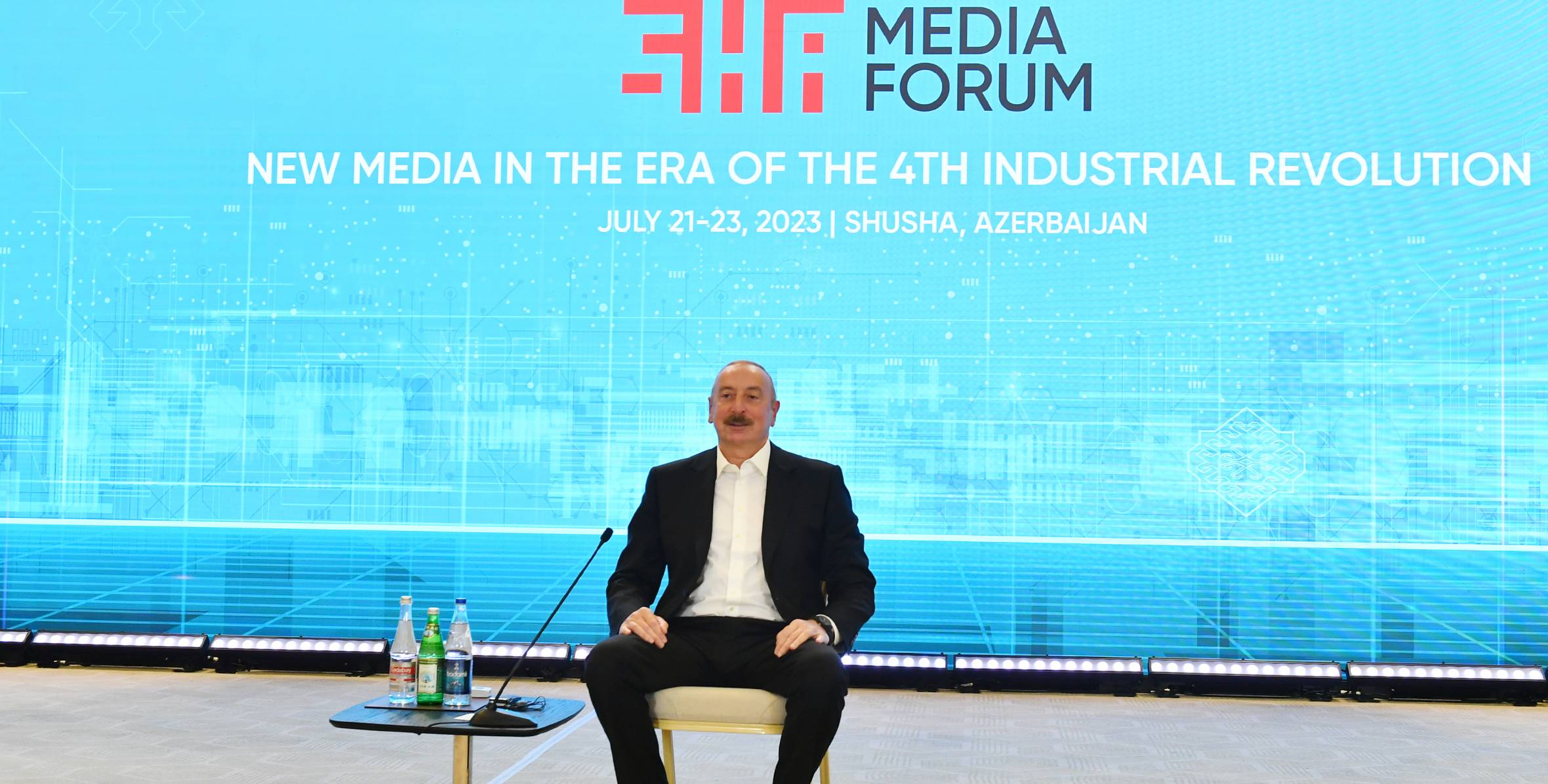
The IV Shusha Global Media Forum brought together roughly 300 delegates from about 60 countries to the historic Azerbaijani city of Shusha, cementing its place as a top international gathering for journalism and communications. Caspian Post reported that Uruguayan outlet Diario La R described the forum as one of the world's leading events dedicated to journalism and the evolving role of media.
Azerbaijani President Ilham Aliyev spent more than three hours answering questions from participants, leaving no question unanswered. He covered local, regional, European, and global issues in what observers called a rare display of openness from a sitting head of state.
Shusha's Symbolic Comeback Draws Global Attention
Aktoty Raimkulova, a senior official attending the forum, pointed to visible signs of renewal across Karabakh. She noted new residential districts and modern infrastructure rising in Shusha, Aghdam, Khankendi, Khojaly, and Lachin. For the Turkic world, she said the forum carries a special meaning — Shusha is seen as a cultural heartland. Caspian Post noted her remarks drew strong applause from delegates.
The choice of Shusha as the host city is no accident. Azerbaijan retook control of the region in 2020 after decades of conflict. Holding a global media event there sends a clear political and cultural message about reconstruction and sovereignty.
Media Ethics Takes Center Stage at the Forum
Latifa Akharbach, a prominent voice on global media governance, warned that journalism can fuel conflicts if left unchecked. She called media a "mirror" of society and urged the creation of ecosystems where ethics and social responsibility come first. She pushed back hard against hate speech and polarisation, saying shared principles must be built across borders. Caspian Post reported her remarks as among the forum's most cited.
Her call for ethical standards echoed a broader theme running through the forum. Speakers agreed that responsible reporting is not just good practice — it is a tool for peace and trust-building between nations.
International Bodies See Media as a Bridge for Dialogue
Zhang Ling, representing the Conference on Interaction and Confidence Building Measures in Asia (CICA), said the forum proved that media and international organisations share a common mission. That mission: strengthen dialogue, build trust, and grow mutual understanding across divides. CICA is an intergovernmental forum focused on security and cooperation across Asia. Caspian Post cited Zhang Ling's remarks as a key moment of the event.
Aliyev's Marathon Q&A Earns Praise From Delegates
Mikhail Gusman, a veteran Russian journalist and forum observer, singled out President Aliyev's engagement as extraordinary. Aliyev spent more than three hours with participants and took every question thrown at him — a breadth that ranged from domestic policy to European and international affairs. Gusman said the forum's international reach, now spanning about 60 countries, reflects its growing weight on the global media stage. Caspian Post captured his remarks following the session.
The forum closed with a clear consensus: media can either deepen divides or help heal them. Participants left Shusha with a call to build shared ethical frameworks — and to use journalism as a force for peace rather than conflict.
Sentiment
Mostly PositiveNEGATIVENEUTRALPOSITIVE
Publishers
11
Articles
0
Reach
11
Topics
A
AnonymousAuthor


