Regional Cooperation Focus
Azerbaijan President Emphasizes Regional Cooperation, Dialogue, and Transit Connectivity at Shusha Forum
Anonymous
Key Points
1
Aliyev announced that Azerbaijan will host the Organization of Islamic Cooperation (OIC) Summit next year, describing it as a major responsibility in a complex and tense period and emphasizing Azerbaijan's long-standing role in strengthening solidarity among Muslim countries.
2
The president highlighted Azerbaijan's leadership within the Non-Aligned Movement (NAM), noting that Azerbaijan was unanimously elected as NAM chair and that the chairmanship was extended for another year by all 120 member states.
3
Aliyev stressed an exceptionally close bilateral relationship with Turkey, stating there are no other two states in the world as close, as mutually supportive, and as deeply connected, calling it a 'great wealth' for their peoples and a source of strength when united.
4
He underscored ongoing efforts to expand connectivity and regional transport corridors, highlighting the Middle Corridor and Azerbaijan's ties with Central Asia, Georgia, Türkiye, and Europe as part of turning Azerbaijan into a vital transit hub linking East and West.
5
The remarks included a critique that solidarity within the Muslim world is not sufficiently strong today, with rising tensions and ongoing wars, framing enhanced unity within the OIC as essential for security and stability.
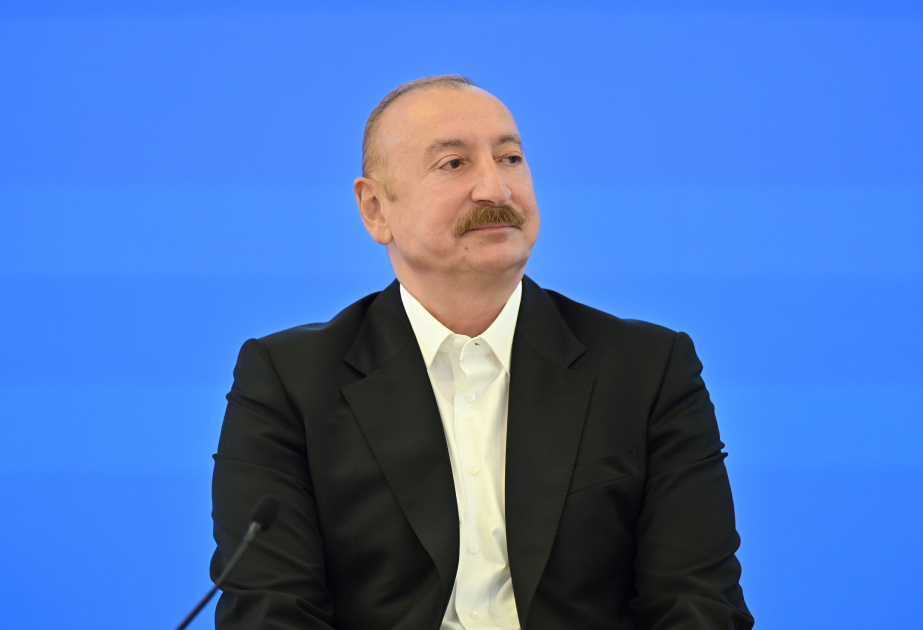
Azerbaijani President Ilham Aliyev used the IV Shusha Global Media Forum to lay out an ambitious foreign policy vision, calling cooperation and mediation the cornerstones of his country's diplomacy. Aliyev announced that Azerbaijan will host the Organization of Islamic Cooperation Summit next year, describing it as 'a major responsibility' at a time of rising global tensions, according to Caliber.az.
The forum, held in the recaptured city of Shusha, brought together international media figures and officials to discuss technology, regional development, and post-conflict reconstruction in the Garabakh region. Aliyev framed Azerbaijan's role as that of a bridge-builder — linking East and West while keeping tensions in check, Today.az reported.
Azerbaijan to Lead OIC at a Tense Moment
Aliyev said hosting the OIC Summit is no small task. He pointed to wars and growing instability across the Muslim world as proof that solidarity is urgently needed. 'The solidarity within the Muslim world is not sufficiently strong today,' he said, calling unity inside the 57-member bloc essential for security and stability, according to Caliber.az.
Azerbaijan has long positioned itself as a connector within the Muslim world despite being a secular, post-Soviet state. Aliyev framed the OIC chairmanship as a chance to push that role further. He did not give a specific date for the summit but called it one of the country's most significant upcoming diplomatic responsibilities.
Azerbaijan Chairs Non-Aligned Movement With Unanimous Support
Aliyev also highlighted Azerbaijan's leadership of the Non-Aligned Movement, a bloc of 120 countries that avoids alignment with major power blocs. He noted that Azerbaijan was unanimously elected as NAM chair — and that all 120 member states later voted to extend the chairmanship for another year, according to Today.az.
The NAM chairmanship puts Azerbaijan in a rare diplomatic position. It allows Baku to speak on behalf of a large share of the Global South while maintaining ties with both Western and Eastern partners. Aliyev called this balancing act a reflection of Azerbaijan's broader policy: 'The policy pursued by Azerbaijan has always been aimed at cooperation,' Today.az reported.
Aliyev Calls Turkey Bond Unlike Any Other on Earth
Some of Aliyev's strongest words came when he spoke about Turkey. He said there are 'no other two states in the world as close, as mutually supportive, and as deeply connected' as Azerbaijan and Turkey. He called the relationship 'a great wealth' for both peoples and a direct source of national strength, according to Caliber.az.
The two countries share deep ties across politics, energy, and the military. Turkey backed Azerbaijan during the 2020 Karabakh war and remains its top strategic partner. Aliyev said being united with Turkey makes Azerbaijan stronger — and framed that unity as a model for broader regional cooperation.
Middle Corridor Push Aims to Make Azerbaijan a Transit Hub
Aliyev used the forum to push Azerbaijan's role as a regional transport hub. He pointed to the Middle Corridor — a trade route linking Central Asia through Azerbaijan, Georgia, and Turkey into Europe — as a key project. The route bypasses both Russia and Iran, making it strategically valuable for East-West trade, according to Caliber.az.
Azerbaijan has invested heavily in rail, road, and port infrastructure to support the corridor. Aliyev said the country's national agenda is focused on 'development, reconstruction, security, and regional connectivity.' He positioned expanded transit links not just as an economic win, but as a tool for regional stability and peace.
Sentiment
Mostly PositiveNEGATIVENEUTRALPOSITIVE
Publishers
20
Articles
6
Reach
26
A
AnonymousAuthor


