Transboundary Haze Emergency
Severe Transboundary Haze Triggers Emergency Health and Operational Alerts Across Malaysia and Philippines
Anonymous
Key Points
1
In Sarawak, beyond Serian, several districts were also flagged as very unhealthy or hazardous, including Kuching (API 310, hazardous), Samarahan (281, very unhealthy), and Sri Aman (245, very unhealthy), with Malaysia’s APIMS noting that readings are released hourly from 68 monitoring stations nationwide.
2
Sabah’s Alert Level 1A plan included specific proposals for religious activity during haze—Zainudin Aman said it was “proposed that solat hajat be held in every district for Muslims,” and that other houses of worship were encouraged to hold appropriate religious activities.
3
In Central Visayas, DOH-7 said a draft regional circular was already being prepared for distribution to infirmaries, DOH hospitals, provincial hospitals, Cebu and Bohol provincial health offices, local government-run hospitals, and drug abuse and treatment rehabilitation centers; the circular was dated Sept 2 but was “still pending the approval and signature” of DOH-7 Regional Director Dr Joshua Brillantes.
4
Under the DOH-7 heightened alert, hospitals were advised to create surge-focused care pathways—consider establishing “priority lanes” for respiratory-illness patients, ensure emergency rooms could handle more patients, and keep referrals “seamless” between lower- and higher-level facilities.
5
Sabah’s government proposed additional operational actions tied to API levels: it suggested cancelling/postponing official state government activities if the API “reaches or exceeds 200,” while indoor activities would still be allowed, and recommending schools in affected areas switch to home-based learning (PdPR) when API hit the same threshold.
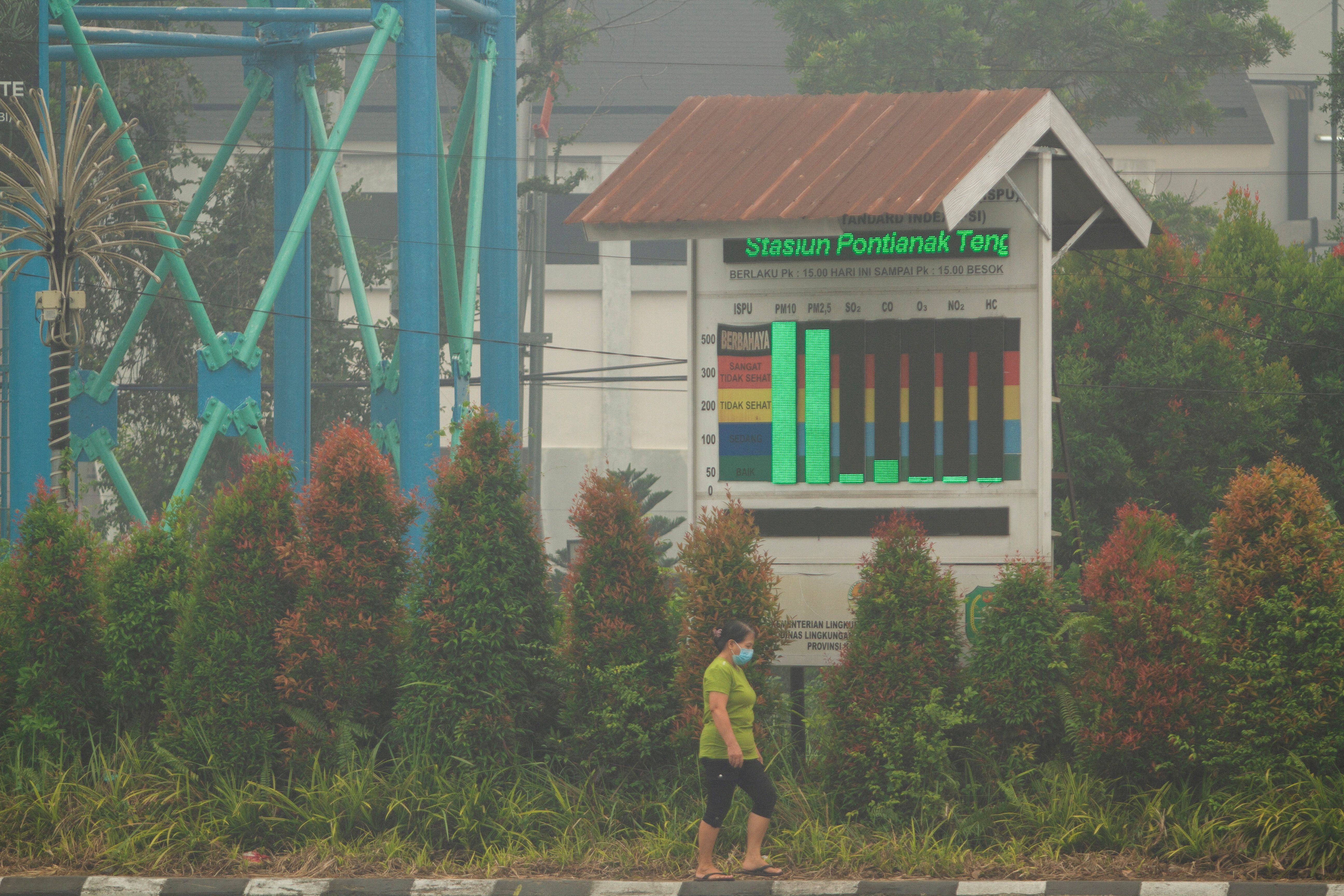
Transboundary haze from Indonesian wildfires pushed air quality to hazardous levels across Malaysia and the Philippines, triggering emergency protocols. Market Screener reported that Malaysia declared an emergency in Sarawak's Serian district after the Air Pollutant Index (API) surged to 518—well above the state's 500-point emergency threshold. In Sabah, API readings approached 200 in several districts, prompting authorities to activate the State Disaster Operations Command Centre and place Kota Kinabalu, Keningau, and Papar under Alert Level 1A.
Winds from Kalimantan are expected to keep pushing smoke toward Malaysia as long as fires burn and rain does not fall, officials said. In the Philippines' Central Visayas, the Department of Health placed hospitals on heightened alert to prepare for a potential surge in respiratory illnesses from the worsening air quality.
Sarawak Breaches Emergency Pollution Threshold
Serian recorded the region's worst readings, with an API of 518 on September 2. Head Topics noted that this far exceeded the 500-point emergency declaration level. Kuching logged a hazardous 310, while Samarahan hit 281 (very unhealthy) and Sri Aman reached 245 (very unhealthy). All readings came from Malaysia's 68 nationwide monitoring stations, which release data hourly.
The sharp jump reflects forest fires burning in neighboring Kalimantan, Indonesia. No immediate relief is expected without rain in that region, according to Malaysian officials who track regional wind patterns and pollutant transport.
Sabah Activates Disaster Command on API Spike
As API readings neared 200 in three Sabah districts, the government moved to Alert Level 1A status. Authorities suspended outdoor school activities, halted sports events, and shut down non-essential public gatherings. Officials also announced plans to cancel or postpone state government activities if API hit or exceeded 200, though indoor work would continue.
Religious leaders were asked to help. Sabah official Zainudin Aman proposed that "solat hajat be held in every district for Muslims," while other houses of worship were encouraged to organize appropriate religious activities. Schools in worst-hit areas were told to prepare for home-based learning (PdPR) if pollution worsened.
Philippines Health System Preps for Respiratory Surge
The Department of Health in Central Visayas placed all hospitals and clinics on heightened alert. Officials drafted a regional circular for distribution to infirmaries, public hospitals, provincial health offices, and rehabilitation centers—preparing them for an expected jump in respiratory cases tied to transboundary haze.
Hospitals were instructed to create "priority lanes" for respiratory patients, boost emergency room capacity, and ensure smooth referrals between facilities. Staff were told to check supplies of respiratory medicines and equipment. The circular, dated September 2, was pending final approval by the DOH-7 Regional Director.
Wind Patterns Forecast Haze to Linger
Sabah officials attributed rising API readings to winds pushing smoke from Kalimantan toward Malaysia. Without rain to clear the air or a shift in wind direction, pollution is forecast to persist at unhealthy or hazardous levels for days. Cross-border haze management therefore depends on meteorology in Indonesia as much as local emissions controls.
Sentiment
Mostly NegativeNEGATIVENEUTRALPOSITIVE
Publishers
17
Articles
24
Reach
41
A
AnonymousAuthor


