AI Math Debate
Prominent Mathematicians Challenge AI Solutions to Millennium Prize Problems
Anonymous
Key Points
1
Only one of the seven Millennium Prize problems had previously been solved: the Poincaré conjecture, resolved in 2003 by Russian mathematician Grigori Perelman, who declined the $1 million prize.
2
The Navier–Stokes equations were developed by Claude-Louis Navier and George Gabriel Stokes in the 19th century and apply Newton’s second law of motion to continuous fluids such as water and air.
3
The mathematicians’ joint statement included prominent figures such as Terence Tao, Peter Scholze, Cédric Villani, Maryna Viazovska and 2026 Fields Medalist Yu Deng; it acknowledged AI’s potential to enhance mathematical study rather than explicitly calling for an end to AI development.
4
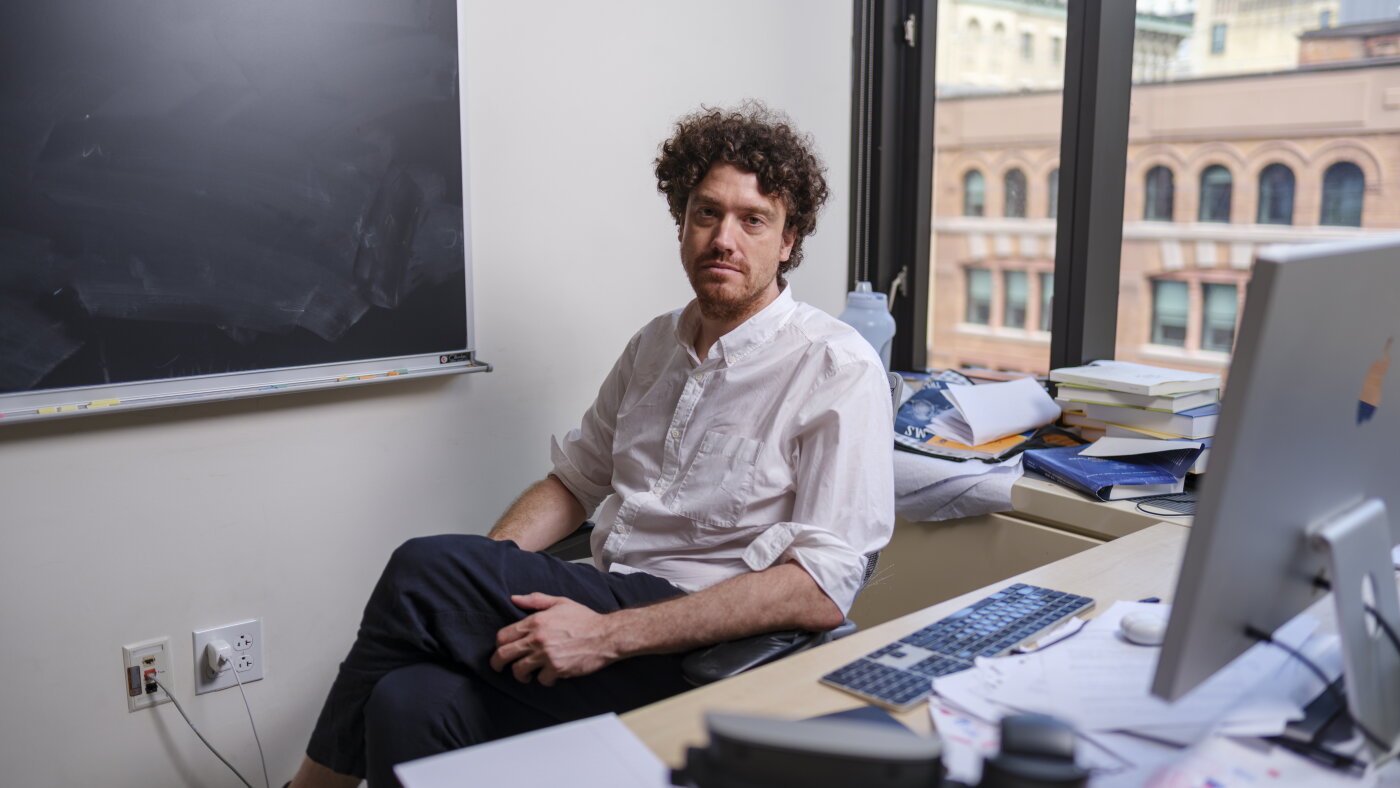
June Huh distinguished between producing a “new result” and developing a “new direction of thought,” asking whether an AI trained only on mathematics available before 1900 could independently make advances comparable to those achieved by humans over the following century.
OpenAI announced on September 8, 2026, that its AI had solved the Navier–Stokes problem, one of mathematics' hardest unsolved puzzles NPR. The breakthrough would claim the $1 million Millennium Prize — but the claim has sparked fierce debate about what counts as real mathematical discovery.
Twenty-five leading mathematicians, including multiple Fields Medalists, publicly criticized using major math problems as AI showcase events. Their core concern: AI may answer questions brilliantly, but can it ask the right new questions? GPB
The Navier–Stokes Problem: Why It Matters
The Navier–Stokes equations describe how fluids like water and air flow. Developed in the 19th century by Claude-Louis Navier and George Gabriel Stokes, they apply Newton's second law to continuous fluids NPR. Engineers use these equations to model everything from airplane wings to ocean currents — but mathematicians have never proven the equations always work.
Only one of the seven Millennium Prize problems had ever been solved before: the Poincaré conjecture in 2003 by Russian mathematician Grigori Perelman, who famously refused the $1 million award GPB
Leading Mathematicians Question AI's True Achievement
Mathematician June Huh drew a sharp distinction: AI excels at connecting existing knowledge but hasn't shown it can formulate genuinely new directions of inquiry GPB. He posed a challenge: could an AI trained only on math from before 1900 independently make advances comparable to human breakthroughs over the next century?
Fields Medalists Terence Tao, Peter Scholze, and Maryna Viazovska joined the joint statement, along with 22 other prominent researchers GPB. Mathematician James Glimm called the announcement disappointing but said he's moving forward with his own work GPB
The Deeper Debate: Answers Versus Understanding
The mathematicians' statement acknowledged AI could enhance mathematical study. But they questioned whether solving a known problem should be celebrated above generating new mathematical questions and expanding understanding GPB. Attribution and verification of AI's role also remain unclear.
The dispute reflects a fundamental question: Should AI be judged mainly by producing correct answers, or also by its ability to move an entire field forward? NPR The answer will shape how the research community treats future AI breakthroughs.
Sentiment
Mostly NegativeNEGATIVENEUTRALPOSITIVE
Publishers
17
Articles
43
Reach
60
A
AnonymousAuthor


