OpenAI Math Advisory Group
OpenAI Forms Princeton Math Advisory Group to Address AI Discovery Concerns
Anonymous
Key Points
1
The initiative follows a June 2026 Leiden Declaration, signed by the International Mathematical Union, urging AI companies to consider the long-term effects of their systems on the norms and values of mathematical research.
2
Twenty-five Fields Medal-winning mathematicians recently signed an open letter warning that AI laboratories’ race to produce solutions to famous problems threatens mathematicians’ intellectual work.
3
OpenAI described the group as “a bridge to the mathematical community and broader public, giving mathematicians a voice in how we move forward.”
4
The Institute for Advanced Study stressed that the advisory group has no decision-making authority over AI companies: “Although we will give advice, we do not have decision making power at any AI company, and the responsibility for the decisions made by any company will rest with that company.”
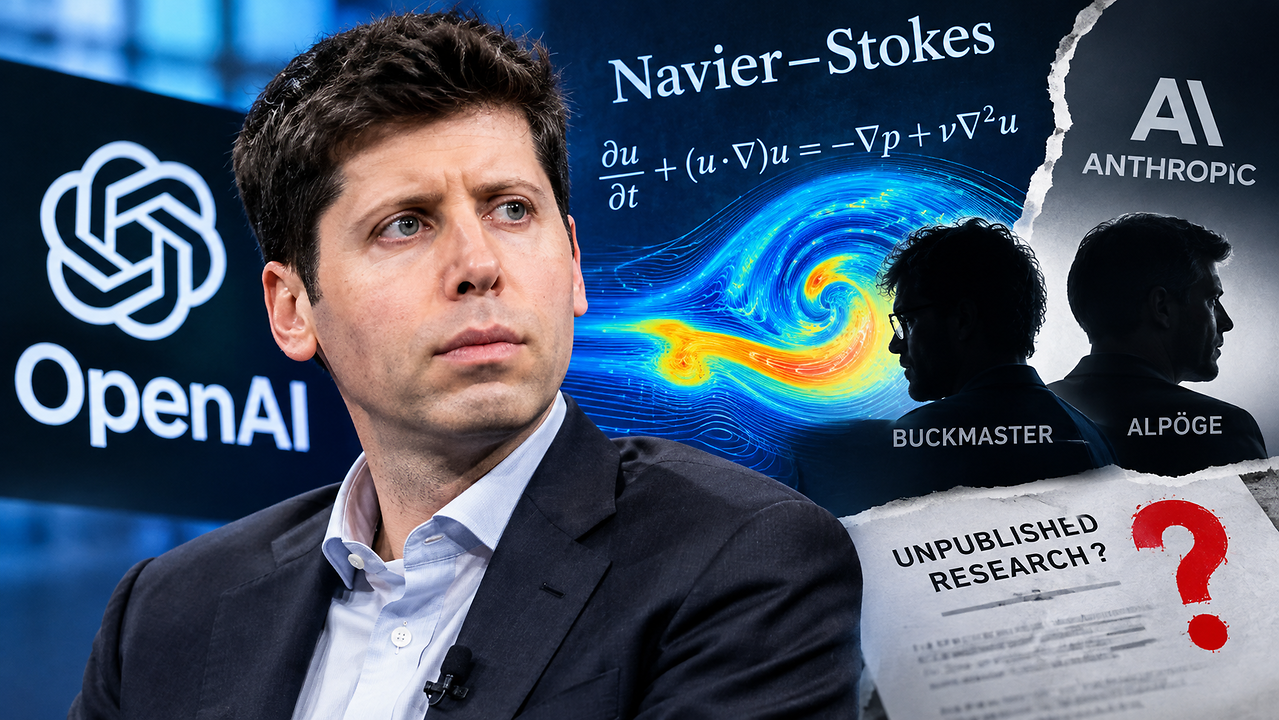
OpenAI has launched an independent Advisory Group on Mathematics and Artificial Intelligence, hosted by Princeton's Institute for Advanced Study, to review and communicate major math discoveries made by its AI systems. itechpost The move comes after OpenAI claimed one of its internal models solved more than 100 longstanding mathematical problems, including the Navier–Stokes Millennium Prize problem, sparking concern among mathematicians about verification speed and the future of human mathematical research.
The group includes prominent mathematicians like Timothy Gowers and Edward Witten and operates independently, allowing members to publicly criticize OpenAI and control their own participation. slguardian However, the group has no decision-making power—OpenAI retains full authority over its research directions and which results to release.
Twenty-Five Fields Medalists Warn Against AI Haste
Leading mathematicians have grown alarmed by the speed at which AI labs are pursuing famous unsolved problems. timesnownews Twenty-five Fields Medal winners recently signed an open letter warning that this competitive rush threatens the integrity and intellectual value of mathematical research itself.
The 2026 Leiden Declaration, signed by the International Mathematical Union, explicitly urged AI companies to consider long-term effects on mathematical research culture and values. The advisory group represents a partial response to these concerns, though mathematicians remain skeptical it will meaningfully slow corporate AI development.
How OpenAI Describes Its New Role
OpenAI framed the advisory group as 'a bridge to the mathematical community and broader public, giving mathematicians a voice in how we move forward.' cxotoday The company positioned the initiative as a way to ensure responsible and transparent communication of AI-generated breakthroughs to both mathematicians and the general public.
Why the Group Has Limited Power
The Institute for Advanced Study made clear the group cannot direct or constrain OpenAI's actual research. t2online 'Although we will give advice, we do not have decision making power at any AI company, and the responsibility for the decisions made by any company will rest with that company,' the institute stated.
Members serve without pay and can resign freely, but they cannot slow internal development or block result announcements. The group's real work—developing verification standards and building AI tools that support rather than replace human mathematicians—remains advisory only.
Sentiment
Mostly NegativeNEGATIVENEUTRALPOSITIVE
Publishers
37
Articles
24
Reach
61
A
AnonymousAuthor


