Bosnia Election Victory
Bosnian Serb Nationalist Milorad Dodik Claims Election Victory Through Allies
Anonymous
Key Points
1
Dodik was barred from public office after being convicted the previous year of defying decisions by the international envoy overseeing the 1995 peace agreement.
2
With nearly 90% of votes counted, Zeljka Cvijanovic had more than 55% in the race for a Serb seat on the tripartite presidency, leading her nearest opponent by about 30 percentage points.
3
Dodik said his party and coalition partners would win two-thirds of seats in Republika Srpska’s new parliament.
4
About 3.4 million voters were eligible to choose the country’s three-member presidency, national lawmakers, and heads of institutions in both entities.
5
TASS described Bosnia and Herzegovina’s post-Dayton structure as two entities—the Federation of Bosnia and Herzegovina and Republika Srpska—plus the Brcko District, with Bosniaks, Serbs and Croats proportionally represented in state governance.
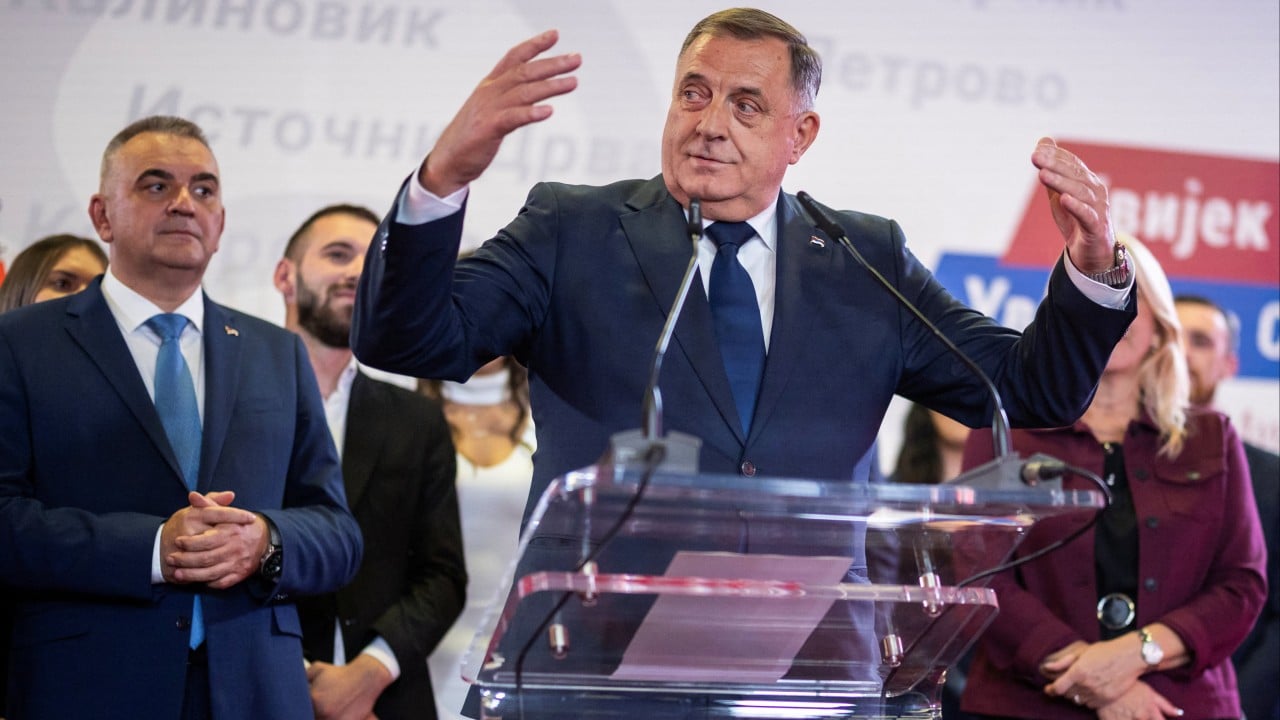
Bosnian Serb nationalist leader Milorad Dodik declared victory in Bosnia and Herzegovina's elections, despite being barred from holding office and not appearing on the ballot. The Globe and Mail reported that his allies won key posts: Zeljka Cvijanovic secured the Serb seat on the country's tripartite presidency with more than 55% of the vote, while Savo Minic was elected president of Republika Srpska. Dodik credited U.S. President Donald Trump and Russian President Vladimir Putin for the outcome.
The election unfolded amid economic pressures, EU membership debates, and lingering ethnic tensions rooted in the 1992–95 war. The Guardian noted that Dodik's separatist rhetoric has continued to heighten divisions in the country. Approximately 3.4 million voters were eligible to choose the country's three-member presidency, national lawmakers, and institutional heads in both entities.
Dodik's Allies Win Major Offices Despite His Disqualification
Dodik was convicted the previous year of defying decisions by the international envoy overseeing Bosnia's 1995 peace agreement, leading to his ban from public office. Yet his political influence remained powerful. With nearly 90% of votes counted, Sunday Guardian Live reported that Cvijanovic led her nearest opponent by about 30 percentage points in the race for the Serb presidency seat. Dodik claimed his party and coalition partners would secure two-thirds of seats in Republika Srpska's new parliament.
Trump and Putin Get Credit From Bosnian Nationalist Leader
France24 reported that Dodik explicitly thanked Trump and Putin for the election outcome. This acknowledgment underscores the geopolitical dimension of Bosnia's domestic politics. Dodik's pro-Russia stance contrasts sharply with the country's push toward EU membership, creating a fundamental tension in the nation's future direction and international alignment.
Economic Hardship and EU Membership Drive Voter Concerns
Economic pressures and the prospect of EU integration shaped voter sentiment in the election. SCMP noted that these issues, combined with persistent ethnic tensions, dominated the campaign. The results reflect a divided Bosnia wrestling with economic challenges while pursuing European integration—a path that nationalist leaders like Dodik oppose.
Bosnia's Complex Governance Structure Shapes Political Outcomes
Bosnia and Herzegovina operates under a unique post-war framework established by the 1995 Dayton Agreement. The country is divided into two entities: the Federation of Bosnia and Herzegovina and Republika Srpska, plus the Brcko District. A tripartite presidency with proportional representation for Bosniaks, Serbs, and Croats governs at the state level. This structure, designed to balance ethnic interests, has also enabled nationalist leaders to consolidate power within their respective communities.
Sentiment
Mostly NegativeNEGATIVENEUTRALPOSITIVE
Publishers
29
Articles
113
Reach
142
A
AnonymousAuthor