AI Graphics Upgrade
Nvidia Unveils DLSS 4.5 and Advanced Ray Reconstruction for GeForce RTX
Anonymous
Key Points
1
Nvidia also unveiled RTX Mega Geometry for the upcoming Gears of War: E-Day, targeting a limitation in Unreal Engine 5’s Nanite geometry system when ray tracing is enabled.
2
The DLSS 4.5 rollout is being distributed through Nvidia App version 11.0.9; users must opt in to Early Access releases, with a wider release scheduled for September.
3
Nvidia App 11.0.9 applies recommended Super Resolution, Frame Generation and Ray Reconstruction models centrally through per-game driver settings, eliminating the need to configure each DLSS update manually in individual games.
4
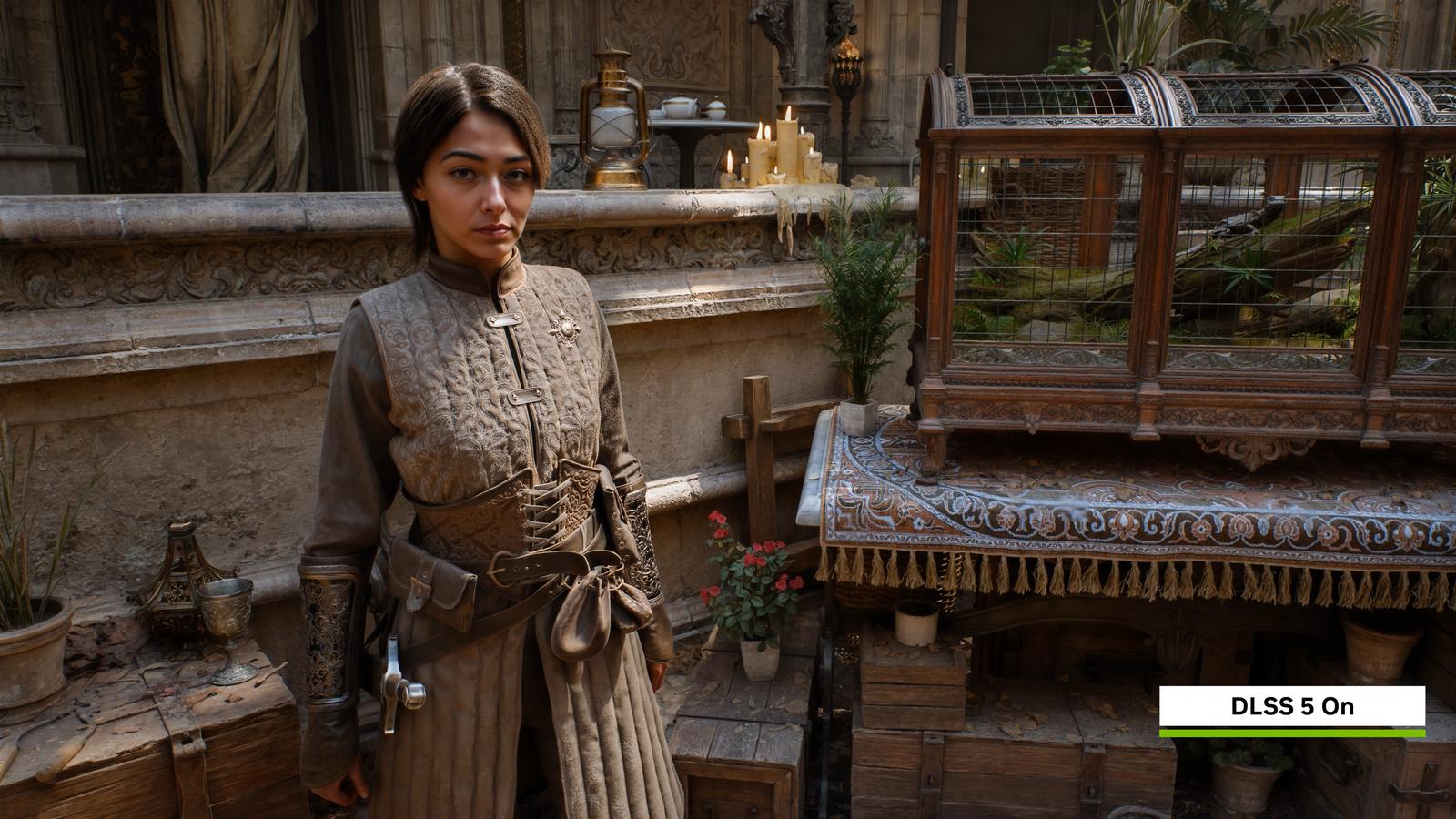
Early DLSS 5 testing found that its visual effects can be adjusted with sliders and may amplify existing character features rather than replace a character’s underlying design; testing in Final Fantasy VII Rebirth highlighted changes to Cloud, Tifa and Aerith’s lighting, skin tones and facial presentation.
5
DLSS5VKLayer uses IPC to pass rendered frames between Linux Vulkan games and a Windows neural-rendering helper running under Wine or Proton, but users must provide Nvidia’s proprietary NGX DLLs from Windows software and use Nvidia’s official driver stack.
Nvidia expanded its AI-driven graphics toolkit at Gamescom 2026, releasing DLSS 4.5 Ray Reconstruction for all GeForce RTX cards. The new transformer-based tool sharpens ray-traced images by improving reflections, shadows, and lighting in Video Cardz supported games. Users access it through Nvidia App 11.0.9, which rolled out early access in September with automatic per-game configuration.
The update marks a significant step forward for Nvidia's upscaling ecosystem. iXBT Games confirmed The Witcher 3 remaster will launch September 29, 2029, featuring DLSS 4.5 Ray Reconstruction alongside updated Super Resolution and frame generation. Meanwhile, early DLSS 5 testing reveals the technology can reshape character appearance, lighting, and geometry—raising performance concerns for adoption.
DLSS 4.5 Ray Reconstruction Launches With Broad GPU Support
Nvidia's DLSS 4.5 Ray Reconstruction is now available for all GeForce RTX generations through Nvidia App version 11.0.9. The transformer-based model enhances ray-traced and path-traced images by improving reflections, shadows, and lighting quality. Gadget Pilipinas reported that DLSS 4.5 support extends to WARDOGS, PUBG, and NBA 2K27. Initial rollout includes 30 games, with wider availability planned for September.
The Nvidia App applies recommended Super Resolution, Frame Generation, and Ray Reconstruction settings centrally. Users no longer configure each DLSS update manually per game. Early access requires opting into experimental releases, eliminating friction for enthusiasts eager to test new features immediately.
Developer Tools Gain Better Game Integration
Nvidia expanded Streamline SDK to version 2.14.1 and DLSS libraries to 310.9.1, improving compatibility with frame-rate limiters, V-Sync, and Vulkan's low-latency features. Per-game Resizable BAR controls now let developers optimize memory bandwidth on a title-by-title basis. These changes reduce friction between Nvidia's AI upscaling and core gaming infrastructure.
For Unreal Engine 5 developers, Nvidia unveiled RTX Mega Geometry specifically for Gears of War: E-Day. The tool addresses a limitation in Unreal's Nanite geometry system when ray tracing is active. This targeted solution shows Nvidia's commitment to solving real bottlenecks developers face in cutting-edge engines.
DLSS 5 Testing Reveals Generative AI Visual Changes Beyond Upscaling
Early DLSS 5 testing indicates the technology operates fundamentally differently from prior versions. Rather than simply enlarging images, iXBT Games found that DLSS 5 can alter character lighting, skin tones, and facial presentation. Tests in Final Fantasy VII Rebirth showed adjustable sliders for visual effects on Cloud, Tifa, and Aerith. Changes amplify existing character features rather than replace underlying design, but performance demands remain uncertain.
A modder successfully ran DLSS Frame Generation on an RTX 2060 Max-Q, Video Cardz reported, testing it in The Witcher 3 next-gen with DirectX 12. This unofficial port suggests older hardware may support advanced Nvidia features. Separately, enthusiasts modified an unofficial DLSS 5 implementation to process frames before upscaling, achieving up to 45% performance gains—though such optimizations require extensive technical expertise.
Linux Vulkan Experiment Attempts DLSS 5 Support via Wine Proxy
An open-source Linux Vulkan layer called DLSS5VKLayer is attempting to bring DLSS 5 to native and Proton-based games. The system uses inter-process communication to pass rendered frames between Linux Vulkan games and a Windows neural-rendering helper running under Wine or Proton. This workaround requires Nvidia proprietary NGX DLLs from Windows software and the official Nvidia driver stack.
The approach highlights both Nvidia's dominance and Linux gaming's technical hurdles. While enthusiasts can already access DLSS 5 through this unofficial bridge, adoption remains niche. The method demands users source proprietary components and accept performance overhead from frame proxying. Mainstream Linux gaming support likely requires official Nvidia commitment.
Sentiment
Mostly PositiveNEGATIVENEUTRALPOSITIVE
Publishers
21
Articles
2
Reach
23
A
AnonymousAuthor


