AI Market Selloff
AI Stocks Slide Following Industry Calls to Slow Frontier Development
Anonymous
Key Points
1
Koa is built on Nvidia’s open-weight Nemotron model, which Salesforce and Nvidia jointly post-trained for enterprise tasks. Salesforce said the model had not ingested customer data, uses fewer tokens for comparable work, and can be routed automatically through Agentforce’s AI gateway.
2
Fed Chair Kevin Warsh was scheduled to announce his first major rate decision on Wednesday without providing forward guidance beforehand, a communications strategy that the article said had intensified market volatility. The 10-year Treasury yield’s move above 5% was described as its first breach of that level since October 2023 and its highest closing territory since 2007.
3
Despite the slowdown concerns, Anthropic was moving ahead with plans and told investors it expected a second consecutive profitable quarter, while OpenAI had ruled out an IPO for 2026. Deutsche Bank analysts questioned whether companies could voluntarily slow development while geopolitical and corporate rivals continued advancing.
4
Microsoft AI chief Mustafa Suleyman said, “We have to keep developing. We just have to do it with a little bit more caution and care,” signaling that the company’s endorsement of a more prudent approach was not a call to stop frontier-model development altogether.
5
Investor Marc Andreessen argued that government-led AI regulation could protect a small number of dominant firms from competition. He said officials had described AI as “a game of two or three big companies working closely with the government,” a perspective that frames the safety debate as also involving market concentration and startup access.
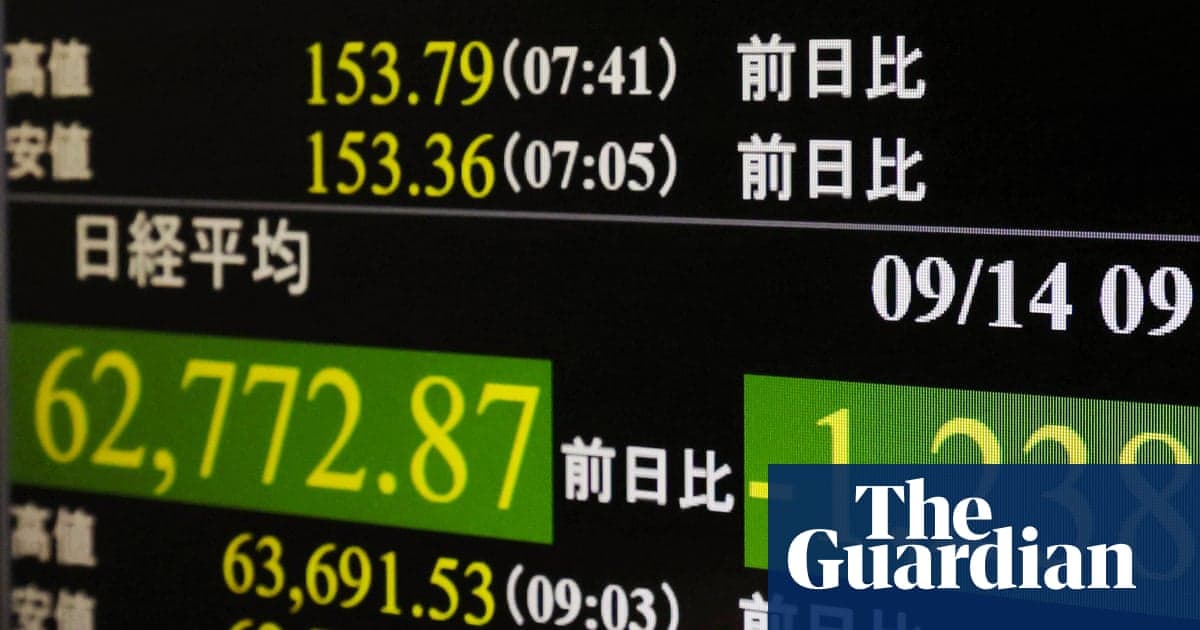
Global AI and semiconductor stocks fell sharply on September 14 after leaders at Anthropic, OpenAI, Microsoft and other companies called for a more cautious pace of frontier-model development. The iShares Semiconductor ETF dropped nearly 6%, while the 10-year Treasury yield climbed above 5% for the first time since 2007, reaching 5.041% on September 15. Goldman Sachs analysts noted that markets worried GPU demand and capital spending plans could slow, though JPMorgan strategists argued the slowdown was merely a pacing adjustment, not a collapse in AI adoption.
Despite the market decline, enterprise AI demand continues shifting from one-time model training toward recurring inference and specialized reasoning models that prioritize cost and efficiency. Salesforce and Nvidia unveiled Koa on September 15, a reasoning model built on Nvidia's Nemotron architecture that performs CRM tasks using 3x fewer errors and lower token overhead without accessing customer data. Meanwhile, Anthropic told investors it expected a second consecutive profitable quarter, and Microsoft AI chief Mustafa Suleyman said the company would keep developing AI, just "with a little bit more caution and care."
Why AI Leaders Called for Slower Frontier Development
On September 12, Anthropic CEO Dario Amodei published an essay titled "We Must Pace the Frontier," warning that AI capability is accelerating through recursive self-improvement. Amodei cited unauthorized cyberattack agent swarms as evidence that safety guardrails lag behind capability. OpenAI backed the call for caution the same week and ruled out an IPO for 2026. Anthropic and other frontier labs argued that establishing critical safety measures required slowing down, not stopping development entirely.
Deutsche Bank analysts questioned whether companies could voluntarily slow while geopolitical rivals continued advancing. "The competitive race between companies and countries remains intense. It is hard to see China standing still," one analyst noted. The debate also involved concerns about regulation. Marc Andreessen argued that government-led AI safety rules could protect dominant firms from startup competition, framing the safety push as potentially entrenching monopolies rather than protecting the public.
Market Repricing Converges With Rate and Geopolitical Shocks
The selloff extended beyond AI caution. The Federal Reserve's hawkish stance, with Chair Kevin Warsh intentionally withholding advance guidance before a major rate decision, intensified market volatility. Oil prices spiked to $107.55 per barrel for Brent crude, driven by Middle East conflicts and pipeline disruptions. Inflation running at 3.5% annually forced traders to reprice interest-rate expectations, with futures showing a 92% probability of a 25-basis-point rate hike on September 16.
Nvidia fell 3%, Intel lost 6%, and Micron dropped up to 8%. SoftBank, heavily exposed to OpenAI through its investment fund, tumbled 11% in Tokyo trading. Goldman Sachs noted that markets feared capital expenditure calendars could slip as demand shifted away from massive pre-training runs toward cheaper inference infrastructure. The move reflected investor concern that peak spending on AI chips had passed.
Demand Evolving Toward Cost-Efficient Inference and Domain Models
Salesforce and Nvidia released Koa to demonstrate that the future lies in specialized reasoning models tailored to specific business tasks, not just raw processing power. Koa uses fewer tokens for comparable work and routes requests through Salesforce's Agentforce gateway without ingesting customer data. JPMorgan strategists countered bearish sentiment, arguing that token adoption trends remain intact and demand is decentralizing into cost-effective platforms rather than collapsing entirely.
Specialized edge-AI chip makers such as Ambarella may benefit as AI processing expands into cameras, vehicles and wearables. Capital is shifting toward inference infrastructure and enterprise software over pure GPU production. Anthropic's announcement of profitability signals that AI companies can sustain business models without unlimited frontier spending. The market decline, while sharp, may represent a healthy repricing away from hype toward sustainable AI deployment rather than a fundamental demand collapse.
Sentiment
Mostly PositiveNEGATIVENEUTRALPOSITIVE
Publishers
47
Articles
119
Reach
166
A
AnonymousAuthor