Human Brain Tissue Restores Memory
Human Brain Organoids Integrate into Mouse Brains and Restore Memory Function
Anonymous
Key Points
1
The transplantation succeeded in 25 of 29 attempts, with the human tissue expanding over roughly three months and eventually occupying much of the space left by the missing mouse brain structures.
2
Researchers implanted four organoids into each treated mouse; the organoids had been generated by exposing human stem cells to chemicals for about 40 days before transplantation.
3
The team used the xenocortical mice to model hypoxia, or insufficient oxygen to brain cells—a condition around birth that can contribute to cerebral palsy and is associated with autism and epilepsy. University of Pennsylvania neuroscientist Hongjun Song called it a live model in which researchers can test these conditions and potential treatments using human cells.
4
The model was designed to address a specific limitation of earlier animal transplants: mouse or rat cells can outcompete human neurons, making it difficult to distinguish human from rodent effects. Earlier work in rats produced human cells making up about one-third of one cortical side, but rats’ faster neuronal maturation limited further development.
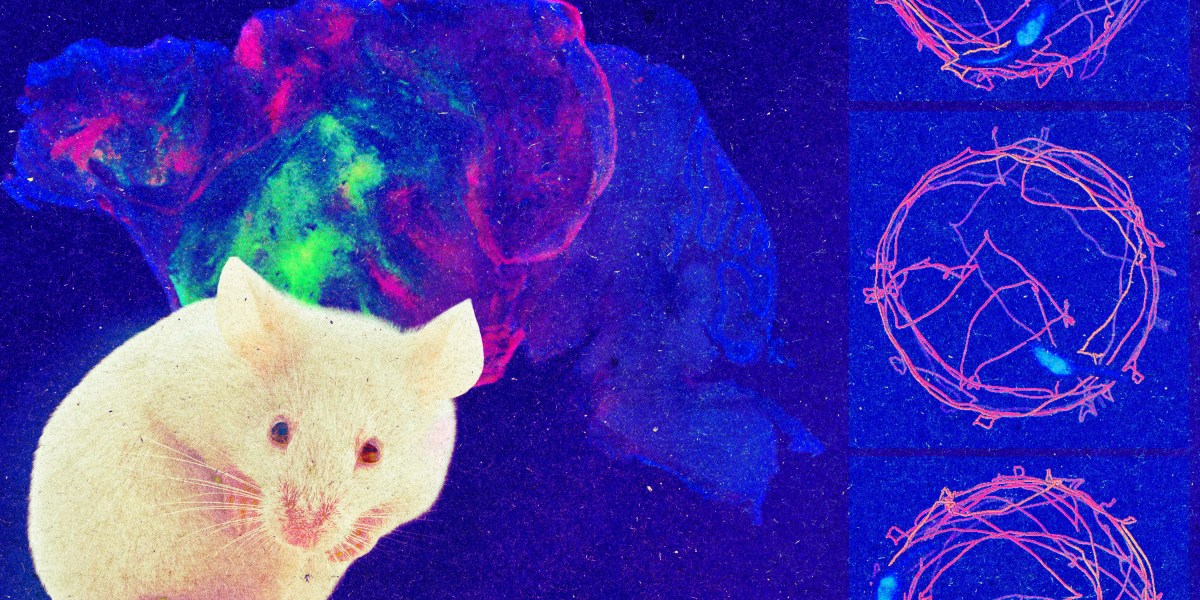
Stanford scientists have successfully transplanted human brain tissue into genetically engineered mice, creating animals with working circuits made partly of human neurons. The human organoids matured into cortex-like structures and restored much of the mice's memory and movement abilities compared to untreated controls, opening a new window into how the human brain develops and responds to injury.
The transplants worked in 25 of 29 attempts, with human tissue eventually filling the space where the mice's cortex and hippocampus had been removed. Researchers say this model could revolutionize the study of brain disorders and drug testing by providing living human neural tissue in a functioning nervous system—something lab dishes cannot fully replicate.
How Scientists Built the Hybrid Mice
Stanford researchers started with human stem cells and exposed them to chemicals for about 40 days, growing them into cerebral-cortex organoids. They then implanted four of these organoids into each newborn mouse that had been engineered to lack most of its cortex and hippocampus. Over three months, the human tissue expanded to fill the empty space left by the missing mouse brain structures.
This design solved a critical problem from earlier attempts. In past studies, mouse or rat neurons outcompeted human cells, making it impossible to separate human effects from rodent effects. By removing the mouse cortex first, scientists gave human neurons room to grow and dominate the space without facing competition.
Human Circuits Restore Memory and Movement
The transplanted human tissue formed functional neural circuits that connected with the mouse's remaining nervous system. In tests, mice that received human organoids showed much better memory performance and improved movement compared to mice with no transplant. Mahoning Matters reports the result suggests human neurons can integrate and work alongside mouse brain cells to restore lost abilities.
These findings demonstrate that human brain tissue can develop and function in a living animal—not just in a lab dish. The restored abilities hint that the xenocortical mice may help researchers understand how human circuits normally form and what goes wrong in disease.
A Tool to Study Brain Injury and Disorders
Researchers used the hybrid mice to model hypoxia—a lack of oxygen to brain cells that occurs around birth and can cause cerebral palsy, autism, and epilepsy. Star-Telegram notes that University of Pennsylvania neuroscientist Hongjun Song called it the first live model using human cells to test these conditions and potential treatments. Previously, scientists could only study such injuries in mice brains, which differ significantly from human brains.
The model could also accelerate drug testing. Instead of relying on human cells in dishes or animal models with non-human brains, researchers can now test medicines on human neural tissue embedded in a functioning nervous system. This could lead to faster discovery of treatments for schizophrenia, epilepsy, and intellectual disabilities.
Sentiment
Mostly NegativeNEGATIVENEUTRALPOSITIVE
Publishers
19
Articles
81
Reach
100
A
AnonymousAuthor


