Normandy Migrant Rescue
About 140 migrants rescued in British waters following long Normandy crossing.
Anonymous
Key Points
1
After being brought ashore, the migrants were expected to be transferred to Manston, the UK’s migrant processing and detention centre.
2
A protest and standoff with police took place near Portsmouth’s Eastney Landing ferry port after occupants of the boat were brought ashore.
3
Isle of Wight East MP Joe Robertson said the incident was worrying because it occurred far from the usual crossing area and said he would urgently seek clarification from the Home Office.
4
UK authorities said 45 additional police officers would be deployed to French beaches in a unit intended to counter larger inflatable boats carrying greater numbers of migrants.
5
Despite a decline in the overall number of boats during the summer, crossings had reached their lowest level since 2019, while smugglers were placing more people on each vessel, according to reporting cited by Sky News.
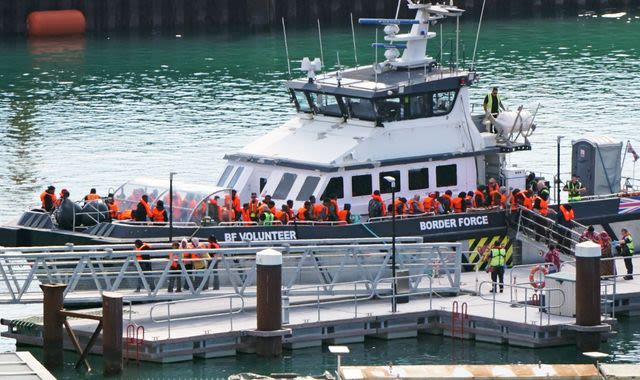
About 140 migrants were rescued from a single inflatable boat in the English Channel after it made an unusually long and dangerous journey from France's Normandy coast. Sky News reported the vessel departed from the Jobourg region, roughly 170 miles from the typical launch points near Calais, forcing the migrants to spend about 10 hours at sea before requesting help in UK waters. RNLI crews from Bembridge and Yarmouth brought them ashore near Portsmouth, with support from HM Coastguard, Border Force, and police.
The rescue comes just days after UK and French leaders announced a crackdown on increasingly large "mega dinghies" carrying record numbers of migrants across the Channel. IBTimes noted that despite overall boat crossings reaching their lowest level since 2019, smugglers are packing far more people onto each vessel, signaling a dangerous shift in tactics that authorities believe may involve launching from more distant locations to avoid detection.
An Unusually Long and Perilous Crossing
The 140 migrants' journey from Normandy stands out as exceptionally dangerous compared to typical Channel crossings. Sky News reported the boat departed from the Jobourg region, placing it 170 miles farther north than usual launch points near Calais. French rescue crews monitored the vessel for approximately 10 hours but determined that stopping it at sea would have posed too great a safety risk. Only after the occupants requested assistance in British waters did RNLI lifeboats move in.
A Protest Erupts After Migrants Reach Portsmouth
After RNLI crews brought the migrants ashore near Portsmouth, tensions flared on the ground. A protest and standoff with police took place at Eastney Landing ferry port, complicating an already complex rescue operation. The migrants were expected to be transferred to Manston, the UK's primary migrant processing and detention facility, for processing and initial assessment.
UK and France Escalate Efforts Against Mega Boats
The incident has alarmed officials on both sides of the Channel. Isle of Wight East MP Joe Robertson expressed concern that the crossing occurred so far from known smuggling routes, signaling that tactics may be shifting. He said he would urgently seek clarification from the Home Office about the implications.
In response, UK authorities announced they will deploy 45 additional police officers to French beaches to counter larger inflatable boats. IBTimes reported that while overall Channel crossings have declined this summer to their lowest level since 2019, smugglers have begun placing significantly more people on each vessel, suggesting an intentional shift toward fewer but larger and more dangerous journeys.
Sentiment
Mostly NegativeNEGATIVENEUTRALPOSITIVE
Publishers
11
Articles
22
Reach
33
Topics
A
AnonymousAuthor


