Anthem Blunder
South Korea Demands Official Apology After Anthem Blunder at Asian Games
Anonymous
Key Points
1
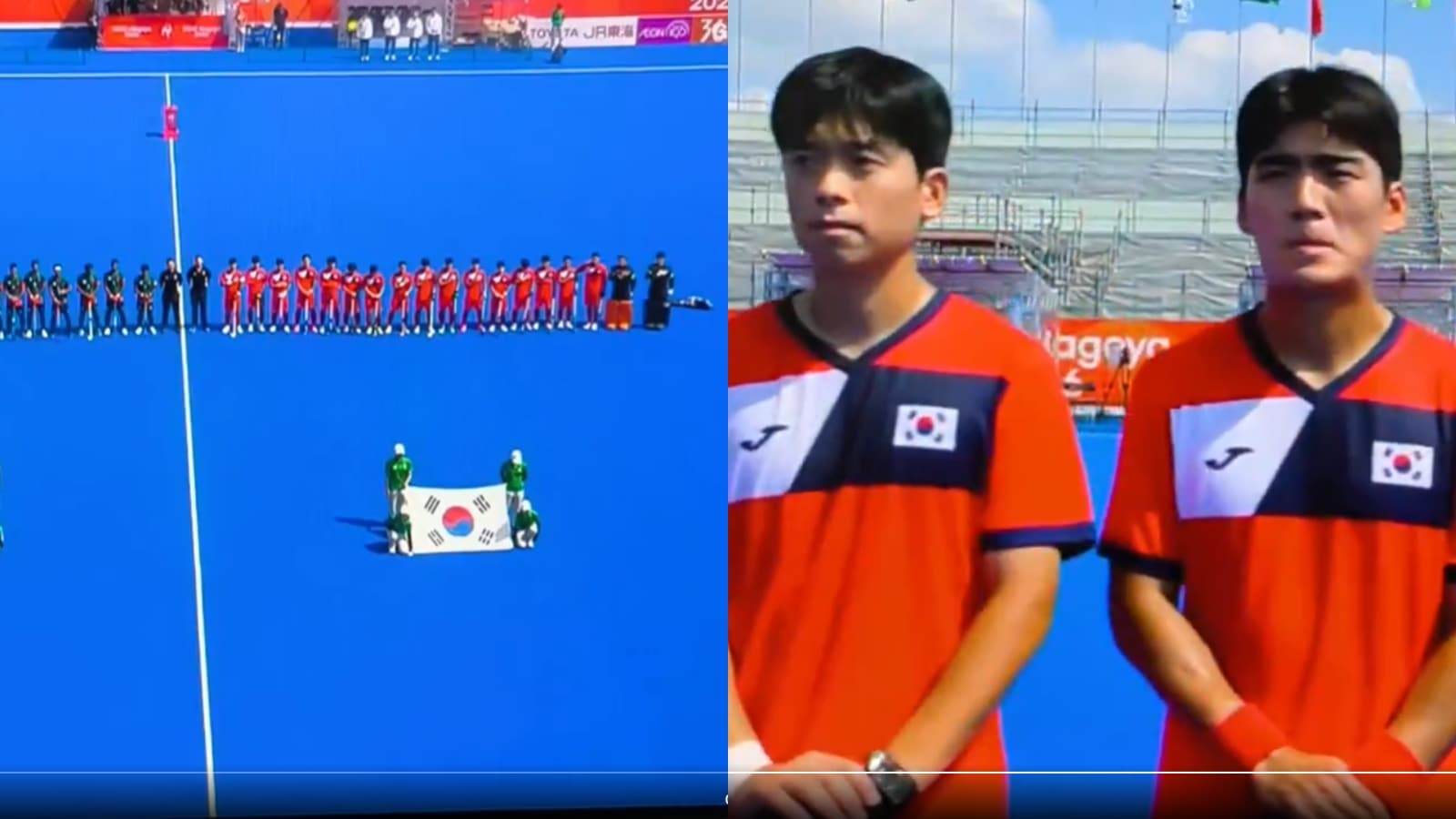
The stadium announcer explicitly apologized, saying, “We are really sorry, terribly sorry. National anthem for the Republic of Korea, we played a different song.”
2
South Korea’s five goals were scored by five different players: Sim Jae-won, Lee Gang-san, Oh Se-yong, Bae Soung-min and Yang Ji-hun.
3
Coach Min Tae-seok said the team had viewed Bangladesh as a potential “dark horse” and deliberately focused on defensive control in the first quarter before becoming more aggressive after halftime.
4
The Games’ accommodation problems included the decision not to build a conventional Athletes’ Village: organizers arranged lodging across facilities including an Italian cruise ship for about 4,000 people and container-style huts at the port for roughly 2,000 athletes and officials.
5
Some teams reportedly faced serious room-allocation problems, including male and female athletes being assigned to shared rooms and groups receiving rooms allocated solely according to numerical capacity rather than practical suitability.
Organizers at the Aichi-Nagoya Asian Games in Japan played North Korea's national anthem before South Korea's men's field hockey match on September 18, sparking an official diplomatic protest. BBC reported that South Korean players stood confused as the wrong anthem blared through Kakamigahara Green Stadium in Gifu. After an immediate apology from the announcer — "We are really sorry, terribly sorry" — organizers replayed Bangladesh's anthem and then South Korea's, though a referee instructed both teams to begin handshakes before the music finished.
South Korea's Olympic committee demanded a formal apology and guarantees the mistake would not happen again. Coach Min Tae-seok called the blunder unacceptable, saying it "simply should never happen." Despite the chaos, South Korea dominated Bangladesh 5-0 in the Group A opener, with five different players each scoring one goal: Sim Jae-won, Lee Gang-san, Oh Se-yong, Bae Soung-min, and Yang Ji-hun.
Why This Matters: North-South Korea Tensions
North and South Korea remain technically at war since the 1953 armistice. Under South Korean law, broadcasting North Korean state symbols is strictly prohibited. Telegraph India noted that players stood bewildered in front of the South Korean flag when the wrong anthem played. The incident struck a raw nerve during an already tense Games.
This was not the first diplomatic friction at the Games. South Korea had already filed complaints about Japanese historical displays during opening ceremonies. The anthem blunder compounded frustrations and overshadowed the event's early days.
A Coach's View: Strategy Amid the Chaos
Coach Min Tae-seok said the team had viewed Bangladesh as a potential "dark horse" in Group A. Sports Tiger reported that South Korea deliberately focused on defensive control in the first quarter, then became more aggressive after halftime. The 5-0 victory showed the strategy worked — five different players scoring one goal each demonstrated balanced attacking play.
Broader Breakdown: Asian Games Plagued by Logistical Chaos
The anthem blunder was just one of many organizational failures. NDTV Sports reported that the Games faced widespread accommodation problems, credentialing delays, and arrival disruptions affecting thousands of athletes. Organizers abandoned the traditional Athletes' Village model to save costs. Instead, about 4,000 people lodged on an Italian cruise ship, while roughly 2,000 stayed in container-style huts at Nagoya Port.
Room allocation became a serious issue. Some teams reported male and female athletes assigned to shared rooms. Others received spaces allocated purely by numerical capacity rather than practical needs. With over 11,000 athletes competing across 16 days, these logistical gaps created stress across the entire Games.
Sentiment
Mostly NegativeNEGATIVENEUTRALPOSITIVE
Publishers
35
Articles
132
Reach
167
A
AnonymousAuthor


