German Plant Closures
Mercedes warns two German plants could close amid high labor costs and fierce resistance.
Anonymous
Key Points
1
Mercedes-Benz said production costs at its Kecskemét plant in Hungary are about 70% lower than in Germany; the Hungarian facility is being expanded to become the company’s largest production site in Europe.
2
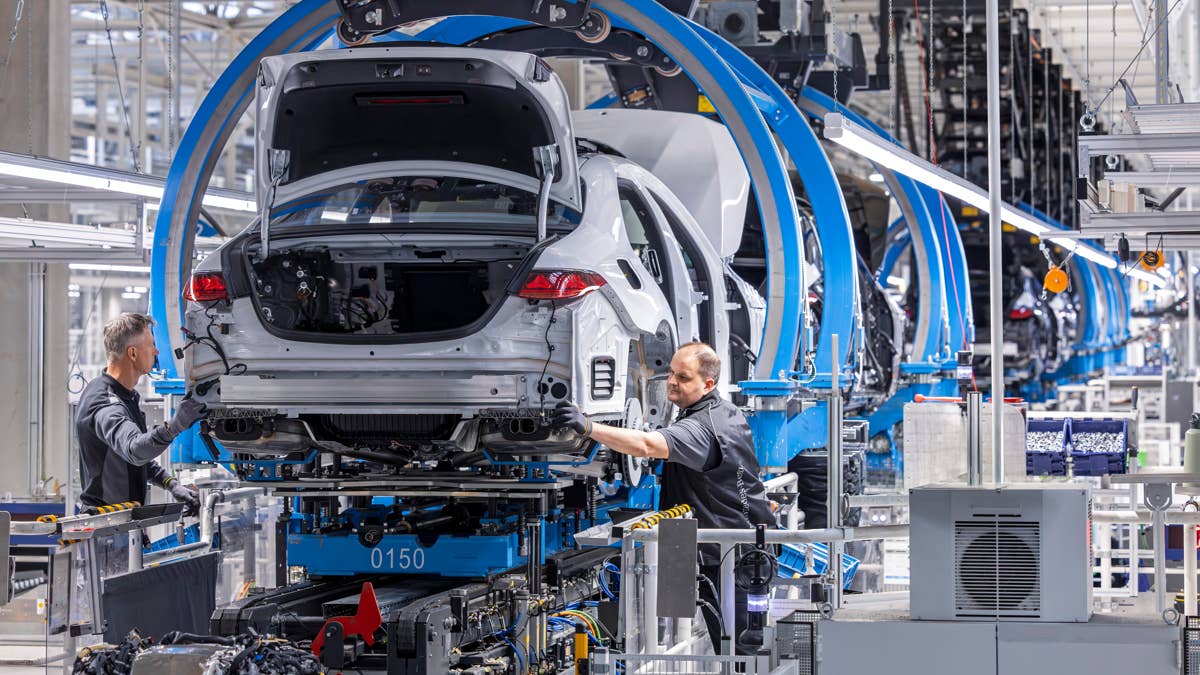
The company’s German manufacturing network includes assembly plants in Sindelfingen, Rastatt and Bremen, while powertrain and component production is carried out at facilities including Untertürkheim, Berlin and Hamburg. The locations potentially facing closure have not been identified.
3
According to a Handelsblatt report cited in the coverage, management is seeking to end the 35-hour workweek and raise weekly working time to 38 hours—changes that would require addressing provisions in the metal and electrical industry’s sector-wide collective agreement.
4
Mercedes said it is negotiating with IG Metall over future salaries and labor costs, with talks scheduled to begin on October 7.
5
The company framed its response as a “production offensive for Germany,” while warning that labor-cost reductions would need to be based on measures acceptable to all sides. The announcement is therefore tied not only to possible closures but also to a broader effort to preserve domestic production.
Mercedes-Benz warned on Monday that it may shut down one German assembly plant and one powertrain facility unless the company can slash costs and boost productivity Autoblog. The automaker cited Germany's high labor costs, shorter workweeks, and lower output per worker compared to its Hungarian plant, where production costs run about 70% lower Motor1. The company has not named which sites face potential closure and stressed its goal is keeping all German operations open.
Mercedes is pushing for longer working hours at the same pay—ending the 35-hour week in favor of 38 hours—to make German plants competitive AutoEvolution. The powerful IG Metall union and works councils are resisting the changes. Tens of thousands of German auto workers have already protested, reflecting deep strain across the country's struggling auto sector.
Hungary's Advantage: 70% Cost Difference
Mercedes' Kecskemét plant in Hungary produces at roughly 70% the cost of German facilities, a gap the company can no longer ignore The Edge Malaysia. The Hungarian site is being expanded to become Mercedes' largest European production hub. This cost disparity underscores why Germany's auto industry is losing ground to Eastern European competitors despite decades of engineering prestige.
Which German Plants Are at Risk?
Mercedes operates three assembly plants in Germany: Sindelfingen, Rastatt, and Bremen Motor1. Powertrain and component facilities are scattered across Untertürkheim, Berlin, and Hamburg. Despite the closure warning, the company has refused to name which assembly or powertrain plant faces the axe. The mystery fuels anxiety among the roughly 130,000 workers employed at German Mercedes sites.
Union Rejects Longer Hours, Same Pay
Management wants to stretch the workweek from 35 to 38 hours without raising pay—a proposal that directly violates the metal industry's sector-wide collective agreement Autoblog. IG Metall has flatly rejected the idea. Wage negotiations are set to begin October 7, and both sides appear far apart on the core issue of labor productivity and cost control.
China Weakness and U.S. Tariff Pressure
The closure threat comes as Mercedes faces a double squeeze: slumping demand in China and rising U.S. tariffs on imports AutoNews. These headwinds make German production—already the world's costliest—even harder to justify. Without quick cost fixes, Mercedes says more plants could follow the two under current review.
Sentiment
Mostly NegativeNEGATIVENEUTRALPOSITIVE
Publishers
16
Articles
25
Reach
41
A
AnonymousAuthor