BP's Strategic Energy Pivot
BP Divests US Biogas Unit Archaea Energy, Pivoting Back to Core Oil and Gas
Anonymous
Key Points
1
BP's Archaea Energy operation focuses on RNG and biogas beyond traditional energy, including dairy digester facilities and landfill gas-to-electric projects; BP also maintains a partnership with Clean Energy Fuels Corp to build anaerobic digestion facilities that convert dairy cow manure into scalable RNG.
2
In the latest quarter, BP reported net debt of about $22.3 billion (down from $25.3 billion in Q1) and impairment charges of roughly $0.8 billion, signaling a tighter balance sheet as it pivots to value-led asset selection.
3
BP's North Sea exit marks the end of decades of regional production, with further divestments including the sale of the Gelsenkirchen refinery and its Austrian retail arm as part of a broad portfolio reduction.
4
The company has an explicit target to complete about $20 billion of asset divestments by the end of 2027, underscoring its shift away from non-core assets toward core oil and gas profitability.
5
Meg O’Neill has reiterated a two-division structure—upstream and downstream—focusing on assets that deliver competitive returns and long-term value rather than sentiment or history.
BP is selling its US biogas unit Archaea Energy, just three years after buying it for $4.1 billion, as the British oil giant accelerates a sweeping retreat from clean energy investments, according to Gasworld. The planned sale marks a sharp reversal on renewables and signals BP's firm pivot back to core oil and gas.
The announcement came alongside a strong set of first-half results. BP posted roughly $5.7 billion in profit, lifted by higher oil prices and volatile energy markets tied to the Middle East conflict, Morningstar reported. Net debt fell to $22.3 billion, down from $25.3 billion in the first quarter.
BP Reverses a $4.1 Billion Biogas Bet
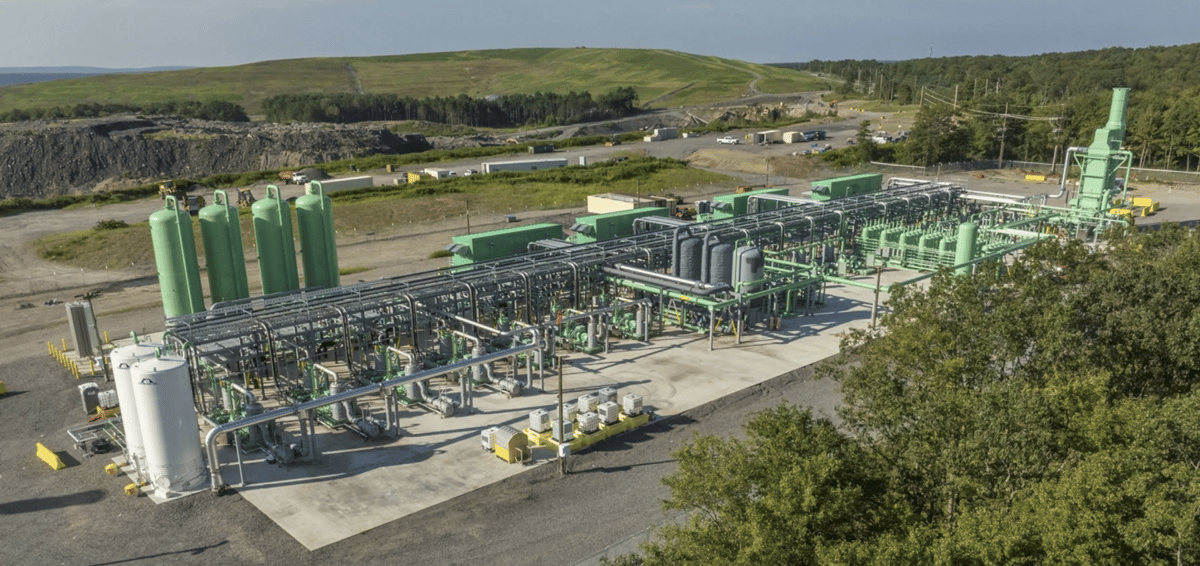
BP bought Archaea Energy in 2022 for $4.1 billion as a centerpiece of its clean energy push. Archaea runs renewable natural gas, or RNG, projects — including dairy digester facilities and landfill gas-to-electric plants. BP also built a partnership with Clean Energy Fuels Corp to convert dairy cow manure into scalable RNG, according to Gasworld.
Now BP wants out. London Insider reported the sale follows BP's full exit from the North Sea — ending decades of regional oil production. CEO Meg O'Neill has said the goal is to shed non-core assets and focus on what actually makes money. Archaea, it seems, no longer fits that list.
Strong Oil Profits Drive the Fossil Fuel Pivot
BP's first-half profit surge was powered by robust oil trading and higher energy prices, with the Middle East conflict adding market volatility that boosted returns, Morningstar reported. The strong results gave BP the financial footing to push ahead with its restructuring without panic.
The company also took impairment charges of roughly $0.8 billion in the quarter — write-downs on assets that are worth less than their book value. Still, the balance sheet improved sharply. Net debt dropped by $3 billion in a single quarter, a sign the leaner strategy is gaining traction, according to Yahoo Finance.
O'Neill's Two-Division Plan to Cut and Simplify
CEO Meg O'Neill is reshaping BP around two divisions: upstream, which covers oil and gas production, and downstream, which covers refining and retail. The idea is to keep only assets that deliver competitive returns, London Insider reported. Everything else is on the table for sale.
BP has set a hard target: $20 billion in asset sales by the end of 2027. Beyond Archaea, the company has already agreed to sell its Gelsenkirchen refinery in Germany and its Austrian retail arm, Morningstar noted. O'Neill has framed the cuts as a move to "simplify the group and improve value" — not a retreat, but a refocus.
A Broader Retreat From Clean Energy Bets
BP's sale of Archaea reflects a wider trend. Several major oil companies have pulled back from renewables after finding that clean energy projects delivered lower returns than traditional oil and gas, according to Market Screener. BP had once promised to cut oil output and lead an energy transition. That vision has been sharply scaled back.
The Archaea exit raises a bigger question: how fast — or slow — should legacy oil giants move toward cleaner energy? For now, BP's answer is clear. Oil trading made money. Biogas did not. And with $22.3 billion in debt still to manage, BP is betting on what it knows best.
Sentiment
Mostly PositiveNEGATIVENEUTRALPOSITIVE
Publishers
18
Articles
29
Reach
47
A
AnonymousAuthor


