BP North Sea Divestment
BP Launches Formal Sale of UK North Sea Assets Amid Portfolio Overhaul and Political Debate
Anonymous
Key Points
1
NSTA reserves and resources data show the UK North Sea still holds substantial potential: 2.9 billion barrels of oil equivalent in proved and probable reserves at end-2024, plus 6.2 billion boe of contingent resources.
2
BP has reorganised the North Sea business from three segments to two as part of its portfolio overhaul to focus on higher-value opportunities.
3
The Clair oilfield is among BP's five North Sea hubs and is highlighted as the largest on the UK continental shelf.
4
BP’s Culzean field stake sale is expected to reduce UK output by about 25,000 boe/d.
5
US President Donald Trump has described the North Sea as a 'treasure chest' the UK should unlock, underscoring cross-border pressure on energy policy.
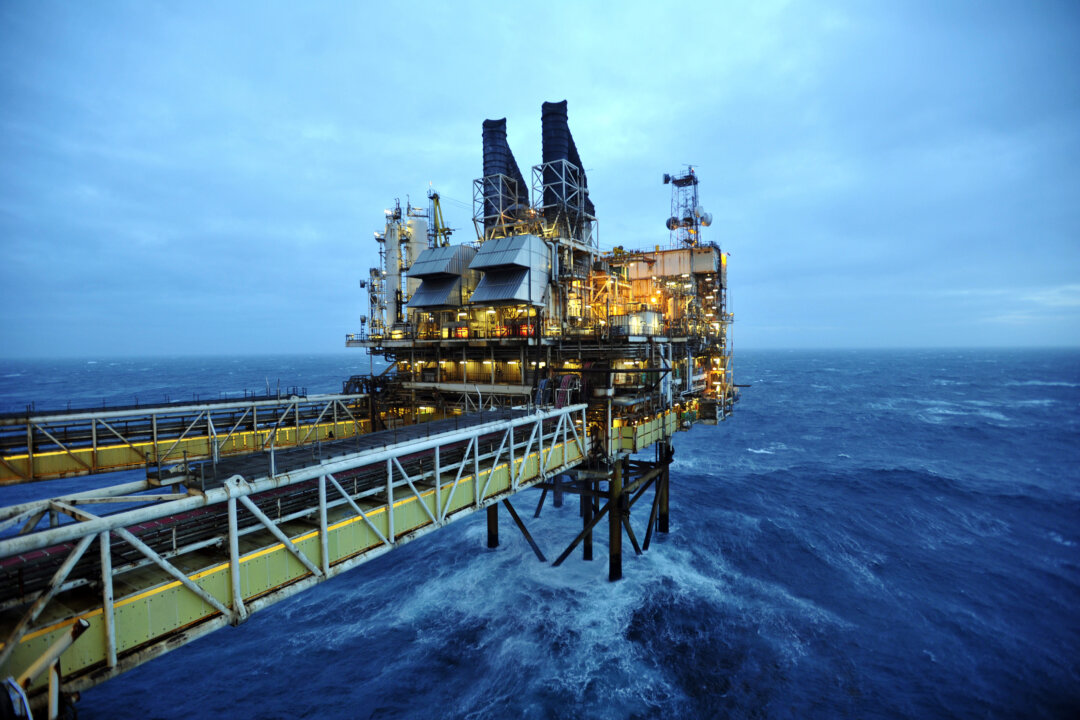
BP formally launched a sale process for its entire UK North Sea business on July 31, 2026, ending 60 years of production in the basin. The move puts roughly 1,100 jobs at risk and marks the exit of the last oil supermajor from British waters, according to Eastern Herald.
CEO Meg O'Neill framed the decision as a capital reset. "The North Sea remains integral to the UK's energy system," she said. "However, as we focus our portfolio and direct capital to our highest-value opportunities, we believe our North Sea business will be better positioned as part of another company." BP's North Sea assets produced 117,000 barrels of oil equivalent per day in 2025, roughly 5% of its global output.
A 78% Tax Rate Drove BP to the Exit
The UK's Energy Profits Levy, introduced in 2022, is the central villain in this story. The Labour government raised it to 38% in late 2024, pushing the total marginal tax rate on North Sea producers to 78%. The government also scrapped the main investment allowance, killing the financial case for reinvesting in aging fields. Daily Record called BP's exit "an alarming wake-up call that cannot be ignored at Holyrood or Westminster."
Industry groups say the policy backfired. Russell Borthwick of the Aberdeen and Grampian Chamber of Commerce was direct: "This decision is another stark reminder that confidence in the UK Continental Shelf has been badly shaken after years of policy uncertainty, punitive taxation and mixed messages." UK upstream capital spending is projected to fall below $3.5 billion in 2026 — its lowest real-term level since the 1970s, according to Wood Mackenzie.
BP's North Sea Portfolio: Five Hubs, Big Liabilities
BP's UK business spans five production hubs, including the Clair oilfield — the largest on the UK continental shelf. The portfolio is valued at between $1.75 billion and $3 billion. But decommissioning liabilities of up to $3 billion add serious complexity to any deal. A prior sale of BP's Culzean gas field stake will already cut UK output by about 25,000 barrels per day before any new buyer takes over.
The basin still holds substantial resources. The North Sea Transition Authority puts UK proved and probable reserves at 2.9 billion barrels of oil equivalent as of end-2024. Contingent resources add another 6.2 billion barrels. Likely bidders include Ithaca Energy and joint ventures backed by Shell and Equinor, or Total. The asset is declining but far from empty.
New PM Burnham Signals Drilling Shift, Trump Piles On
The sale lands in the middle of a political whirlwind. Andy Burnham was sworn in as UK Prime Minister on July 20, 2026, after Keir Starmer resigned. Within days, Burnham told reporters he would take "a pragmatic approach" to North Sea drilling. "There is a resource there. When people are struggling, we can't ignore that," he said, according to Epoch Times.
US President Donald Trump called the North Sea a "treasure chest" and claimed Burnham had agreed to "open it up." Burnham pushed back on that framing but did not rule out new licenses. Energy Secretary Miatta Fahnbulleh said her "priority is ensuring that the workers and local community are protected during this sale process." But BP's departure suggests the market is not waiting for Whitehall to act.
'British Petroleum' Will No Longer Drill in Britain
BP's exit carries a sharp symbolic sting. The company historically known as British Petroleum will produce zero oil or gas in British waters once the sale closes. BP will keep its global headquarters in London and hold on to its trading desk, petrol stations, and EV-charging networks. But its upstream identity is now entirely decoupled from the UK, according to Head Topics.
Greenpeace called the exit proof that fossil fuels are failing. "If the North Sea really were the savior of jobs, opportunity and energy security," campaigner Angharad Hopkinson said, "its biggest beneficiaries wouldn't be heading for the exit." Chris Beauchamp of IG Group called it a "watershed moment," adding that BP clearly decided "waiting around for Whitehall to move is not a prudent use of resources."
Sentiment
Mostly NegativeNEGATIVENEUTRALPOSITIVE
Publishers
44
Articles
365
Reach
409
Topics
A
AnonymousAuthor


