Naval Collision Protest
India Lodges Strong Protest After Pakistani Naval Vessel Collides in Arabian Sea
Anonymous
Key Points
1
The collision occurred on Tuesday evening, according to Indian government sources; the Ministry of External Affairs said the incident took place the previous night in the Arabian Sea.
2
India’s protest specifically asked Pakistan’s chargé d’affaires to convey the matter to the concerned Pakistani authorities, with the stated aim of preventing any repeat of such incidents.
3
India’s chargé d’affaires in Islamabad was instructed to lodge the reciprocal protest directly with Pakistan’s Ministry of Foreign Affairs.
4
Indian government sources characterized the Pakistani vessel’s approach as involving both high speed and unsafe manoeuvring before the collision, while reporting that no damage had been recorded.
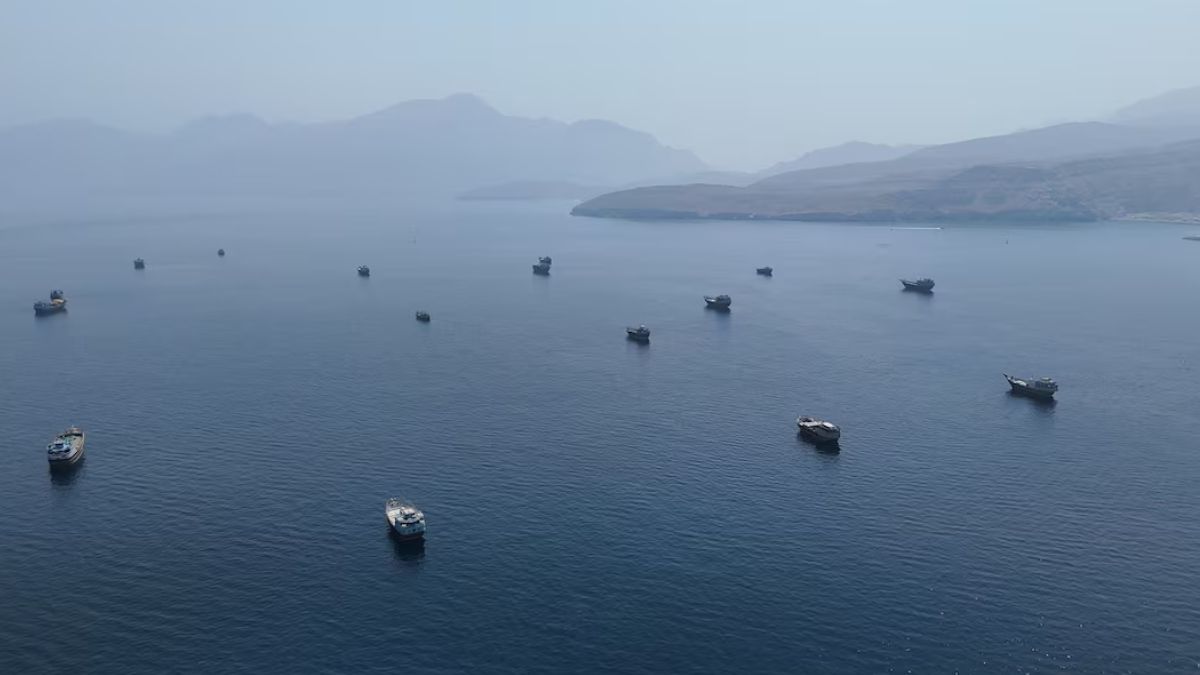
India summoned Pakistan's diplomatic representative on September 16 after a Pakistani naval vessel collided with an Indian Navy ship in the North Arabian Sea the previous evening. Financial Express reported that India called the Pakistani conduct "unacceptable and unprofessional," saying the Pakistani ship approached at high speed and maneuvered unsafely before the collision. No major damage was reported on the Indian warship.
India lodged a formal protest citing Article 10 of a 1991 bilateral agreement requiring naval vessels to maintain at least three nautical miles of separation in international waters. Business Standard confirmed the incident occurred Tuesday evening in international waters, while India instructed its envoy in Islamabad to file a parallel protest. Pakistan had not publicly responded as of September 16.
High-Speed Approach Sparked the Collision
The Pakistani patrol vessel *PNS Hunain* closed in on an Indian Navy warship conducting routine surveillance when the unsafe maneuvering began. Defense sources said the Pakistani ship cut across the Indian vessel's bow at high speed and brushed against it before the collision. The Print reported that the Indian warship broadcast repeated safety warnings over maritime radio Channel 16 before impact, warnings that went unheeded.
The Indian Navy was operating in international waters conducting standard peacetime operations when the encounter occurred on Tuesday evening. Business Standard noted that defense sources described the Pakistani approach as involving both dangerous speed and unsafe maneuvering that violated basic maritime safety protocols. The incident left no structural damage or personnel injuries on the Indian vessel.
India Invokes 1991 Safety Treaty With Formal Protests
The Indian Ministry of External Affairs specifically cited Article 10 of the April 1991 bilateral agreement between India and Pakistan. This article requires naval vessels and submarines to maintain a minimum separation of three nautical miles in international waters. OpIndia reported that India summoned Pakistan's Chargé d'Affaires Saad Ahmad Warraich to lodge the protest and instruct him to notify concerned Pakistani authorities.
India's approach emphasized legal accountability through bilateral frameworks rather than military escalation. ABP Live stated that India also instructed its own Chargé d'Affaires in Islamabad to file a reciprocal protest directly with Pakistan's Ministry of Foreign Affairs. The dual diplomatic action stressed the need for all military units to exercise due care and respect relevant maritime agreements.
Pakistan Silent While Tensions Remain High
As of September 16, Pakistan's government and military had not issued any public statement about the collision. The silence leaves unclear whether Islamabad will characterize the incident as a navigation accident, routine monitoring, or deny responsibility altogether. Defense analysts noted this marks the second dangerous close encounter between Pakistani and Indian naval ships in the Arabian Sea within six months.
Indian security commentators emphasized that while routine maritime tracking is standard, reckless high-speed maneuvering violates international collision prevention rules and bilateral safety protocols. ABP Live reported heightened surveillance and defensive readiness expected across the North Arabian Sea near critical shipping routes. The incident underscores escalating tensions between the two nuclear-armed nations in contested waters.
Sentiment
Mostly NegativeNEGATIVENEUTRALPOSITIVE
Publishers
64
Articles
105
Reach
169
A
AnonymousAuthor