UN Assembly Diplomacy
Global Leaders Gather at UN General Assembly Amid Rising Regional Tensions
Anonymous
Key Points
1
The 81st U.N. General Assembly’s official theme is “Restoring Trust, Managing Transformation: A United Nations That Delivers for All.” The high-level debate is scheduled to run from Sept. 22 to 26, with a final sitting on Sept. 28.
2
Pakistan’s Deputy Prime Minister and Foreign Minister Ishaq Dar met France’s Foreign Minister Jean-Noël Barrot in New York to discuss bilateral ties, including trade, investment, education and people-to-people exchanges. They also stressed keeping Palestine high on the international agenda and supported efforts toward a two-state solution.
3
During the Pakistan-France talks, the two sides emphasized the importance of implementing the Islamabad Memorandum of Understanding, maintaining the safety and free flow of maritime traffic, and protecting uninterrupted energy supplies amid the Iran crisis.
4
Pakistan’s prime minister is also expected to raise climate change, sustainable development, counterterrorism, Islamophobia and global economic challenges in his U.N. address, alongside the conflicts and security issues highlighted in the summary.
5
Kuwait’s Crown Prince Sheikh Sabah Khaled Al-Hamad Al-Sabah arrived at John F. Kennedy International Airport accompanied by an official delegation and was received by Kuwait’s foreign minister, its ambassador to the United States and its permanent representative to the United Nations.
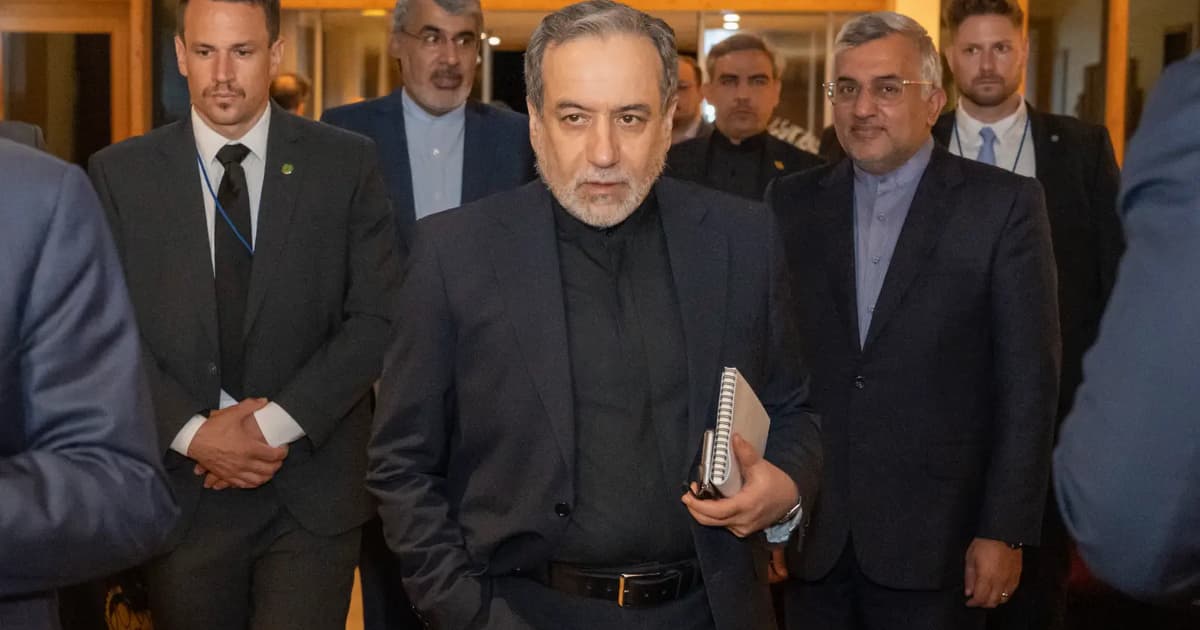
World leaders are converging on New York this week for the 81st United Nations General Assembly's high-level debate, with delegations from Iran, Pakistan, Saudi Arabia, Kuwait, and Zambia arriving amid escalating Middle East tensions. 24 News HD reported that Iran's Foreign Minister Abbas Araghchi has arrived to lead Tehran's delegation, while the US has restricted visas for some Iranian officials and warned of sanctions that could effectively shut down Iranian airlines. The five-day debate, running September 22–26, comes under the theme "Restoring Trust, Managing Transformation: A United Nations That Delivers for All."
Pakistan's Prime Minister Shehbaz Sharif plans to address maritime security, the Strait of Hormuz, Palestine, Kashmir, and regional mediation efforts, while Foreign Minister Ishaq Dar has already begun bilateral talks in New York. The Frontier Post confirmed that Iran's delegation is the highest-ranking representation Tehran has sent in recent years. Britain is now providing Saudi Arabia limited defensive support, including Royal Air Force air-to-air refueling, following intensified Houthi attacks on the Gulf region.
Pakistan and France Align on Maritime Security and Diplomacy
Pakistan's Deputy Prime Minister and Foreign Minister Ishaq Dar met France's Foreign Minister Jean-Noël Barrot in New York on September 21 to discuss trade, investment, and people-to-people exchanges. The two countries stressed keeping Palestine on the international agenda and supporting a two-state solution. Both sides emphasized the critical importance of maintaining safe maritime traffic and protecting uninterrupted energy supplies amid the Iran crisis, specifically through the Islamabad Memorandum of Understanding framework governing the Strait of Hormuz.
Pakistan's Prime Minister plans to raise additional global challenges in his UN address, including climate change, sustainable development, counterterrorism, Islamophobia, and economic hardship facing developing nations. Pakistan aims to position itself as a mediator among major powers while protecting its own security interests in the region.
Iran's Highest-Level UN Presence Faces Western Pressure
Iran's President Masoud Pezeshkian and Foreign Minister Abbas Araghchi are attending the assembly despite US visa restrictions on other delegation members. The United States has warned that additional sanctions could effectively shut down Iranian airlines, while Iraq said it would enforce these measures. Free Malaysia Today confirmed that Araghchi's arrival marks the highest-ranking Iranian representation at recent UN gatherings, signaling Tehran's commitment to diplomatic engagement despite American pressure.
The dual attendance of Iran's president and foreign minister underscores Tehran's determination to defend its position on the nuclear crisis and regional conflicts. However, US restrictions on visas and threatened airline sanctions aim to limit Iran's diplomatic reach and isolate the country economically.
Gulf States Emphasize Stability and Defensive Cooperation
Saudi Arabia and Kuwait are leading coordinated delegations focused on regional stability and multilateral action. Kuwait's Crown Prince Sheikh Sabah Khaled Al-Hamad Al-Sabah arrived at JFK Airport with an official delegation and was received by Kuwait's foreign minister, ambassador to the US, and UN permanent representative. Saudi Arabia's Foreign Minister Prince Faisal bin Farhan is heading his country's delegation with emphasis on economic cooperation and security coordination among GCC member states.
Britain's decision to provide Saudi Arabia limited defensive support—including Royal Air Force air-to-air refueling capability—reflects growing Western military backing for the kingdom against Houthi attacks. This escalation signals heightened concern about maritime security in the Red Sea and Arabian Peninsula, where Houthi forces have intensified strikes on shipping and Gulf infrastructure.
Zambia Pushes for Human Rights Council Seat and Regional Voice
Zambia's Foreign Minister Mulambo Haimbe is representing President Hakainde Hichilemo at the assembly, where he will highlight peace, democracy, and human rights. Zambia is bidding for a seat on the UN Human Rights Council for the 2027–2029 term. CAJ News Africa reported that political analyst Brian Polombwe described Zambia's bid as coming at a "critical juncture," as scrutiny from the European Parliament, UN, and Commonwealth has strained the country's international standing in recent months.
Zambia's push for the Human Rights Council seat reflects Africa's broader effort to secure a stronger voice in global governance bodies. The country's focus on democracy and peace comes amid regional instability in southern Africa and global geopolitical fragmentation that has paralyzed the UN Security Council on major issues.
Sentiment
Mostly NegativeNEGATIVENEUTRALPOSITIVE
Publishers
40
Articles
38
Reach
78
A
AnonymousAuthor


