Shenzhen Urban Index
Shenzhen Bureau Unveils Urban Index Suite Globally for Sustainable Urban Development Assessment
Anonymous
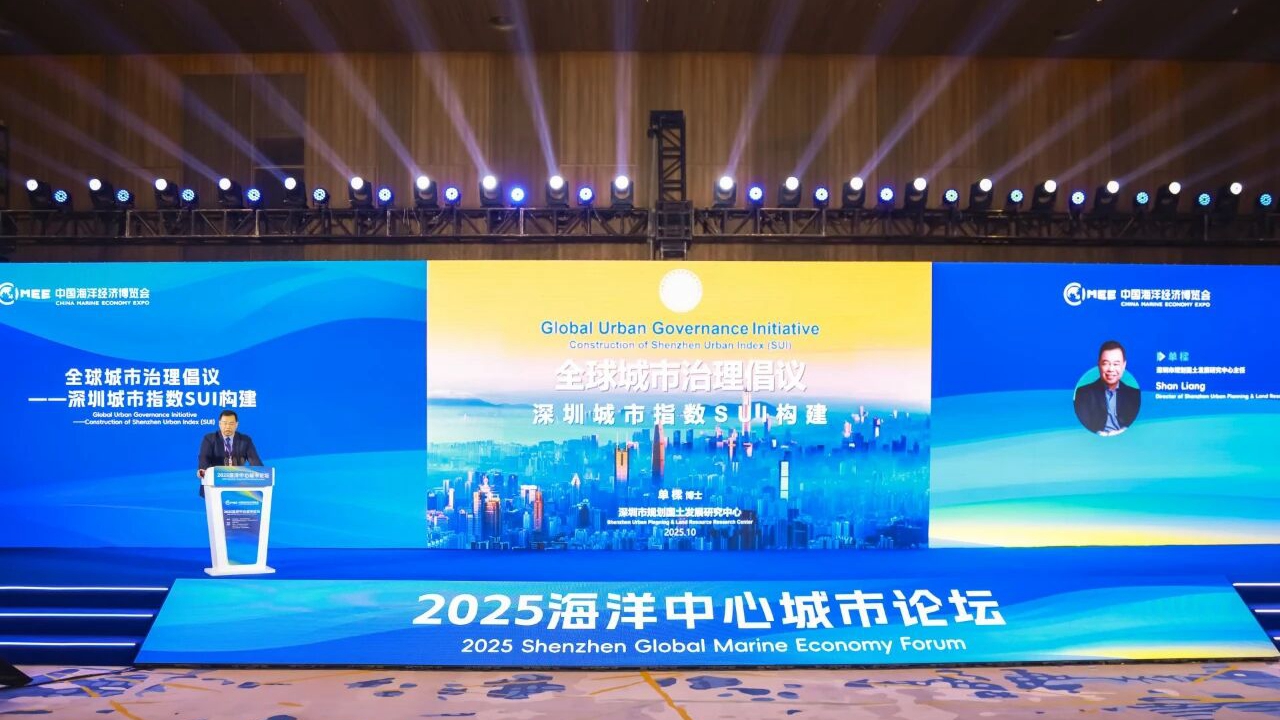
Shenzhen launched a new global urban benchmarking tool on July 28, 2026, called the Urban Index of Shenzhen, or UIS. The index aims to give cities around the world a scientific way to measure and improve how they develop, according to The Whig.
The launch was backed by China's Ministry of Natural Resources and the Shenzhen Municipal People's Government. The debut product suite includes two flagship research reports, a monthly monitoring bulletin, a bilingual website, and an official WeChat account, Chatham Daily News reported.
Six Dimensions Drive Shenzhen's New Urban Framework
The UIS puts human well-being at the center of how it judges a city. It scores cities across six key dimensions, though officials have not yet published the full list of those categories. The goal is to move beyond simple economic measures like GDP and look at cities more completely, according to Stratford Beacon Herald.
The framework is designed to be scientific and systematic. It is meant to work as a reference tool for urban leaders making governance decisions. Officials say the index supports what they call high-quality and sustainable urban development, Owen Sound Sun Times reported.
China Positions Shenzhen as a Global City Governance Model
The launch signals China's push to export its urban planning ideas on a world stage. Shenzhen, once a small fishing village, grew into a city of over 17 million people in roughly 40 years. Officials are now using that rapid growth story to frame Shenzhen as a model for cities in developing nations, Fort McMurray Today reported.
The event was co-organized by four government bodies, showing strong political backing at both the city and national level. The Ministry of Natural Resources — a cabinet-level body in Beijing — was directly involved. That level of support suggests China views the UIS as more than a local report.
Bilingual Website and WeChat Account Extend Global Reach
The UIS product suite was built to reach audiences both inside and outside China. The official website is bilingual, meaning it runs in both Chinese and English. A WeChat account was also launched to distribute monthly monitoring bulletins, according to Daily Herald Tribune.
Monthly bulletins are a key part of the suite. They are designed to give city planners regular data updates, not just a once-a-year report. That cadence makes the UIS more like a live dashboard than a traditional academic study, Northern News reported.
What the UIS Means for Global Urban Policy Debates
Global urban ranking tools already exist. The UN, World Bank, and groups like the Economist Intelligence Unit all publish city indexes. The UIS enters a crowded field and will need to prove its methods are independent and transparent to gain credibility outside China, The Sudbury Star reported.
Still, Shenzhen's story is hard to ignore. The city built its subway, tech sector, and skyscrapers faster than almost any city in history. If the UIS can translate that experience into usable data for other cities, planners in Africa, Southeast Asia, and Latin America may take notice, according to Cold Lake Sun.
Sentiment
NeutralNEGATIVENEUTRALPOSITIVE
Publishers
16
Articles
16
Reach
16
A
AnonymousAuthor


