Jingdezhen: World Heritage Porcelain
Jingdezhen porcelain industry sites earn UNESCO World Heritage status for global cultural impact
Anonymous
Key Points
1
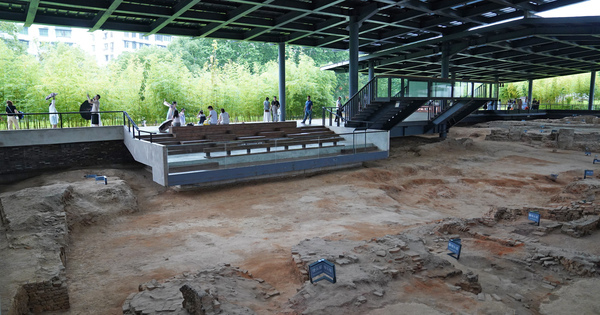
The Jingdezhen inscription spotlights the Taoyangli Historical and Cultural Block, with a kiln site showcased within this block as part of the UNESCO World Heritage designation coverage.
2
UNESCO’s recognition frames Jingdezhen pottery as a living tradition organized around 72 traditional processes, tracing the journey from shaping kaolin clay to the final firing and highlighting how the craft connected civilizations globally.
3
The site comprises five named zones, including the town center porcelain production district, Hutian ancient kiln site, Gaoling porcelain clay mining site, Changling porcelain stone mining site, and Jiaotan firewood production area.
4
Changling features a 10-kilometer stone vein; Jianxi riverbank docks handled fuel shipments for the kilns, and raw materials and fuel moved via the Donghe and Changjiang river systems to the production center downstream, illustrating Jingdezhen’s integrated pre-industrial logistics network.
UNESCO has added China's Jingdezhen Handicraft Porcelain Industry Sites to its World Heritage List, bringing China's total to 61 recognized sites. The decision came during the 48th session of the World Heritage Committee, held in Busan, South Korea, according to Xinhua via InKunming.
The inscription marks the first time a complete handicraft porcelain production system has received global heritage recognition, according to Global Times. Jingdezhen, located in China's Jiangxi province, has been a center of porcelain-making for nearly a thousand years.
Five Zones Covering 1,979 Hectares of Porcelain History
The inscribed site spans 1,979 hectares across five distinct zones. Each zone covers a different stage of the porcelain-making process. The five areas are: the town center production district, the Hutian ancient kiln site, the Gaoling porcelain clay mining site, the Changling porcelain stone mining site, and the Jiaotan firewood production area, according to Global Times.
The Taoyangli Historical and Cultural Block sits within the town center zone. A kiln site inside this block is part of the UNESCO coverage. Together, the five zones tell the full story of how raw earth became fine porcelain, from digging clay to firing finished pieces, as Beijing Bulletin reported.
A 10-Kilometer Stone Vein and River Logistics Network
Changling, one of the five zones, features a stone vein stretching 10 kilometers. Workers quarried porcelain stone there for centuries. That raw material then traveled downstream via the Donghe and Changjiang river systems to reach the kilns in the production center, according to Shanghai News.
Fuel for the kilns moved the same way. Docks along the Jianxi riverbank handled shipments of firewood from the Jiaotan area. The entire supply chain — mining, transport, fuel, and firing — ran as one connected system. This pre-industrial logistics network is a key reason UNESCO gave the site its designation, according to Global Times.
72 Traditional Processes That Connected Civilizations
UNESCO's recognition centers on Jingdezhen's 72 traditional production steps. The process starts with shaping kaolin clay and ends with a final firing in the kiln. Kiln districts in the city operated without pause for nine centuries, according to China National News.
The inscription frames Jingdezhen porcelain as more than a craft. UNESCO sees it as a global bridge between cultures. Chinese porcelain moved along trade routes to Europe, the Middle East, and Africa, carrying artistic ideas in both directions. The site preserves the full chain of production, not just the finished wares, Global Times reported.
China's 61st World Heritage Site Celebrated in Busan
Chinese delegates at the Busan ceremony celebrated the decision with visible pride. The inscription pushes China's total to 61 World Heritage sites, one of the highest counts of any country. Beijing Bulletin reported that the recognition underscores Jingdezhen's enduring place in world craftsmanship.
Officials called the site a living tradition, not just a relic. The 72 production processes are still practiced today. UNESCO's recognition is expected to boost efforts to protect and pass on these skills to future generations, according to Shanghai News.
Sentiment
Mostly PositiveNEGATIVENEUTRALPOSITIVE
Publishers
14
Articles
32
Reach
46
A
AnonymousAuthor


