Alibaba Plans Data Centers Across Europe, Middle East
Alibaba Plans Data Centers Across Europe, Middle East
Anonymous
Key Points
1
Alibaba Cloud’s Paris region has two availability zones and brings the company’s network to 105 availability zones across 32 regions, offering computing, storage, networking and developer services tailored to European businesses.
2
Alibaba Cloud plans to roll out specific European enterprise AI tools later in 2026, including AgentRun, STAROps and AI Security Guardrails 2.0, aimed at developing and deploying AI agents with stronger security controls.
3
Alibaba has committed $52.7 billion to its cloud business, while its Cloud Intelligence Group reported $4.662 billion in first-quarter 2026 revenue, up 26% year over year; AI-related revenue had grown at triple-digit rates for eight consecutive quarters.
4
China’s inland data-center locations, including Inner Mongolia, Ningxia, Gansu and Guizhou, are attractive because of cheaper land, cooler climates and access to renewable energy, which can help reduce operating costs.
5
The AI infrastructure race is also influencing China’s technology workforce: Jack Zhang of the University of Science and Technology of China said fewer students and researchers are going to the United States and more are returning to China amid tensions with the U.S. and restrictions associated with President Donald Trump’s administration.
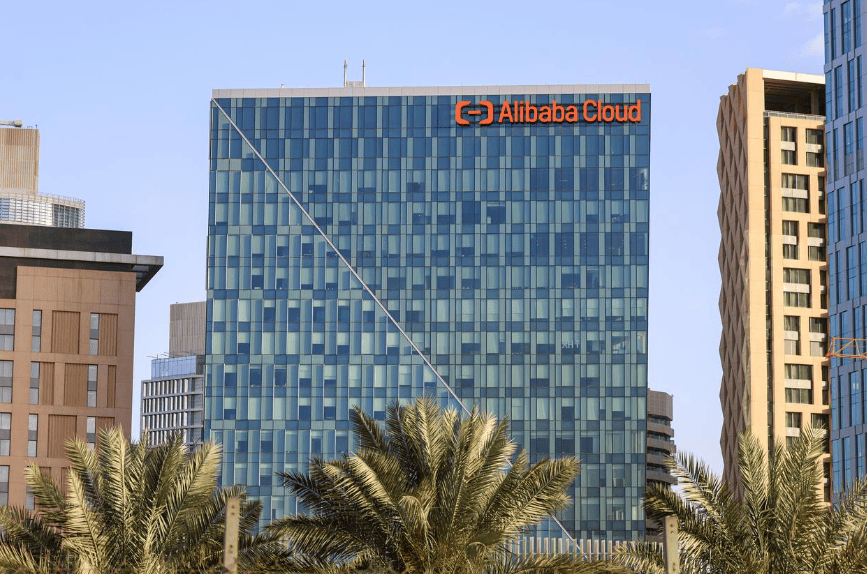
Alibaba is racing to build cloud data centers across Europe and the Middle East as China battles the United States for dominance in artificial intelligence. The Chinese tech giant plans to launch its first cloud regions in Turkey, Finland, and the Netherlands within the next year, Quartz reported, adding to its Paris region that opened in June 2026.
The expansion reflects China's broader push to control AI infrastructure and talent. Alibaba Cloud now operates 105 availability zones across 32 regions worldwide, and the company is rolling out new AI tools in Europe later this year while China builds massive inland data centers to cut costs and fuel AI development.
Paris Region Opens With 105 Global Zones
Alibaba Cloud's Paris region launched in June 2026 with two availability zones, bringing the company's total network to 105 availability zones across 32 regions worldwide, Fierce Network reported. The infrastructure offers European businesses computing, storage, networking and developer services tailored to local regulations and data sovereignty needs.
The expansion supports stricter European data laws that require companies to keep customer information within the region. Alibaba's push into Turkey, Finland, and the Netherlands follows this same playbook—localized cloud infrastructure that meets compliance requirements while supporting AI development.
New AI Tools Launching for European Businesses
Alibaba Cloud plans to introduce three enterprise AI tools across Europe in 2026: AgentRun, STAROps, and AI Security Guardrails 2.0. These tools are designed to help businesses develop and deploy AI agents with stronger security controls, addressing growing concerns about data protection and AI safety in regulated markets.
The company has committed $52.7 billion to its cloud business overall. In the first quarter of 2026, Alibaba's Cloud Intelligence Group reported $4.662 billion in revenue, up 26% year over year, with AI-related revenue growing at triple-digit rates for eight consecutive quarters.
China's Inland Data Centers Race Ahead on Cost
While Alibaba expands globally, China is simultaneously building massive AI data centers inland in regions like Inner Mongolia, Ningxia, Gansu, and Guizhou. These locations offer cheaper land, cooler climates, and access to renewable energy that dramatically reduce operating costs compared to coastal cities.
China's officials aim to integrate AI across 90% of industries and society by 2030, Capital FM Africa noted, though these ambitious projects have raised concerns about energy and water consumption. The infrastructure buildout is also reshaping China's tech workforce, with fewer students and researchers moving to the United States and more returning home as tensions escalate with the Trump administration.
Sentiment
Mostly PositiveNEGATIVENEUTRALPOSITIVE
Publishers
17
Articles
18
Reach
35
Topics
A
AnonymousAuthor


