Nepal Mountain Collapse Disaster
Climate and geological factors fueled Nepal's catastrophic mountain collapse and deadly floods.
Anonymous
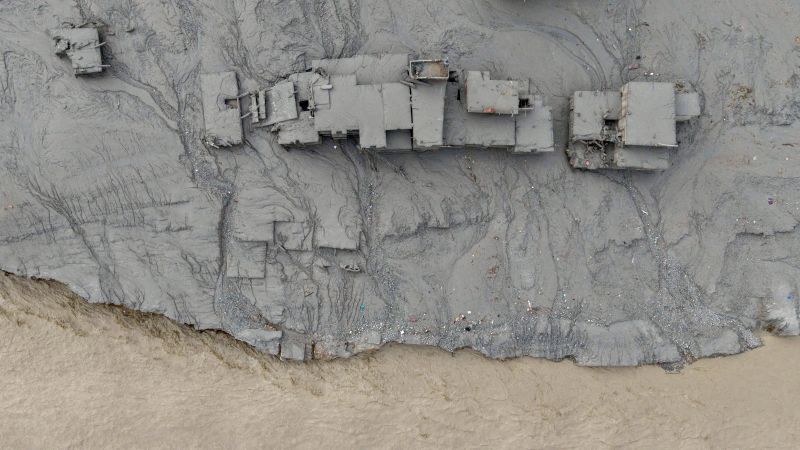
An international analysis found that the catastrophic Aug. 26 collapse of rock and glacier ice from Nepal’s Langtang Lirung mountain was caused not by a single extreme-weather event but by a cascade of climate and geological factors. About 110–116 million cubic meters of material plunged roughly 1,400 meters, generating an impact equivalent to a magnitude-5.2 earthquake and triggering destructive flash floods across the Nepal-China border. Scientists said unusually high temperatures, glacier thinning, permafrost thaw, excess meltwater and possibly damage from Nepal’s 2015 earthquake weakened the mountain slope, with human-driven warming playing a clear role in the disaster’s preconditioning. The floods destroyed communities and infrastructure, killed at least 1,300 people and left more than 5,000 missing, while researchers warned that events of this scale are extremely rare and increasingly difficult to protect against as the Himalayas warm.
Key Points
1
The resulting flood wave traveled more than 20 miles downstream at speeds exceeding 110 mph, melting ice on impact and carrying sediment, boulders and debris through the valleys.
2
Scientists identified unusually heavy snowfall in late 2025—during a period that is typically very dry—as an additional source of meltwater that may have contributed to the collapse.
3
The initial mountain failure was estimated at roughly 116 million cubic meters, about five times the volume of the comparable 2021 Chamoli mountain collapse and flood in India; researchers called its scale unprecedented in the Himalayas.
4
The disaster’s economic losses were estimated at approximately $5 billion, with damage extending beyond homes and transport links to farms, orchards and energy infrastructure.
5
The World Weather Attribution report used peer-reviewed attribution methods but had not itself yet undergone peer review; its authors warned that the event showed that the limits of adaptation are already being reached.
Sentiment
Mostly NegativeNEGATIVENEUTRALPOSITIVE
Publishers
6
Articles
16
Reach
22
A
AnonymousAuthor


