Global Glacier Melt Crisis
Satellite Assessments Reveal Rapid Global Ice Loss Raising Sea-Level and Flood Risks
Anonymous
Key Points
1
The polar assessment combined 42 independent satellite surveys from 27 missions and extended the Greenland record to 1972 using early Landsat velocity measurements; it incorporated altimetry, gravimetry and ice input-output estimates to calculate mass changes.
2
Greenland contributed more to global sea-level rise than Antarctica over the study period, while Antarctica alone accounted for an estimated 13.3 millimetres of rise.
3
The Hindu Kush-Himalaya spans eight countries, from Afghanistan to Myanmar, and the region’s glaciers support an economic system extending beyond India’s water supply: although the Himalayas cover about 18% of India’s land, they account for roughly 35% of the country’s natural disasters.
4
Mount Ağrı’s ice cap in eastern Türkiye has shrunk from about 15 square kilometres to 5 square kilometres, while its glacial valleys have retreated to roughly 4,900 metres from 3,600 metres in the early 1900s, prompting warnings of mudflows.
5
Mount Ağrı has a documented history of glacier-related disasters: a mudflow in 1840 destroyed Ahura village, and later glacial mudslides and meltwater floods occurred in 2021 and 2026. Researchers are calling for systematic satellite monitoring and field surveys of Türkiye’s glaciated mountains.
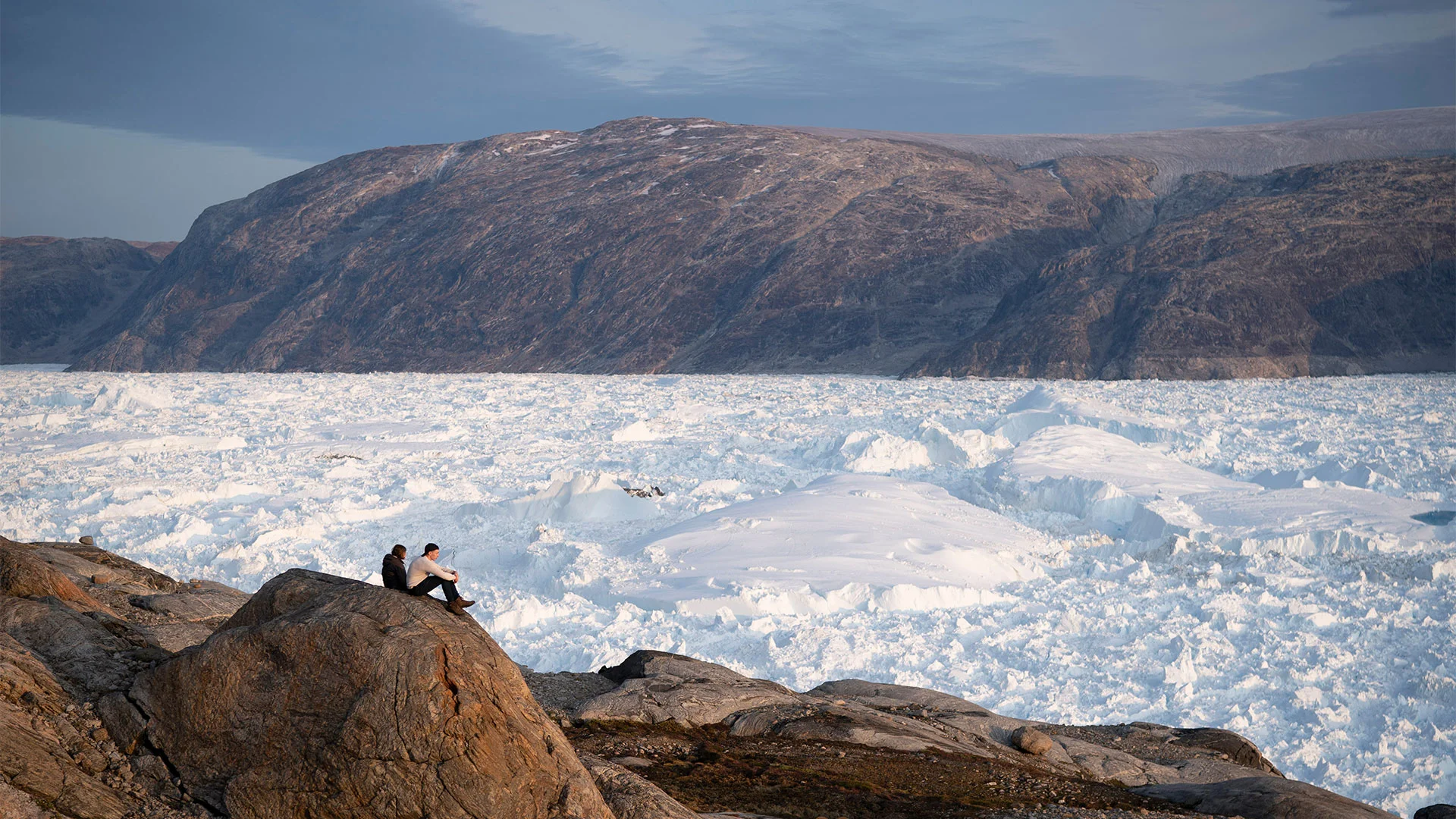
Greenland and Antarctica lost an estimated 11.3 trillion tonnes of ice between 1979 and 2023, raising global sea levels by 31.4 millimetres, according to EurekAlert. About 84% of this loss came from faster-flowing glaciers rather than surface melting. Separately, Himalayan glaciers are losing mass 65% faster than a decade ago and could reach 'peak water' by mid-century, threatening water and food security for hundreds of millions across South Asia.
Polar Ice Sheets Accelerate Sea-Level Rise
A landmark satellite study combined 42 independent surveys from 27 missions to measure ice loss across the poles over nearly 45 years, EurekAlert reported. Greenland contributed more to sea-level rise than Antarctica during this period, with Greenland accounting for 18.1 millimetres and Antarctica for 13.3 millimetres. Researchers led by Dr. Inès Otosaka at Northumbria University found that warming ocean waters are eroding ice sheet edges from beneath, Asharq Al-Awsat noted.
Himalayan Glaciers Face 'Peak Water' Crisis by 2050
Himalayan glaciers are melting at an accelerating pace, losing mass 65% faster than a decade ago, according to Down To Earth. These glaciers feed major river basins serving more than 2 billion people across South Asia. By mid-century, glacial melt will peak and then decline, cutting freshwater supplies for irrigation, drinking water and hydropower that support economies equivalent to over 20% of India's GDP.
India alone has identified nearly 200 high-risk glacial lakes, with 56 rated as very high risk, Systemiq Report stated. Yet only 21 of an estimated 40,000 Himalayan glaciers are closely monitored. Retreating ice, expanding lakes and weakening slopes are creating conditions for catastrophic floods and landslides.
Nepal-Tibet Glacial Disaster Kills More Than 1,300
An ice-rock avalanche on August 26, 2026, dislodged 142 million cubic metres of material from Langtang Lirung peak on the Nepal-Tibet border, Down To Earth reported. The impact triggered a magnitude 5.2 seismic event and sent a massive flash flood downstream. More than 1,300 people died and thousands remain missing in what scientists and civil society experts say reflects decades of delayed climate action and reckless mountain development.
Turkey's Mount Ağrı Shows Dramatic Glacial Retreat
Mount Ağrı's ice cap in eastern Turkey has shrunk from about 15 square kilometres to just 5 square kilometres, while its glacial valleys have retreated to roughly 4,900 metres from 3,600 metres in the early 1900s, Hürriyet Daily News reported. A July 2026 German-Turkish scientific expedition conducted the first detailed survey of the 5,050-metre summit glacier. Just days later, melting ice triggered mud floods on the mountain.
Mount Ağrı has a documented history of glacier disasters. A mudflow in 1840 destroyed Ahura village, killing 1,300 to 1,700 people. Recent mudslides and meltwater floods occurred in 2021 and 2026. Prof. Faruk Kaya at Ağrı İbrahim Çeçen University is calling for systematic satellite monitoring and field surveys of Turkey's glaciated mountains to prevent future catastrophes.
Sentiment
Mostly NegativeNEGATIVENEUTRALPOSITIVE
Publishers
41
Articles
237
Reach
278
A
AnonymousAuthor


