Robotic Space Rescue Fails
Failed NASA-backed rescue mission ends as robotic spacecraft re-enters Earth's atmosphere.
Anonymous
Key Points
1
The Sun’s intense flare-ups accelerated Swift’s orbital decay, prompting NASA to suspend observations early in 2026 and reposition the telescope to reduce atmospheric drag while it awaited the rescue attempt.
2
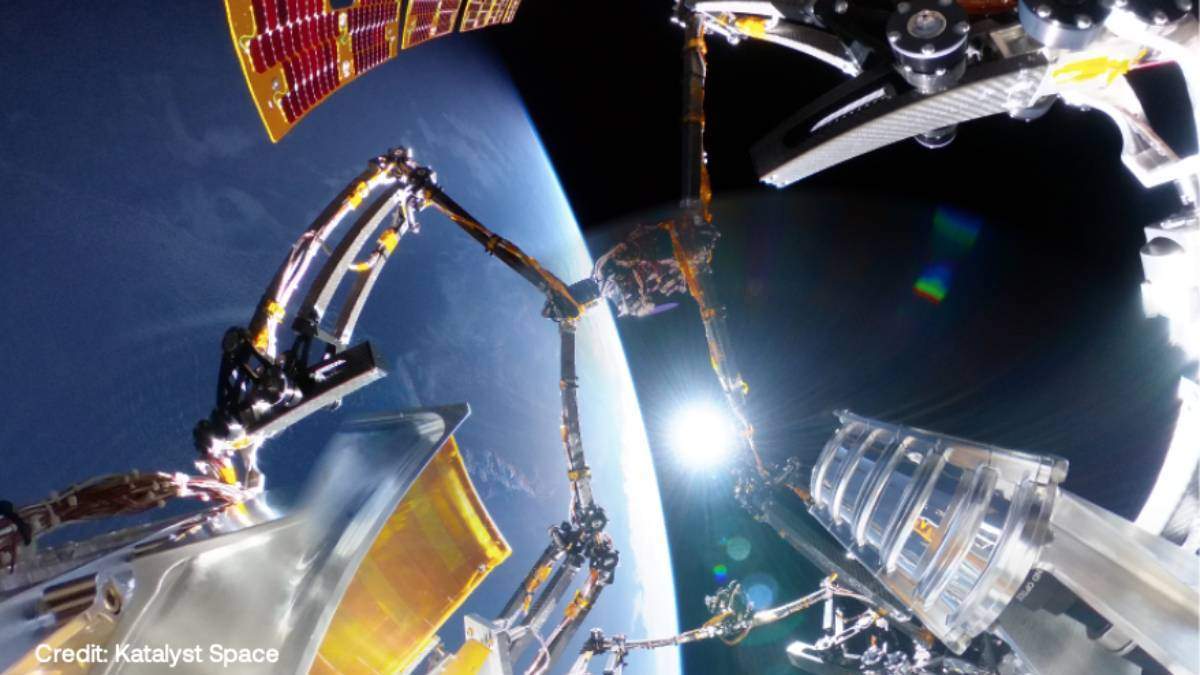
After the rescue was abandoned, Katalyst used Link’s remaining time to practice operating its three robotic arms, each about 3 feet long and fitted with a handlike gripper.
3
Katalyst CEO Ghonhee Lee said the mission created a foundation for future work: “in less than a year we went from mission concept to launching and operating the first commercial space robot.”
4
Link launched from Kwajalein Atoll in the South Pacific on July 3 and spent 85 days in orbit before re-entering.
Katalyst Space Technologies' robotic spacecraft Link re-entered Earth's atmosphere Friday, ending a $30 million NASA-backed mission to rescue the aging Neil Gehrels Swift Observatory. iHeart reported that Link launched on July 3 and operated for 85 days in orbit before burning up on re-entry. Technical failures — including two disabled reaction wheels and a faulty valve — prevented Link from completing its capture of Swift.
Link managed to approach Swift to within 7–9 miles but lacked fuel to finish the rescue. NASA suspended Swift's observations and adjusted its orbit to buy time before the telescope re-enters in early November. Despite the failure, NASA said the effort provided valuable experience for future satellite-servicing missions.
Sun's Flares Accelerated Orbital Decay
Swift's orbit has been decaying faster than expected due to intense solar activity. The Sun's flare-ups in 2025 and 2026 increased atmospheric drag at the telescope's altitude. NASA responded by suspending observations early in 2026 and repositioning Swift to reduce atmospheric drag. This bought the mission time to attempt the rescue before the satellite's inevitable plunge.
Technical Failures Doomed the Rescue Attempt
Link encountered critical problems during its mission. Electronic failures disabled two of its three reaction wheels, which stabilize the spacecraft in orbit. A faulty valve caused Link to spin wildly, disrupting communications. The spacecraft regained control and navigated close to Swift — just 7–9 miles away — but couldn't proceed with the capture.
Link ran out of fuel before completing the rescue. Mission controllers called off the attempt in August after analyzing the remaining propellant. The spacecraft then spent its final weeks in orbit performing other tests before burning up during re-entry.
Robotic Arms Tested for Future Missions
After the rescue was abandoned, Katalyst used Link's remaining time to test its three robotic arms. Each arm measures about 3 feet long and includes a handlike gripper for grasping satellites. These tests gathered critical data on robotic servicing in space. The experience will inform the design of future satellite-repair vehicles.
Katalyst CEO Ghonhee Lee emphasized the mission's value despite its outcome: "in less than a year we went from mission concept to launching and operating the first commercial space robot." Lee framed the effort as proof that commercial companies can build and operate complex spacecraft. The experience paves the way for follow-up missions to extend the lives of other aging satellites.
Swift Observatory Set to Fall in Early November
The Neil Gehrels Swift Observatory will re-enter Earth's atmosphere in early November, ending its 22-year mission in orbit. Swift has studied gamma-ray bursts and other high-energy phenomena since 2004. Its uncontrolled re-entry poses a small but real risk to populated areas on Earth. NASA adjusted Swift's orbit to reduce that risk by steering it over less populated regions.
Sentiment
Mostly NegativeNEGATIVENEUTRALPOSITIVE
Publishers
12
Articles
322
Reach
334
A
AnonymousAuthor


