Telescope Fuel Efficiency Extended
NASA says its new space telescope has enough fuel to operate for twenty-two years.
Anonymous
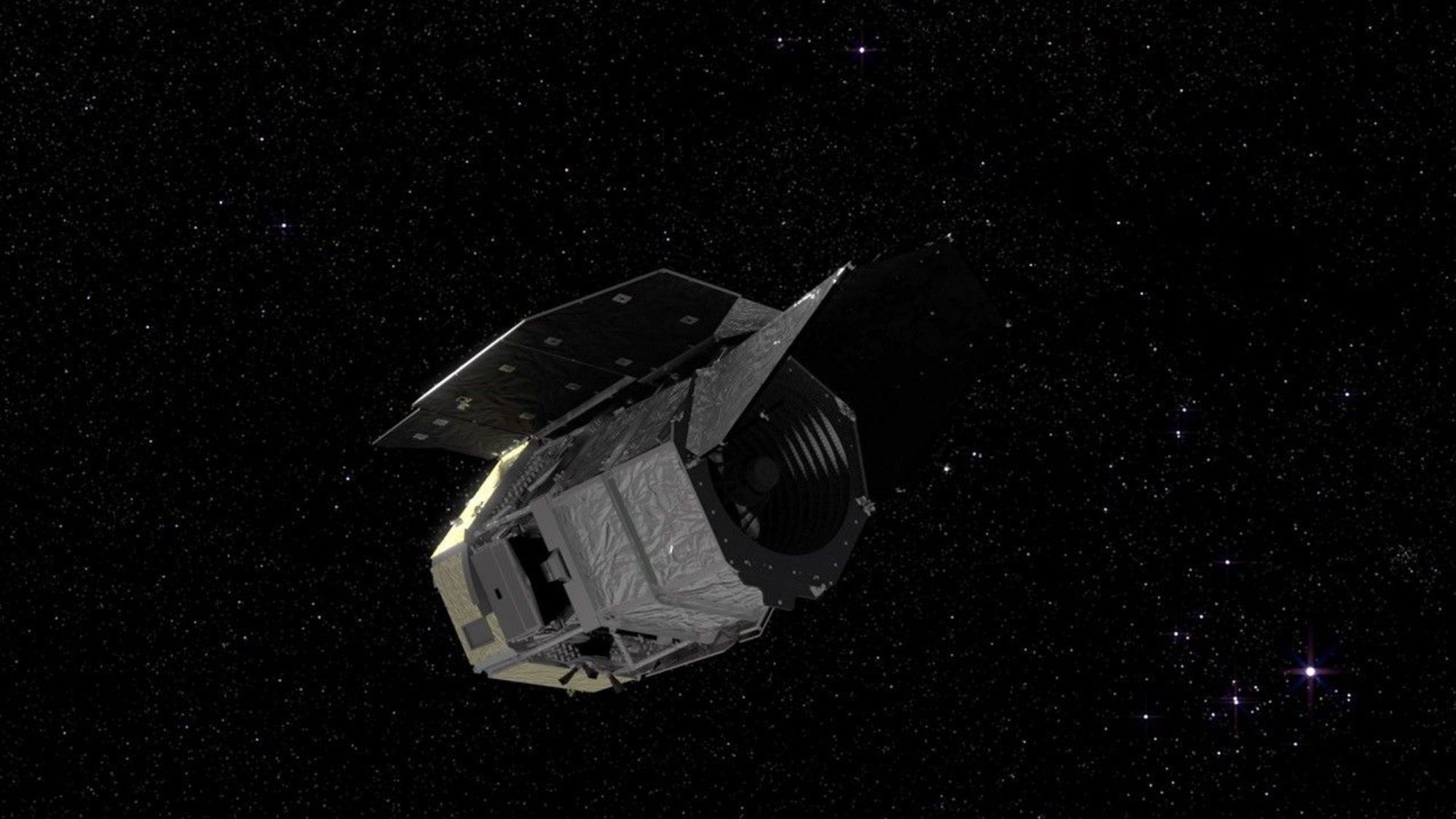
NASA says its Nancy Grace Roman Space Telescope has enough fuel for at least 22 years of science operations, more than twice the mission’s original 10-year design target. The observatory launched aboard a SpaceX Falcon Heavy on Aug. 30 and is traveling to the Sun-Earth L2 point, where it will study dark energy and dark matter, survey galaxies and search for exoplanets. Its first course-correction maneuver used about 18 kilograms of propellant, compared with roughly 200 kilograms budgeted, after engineers executed the burn with more than 99% accuracy. Roman also launched significantly lighter than its maximum design mass, allowing NASA to fill its propellant tanks to capacity. The extended lifespan will give scientists substantially more time to conduct observations, although the final duration will depend on spacecraft performance and mission funding.
Key Points
1
Roman is expected to reach its final orbit around the Sun-Earth L2 point roughly 100 days after launch, in early December. At L2, about 1.5 million kilometers from Earth, the Sun and Earth remain on the same side of the spacecraft, helping it maintain a relatively stable observing position.
2
Once it reaches L2, Roman will require station-keeping maneuvers approximately every 28 days to counteract small gravitational and radiation forces that could otherwise push it away from its orbit.
3
The Aug. 31 course-correction maneuver alone is estimated to have preserved enough fuel for roughly four additional years of operations.
4
Unlike Hubble, Roman cannot be serviced by astronauts with current technology because of its remote location at L2; the propellant loaded before launch is therefore expected to be all it will ever have.
5
Roman’s first science observations are expected before the end of 2026, after it completes its cruise and settles into its operational orbit.
Sentiment
Mostly PositiveNEGATIVENEUTRALPOSITIVE
Publishers
5
Articles
5
Reach
10
A
AnonymousAuthor


