Bacteria Clears Textile Dyes
IIT Researchers Develop Bacteria-Based Treatment for Safe Textile Wastewater Disposal
Anonymous
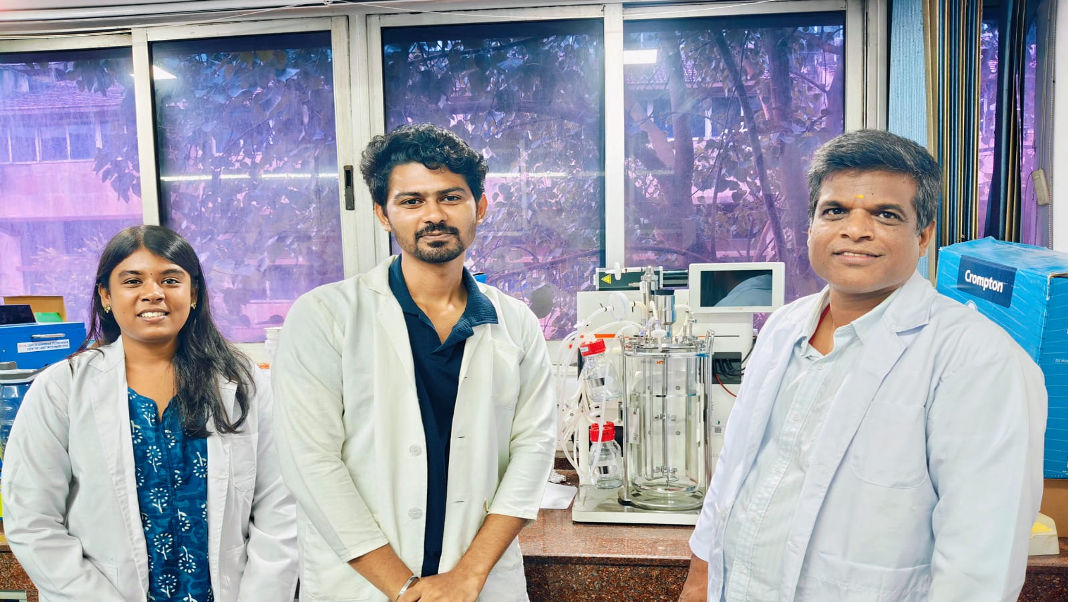
Researchers at IIT Guwahati and Banaras Hindu University have developed a biological method for treating textile wastewater containing toxic azo dyes. The bacterium Brevundimonas sp. AJZ05, isolated from a textile effluent site, degraded 98.5% of the synthetic dye Direct Blue-6 under optimized laboratory conditions. The bacterium produces azoreductase, an enzyme that breaks the dye’s stable azo bond, and testing found the resulting degradation products to be non-toxic. The findings, published in Environmental Geochemistry and Health, could support lower-energy alternatives or supplements to conventional chemical treatment, which may generate secondary pollutants and can remove color without eliminating toxicity.
Key Points
1
Using statistical multi-objective optimisation based on Response Surface Methodology, the researchers simultaneously optimised dye degradation and azoreductase production; under the optimised conditions, azoreductase activity reached 0.761 U/mL.
2
The study was supported by India’s Ministry of Education through the Prime Minister’s Research Fellowship, with additional support from the Department of Chemical Engineering and Technology at IIT Varanasi.
3
The research may have particular relevance for industrial wastewater management in India’s Northeast, where the IIT Guwahati-based work could inform biological alternatives to chemical-intensive treatment.
4
Researchers emphasised that the study went beyond measuring colour removal by analysing the metabolites formed during degradation, an important distinction because wastewater can look cleaner while still containing harmful compounds.
Sentiment
Mostly PositiveNEGATIVENEUTRALPOSITIVE
Publishers
8
Articles
1
Reach
9
Topics
A
AnonymousAuthor


