Redefining Indian Medical Delivery
Air India, SkyDrive, Suzuki Partner to Study eVTOL Medical Logistics for India
Anonymous
Key Points
1
SkyDrive has demonstrated remotely piloted eVTOL operations in Tokyo and is targeting a 2028 commercial launch for its aircraft.
2
SkyDrive recently became the first company in Japan's eVTOL sector to receive Approved Design Organisation (ADO) certification from the Japan Civil Aviation Bureau (JCAB).
3
Suzuki's Indian presence is longstanding, with Maruti Suzuki dominating the domestic automotive sector, which supports manufacturing scale and supply-chain readiness for the eVTOL project.
4
The MoU to study eVTOL medical logistics in India was announced on July 31, 2026, formalizing the collaboration.
5
Air India's Head of Cargo, Ramesh Mamidala, described advanced air mobility as a natural extension of India's transport ecosystem and highlighted the airline's role in enabling safe, reliable eVTOL operations through regulatory navigation and airport integration.
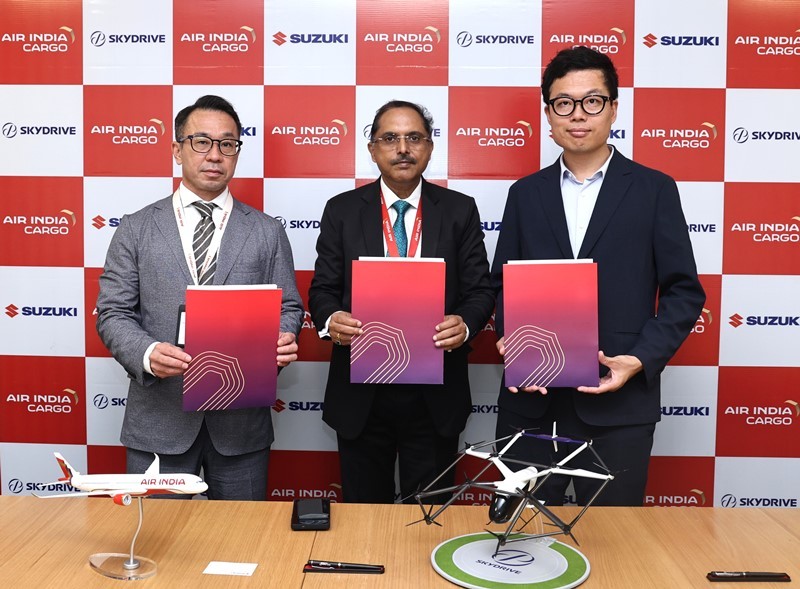
Air India, SkyDrive Inc., and Suzuki Motor Corporation signed a memorandum of understanding on July 31, 2026, to study whether electric vertical take-off and landing aircraft — known as eVTOLs — can deliver time-critical medical supplies across India's congested cities, according to Market Screener. The deal targets shipments like blood, organs, medicines, and diagnostic samples, where every minute counts.
India's urban traffic is so severe that traditional ground transport routinely fails emergency logistics. The three partners aim to find out if eVTOLs can fix that, according to Aviation Jeta.
Why India Needs Flying Medical Couriers Now
India's major cities face some of the worst traffic congestion in the world. Ground ambulances and couriers can lose precious hours stuck in gridlock. That delay can cost lives when cargo is a donor organ or emergency blood supply. The MoU specifically targets this last-mile problem, aiming to cut transit times in urban centers, according to NE Herald.
The study also aligns with India's National Air Space 2026 guidelines, which set rules for advanced air mobility. Meeting those rules is essential before any commercial eVTOL flights can begin. Air India's Head of Cargo, Ramesh Mamidala, called advanced air mobility "a natural extension of India's transport ecosystem," according to Drone Life.
SkyDrive's Tech Edge and 2028 Commercial Target
SkyDrive brings the core eVTOL technology to the table. The Japanese company has already run remotely piloted eVTOL flights over Tokyo. It recently became the first eVTOL firm in Japan to receive Approved Design Organisation certification from the Japan Civil Aviation Bureau, according to Aviation Jeta. That certification shows the aircraft design meets strict safety standards.
SkyDrive is aiming for a full commercial launch of its aircraft by 2028. The Indian medical logistics study fits that timeline, giving the company a real-world proving ground for its technology before mass deployment, according to Drone Life.
What Each Partner Brings to the Deal
The three companies split distinct roles. SkyDrive supplies the eVTOL aircraft and its certified design. Air India handles regulatory navigation and integration with existing airport infrastructure. Mamidala highlighted the airline's ability to enable "safe, reliable eVTOL operations" through its established aviation relationships, according to Market Screener.
Suzuki's role leans on its deep roots in India. Through Maruti Suzuki, the company dominates the Indian automotive market. That presence gives the project manufacturing scale and a ready supply chain — both key to building and maintaining eVTOL fleets at affordable cost, according to NE Herald.
What Comes Next If the Study Succeeds
The MoU is a feasibility study, not a done deal. The partners must first prove the concept is safe, scalable, and cost-effective before any aircraft takes flight with medical cargo. Success would mean integrating eVTOLs into India's wider medical logistics network, according to Aviation Jeta.
If it works, the impact could stretch far beyond India. A proven model for eVTOL medical delivery in one of the world's most chaotic urban environments could position India as a hub for advanced air mobility across South Asia, according to Drone Life.
Sentiment
Mostly PositiveNEGATIVENEUTRALPOSITIVE
Publishers
14
Articles
27
Reach
41
Topics
A
AnonymousAuthor