New Brown Dwarf Discoveries
James Webb Space Telescope Discovers Tiny Brown Dwarfs Challenging Star Formation
Anonymous
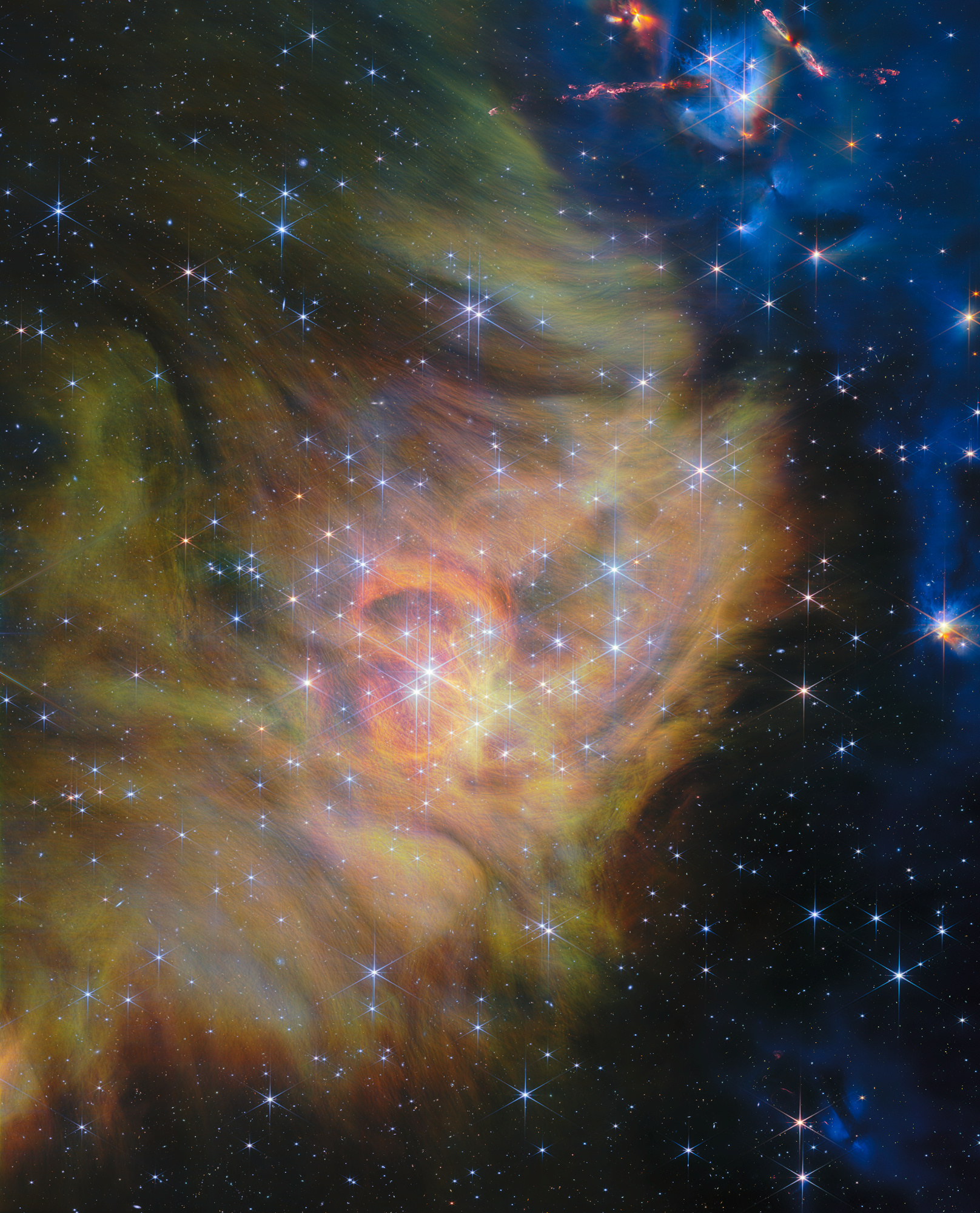
NASA’s James Webb Space Telescope has identified brown dwarfs in the star-forming region IC 348 with masses as low as twice that of Jupiter, extending observations of these objects into a previously unexplored range. Located about 1,000 light-years away in Perseus, IC 348 is a stellar nursery where collapsing clouds of molecular gas produce stars and substellar objects. Brown dwarfs form like stars but lack enough mass to sustain ordinary hydrogen fusion, making the new discoveries important for understanding the lower limit of star formation and the boundary between planets and stars. Webb’s observations also captured young stars launching energetic jets into surrounding gas and dust, providing a detailed view of the region’s dynamic environment.
Key Points
1
The research builds on Webb observations from 2022, when the team had identified brown dwarfs with masses of roughly three to four times Jupiter; the latest observations pushed below that threshold.
2
The team used Webb’s Near-Infrared Camera (NIRCam) in 2024 to probe deeper into IC 348 and search for still-smaller brown dwarfs.
3
The smallest stars have about 8% of the Sun’s mass; below that threshold, brown dwarfs cannot sustain ordinary hydrogen-to-helium fusion, although many can briefly fuse deuterium early in their lives.
4
The newly released IC 348 view is described as one of the largest images of its kind released by Webb to date, combining the search for faint brown dwarfs with a broad view of the surrounding star-forming environment.
Sentiment
Mostly PositiveNEGATIVENEUTRALPOSITIVE
Publishers
7
Articles
4
Reach
11
A
AnonymousAuthor


