NSUI’s Meena Leads DUSU Presidency After Tenth Round
NSUI’s Meena Leads DUSU Presidency After Tenth Round
Anonymous
Key Points
1
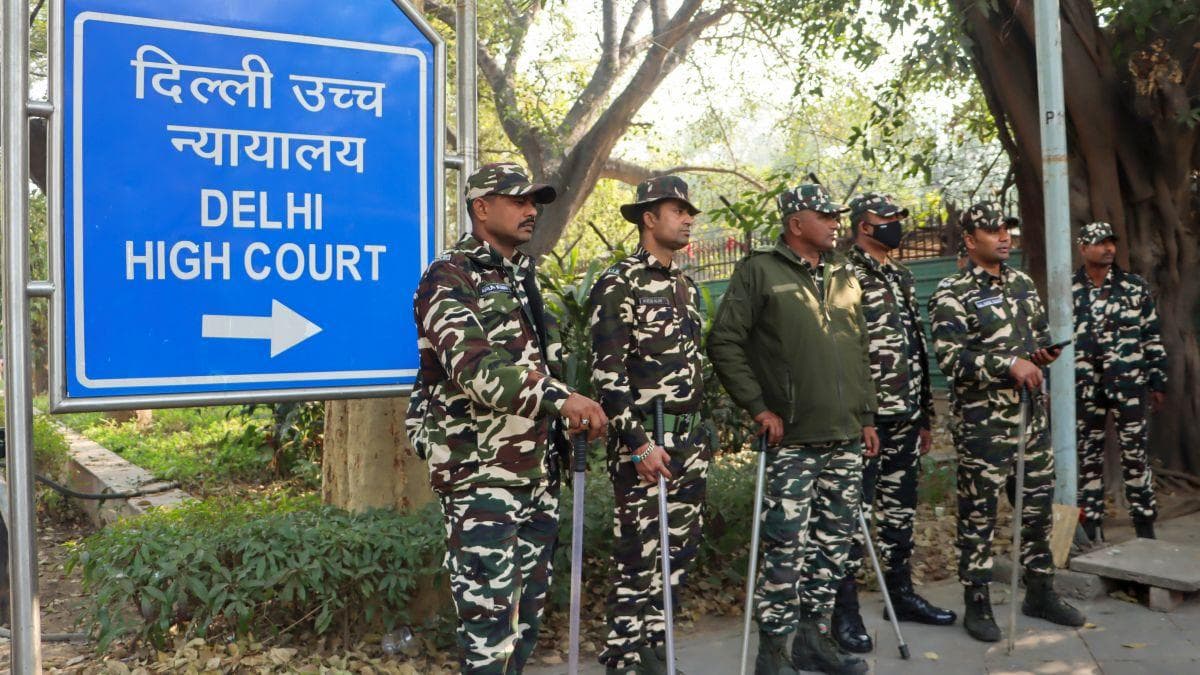
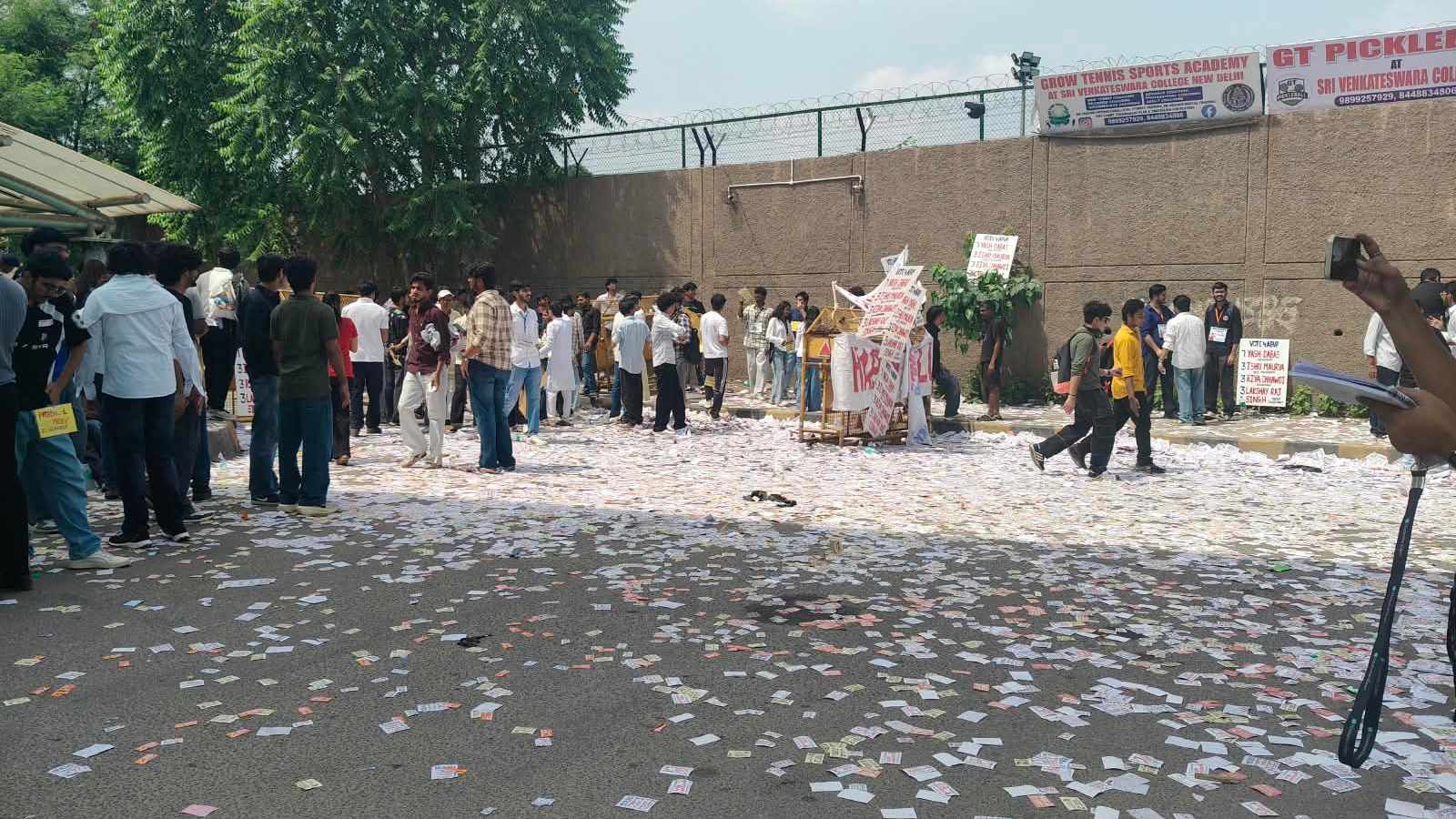
Counting was held at the Multipurpose Hall of the University Sports Stadium in North Campus, with heightened security arrangements across the university.
2
Twenty candidates from major student organisations contested the central-panel elections: seven for president, five for vice-president, and four each for secretary and joint secretary.
3
NSUI said Vijay Shankar Meena, who is from Rajasthan and pursuing an MA in Buddhist Studies at Delhi University, has campaigned on student rights, social justice, scholarships and hostel shortages, under a platform promising to put “student interests first.”
4
Before the central-panel results, ABVP had won all key posts in college-level elections at Aditi Mahavidyalaya, Sri Aurobindo College (Morning), Dr BR Ambedkar College, Bharati College and Shivaji College.
5
The election will determine the composition of DUSU’s central panel for the 2026–27 academic session, with the RSS-affiliated ABVP, Congress-backed NSUI and the AISA-SFI Left alliance competing for influence.
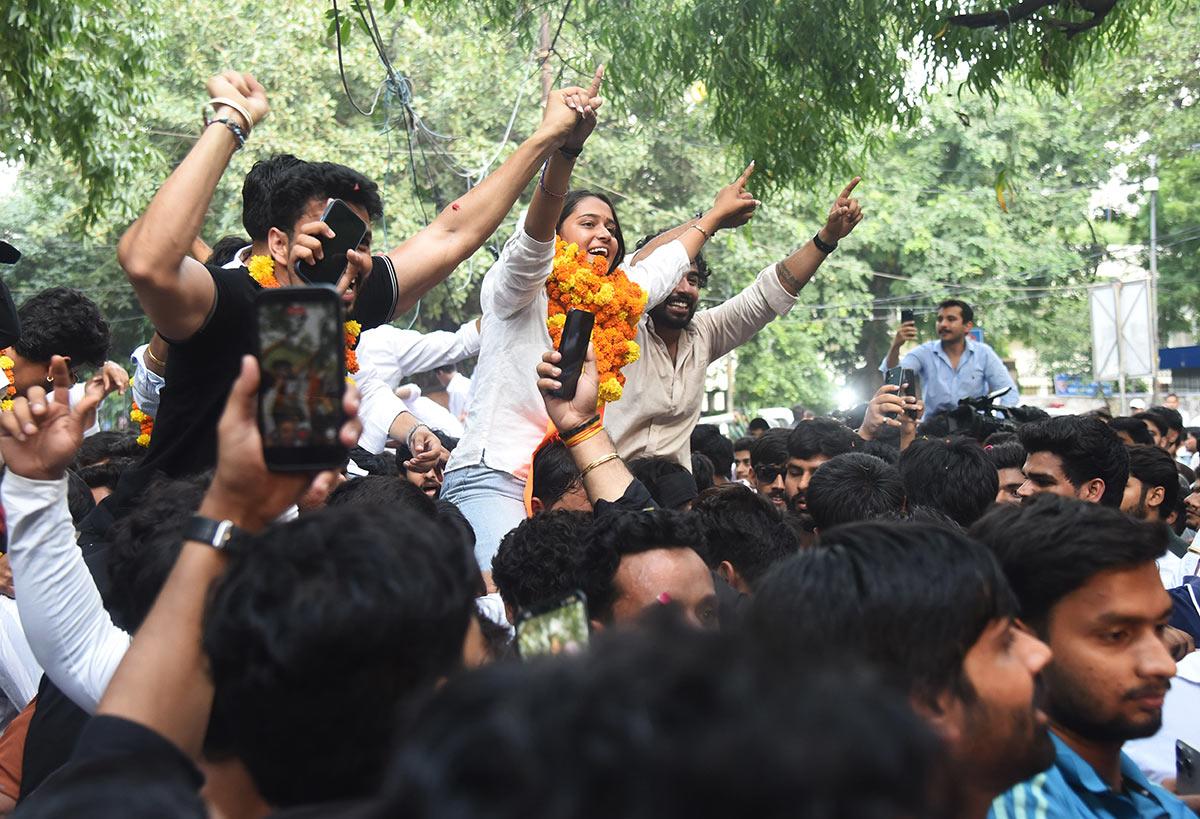
Congress-backed NSUI candidate Vijay Meena narrowly leads Delhi University's student union presidential race after ten rounds of vote counting, holding 11,966 votes compared to rival ABVP candidate Yash Dabas's 11,472 votes. News18 reports that Independent candidate Deepanshu Shokeen has seized a commanding lead in the vice-presidential contest with approximately 15,600 votes, while ABVP's Riya Chhawdi leads the secretary race by 2,241 votes over NSUI's Namrata Chaudhary. The race for joint secretary remains razor-thin, with Independent candidate Vishesh Yadav ahead of NSUI's Gopal Choudhary by just 89 votes.
Voting concluded on September 18 across 52 polling centers at Delhi University, with final counting underway under heightened security at the Multipurpose Hall of the University Sports Stadium. Turnout reached 40.46 percent — the highest in three years — as twenty candidates from major student organizations competed across four central panel positions. The results will shape the DUSU central panel for the 2026-27 academic session in a three-way contest between the RSS-affiliated ABVP, Congress-backed NSUI, and the AISA-SFI Left alliance.
NSUI's Meena Wins on Student Rights Platform
Vijay Shankar Meena, an MA student in Buddhist Studies from Rajasthan, campaigned on promises to prioritize student interests, tackle hostel shortages, improve scholarship access, and champion social justice issues. His narrow lead of 494 votes over ABVP's Dabas reflects a competitive presidential race where every vote counts. NSUI positioned Meena as the candidate best equipped to represent undergraduate and graduate concerns across Delhi University's sprawling North Campus.
ABVP's College Victories Before Central Results
Before the central-panel counting began, the RSS-affiliated ABVP dominated college-level elections, sweeping all key positions at Aditi Mahavidyalaya, Sri Aurobindo College (Morning), Dr BR Ambedkar College, Bharati College, and Shivaji College. News18 notes that ABVP won three of four central posts in the previous election, establishing the group as a formidable force in student politics at India's premier university. These college victories provided momentum heading into the high-stakes central panel races.
The college results suggested strong ABVP organizational strength in the 2026 cycle. However, the tight presidential race indicates that NSUI and independent candidates retained significant support among the broader student body. The gap between ABVP's college dominance and the close central-panel contest reflects deep divisions in how different student constituencies view campus leadership.
Independent Candidate Shokeen Surges in VP Race
Independent candidate Deepanshu Shokeen emerged as an unexpected powerhouse in the vice-presidential contest, News18 reports, defeating ABVP's Ishu Maurya and NSUI's Vir Chatrath by significant margins with approximately 15,600 votes. Shokeen's strong showing suggests that independent voices resonated with students frustrated by traditional party politics on campus. His victory margin — more than 2,000 votes ahead of competitors — represents one of the clearest results in the entire DUSU election.
Shokeen's win underscores the unpredictable nature of Delhi University student politics, where individual candidates can mobilize voters despite organizational disadvantages. The independent candidate's victory in the second-highest post indicates growing voter appetite for candidates operating outside ABVP, NSUI, and Left-alliance structures. This shift could reshape campus dynamics if Shokeen leverages his strong mandate into actual student-centered governance.
Allegations of Fraud Overshadow Close Results
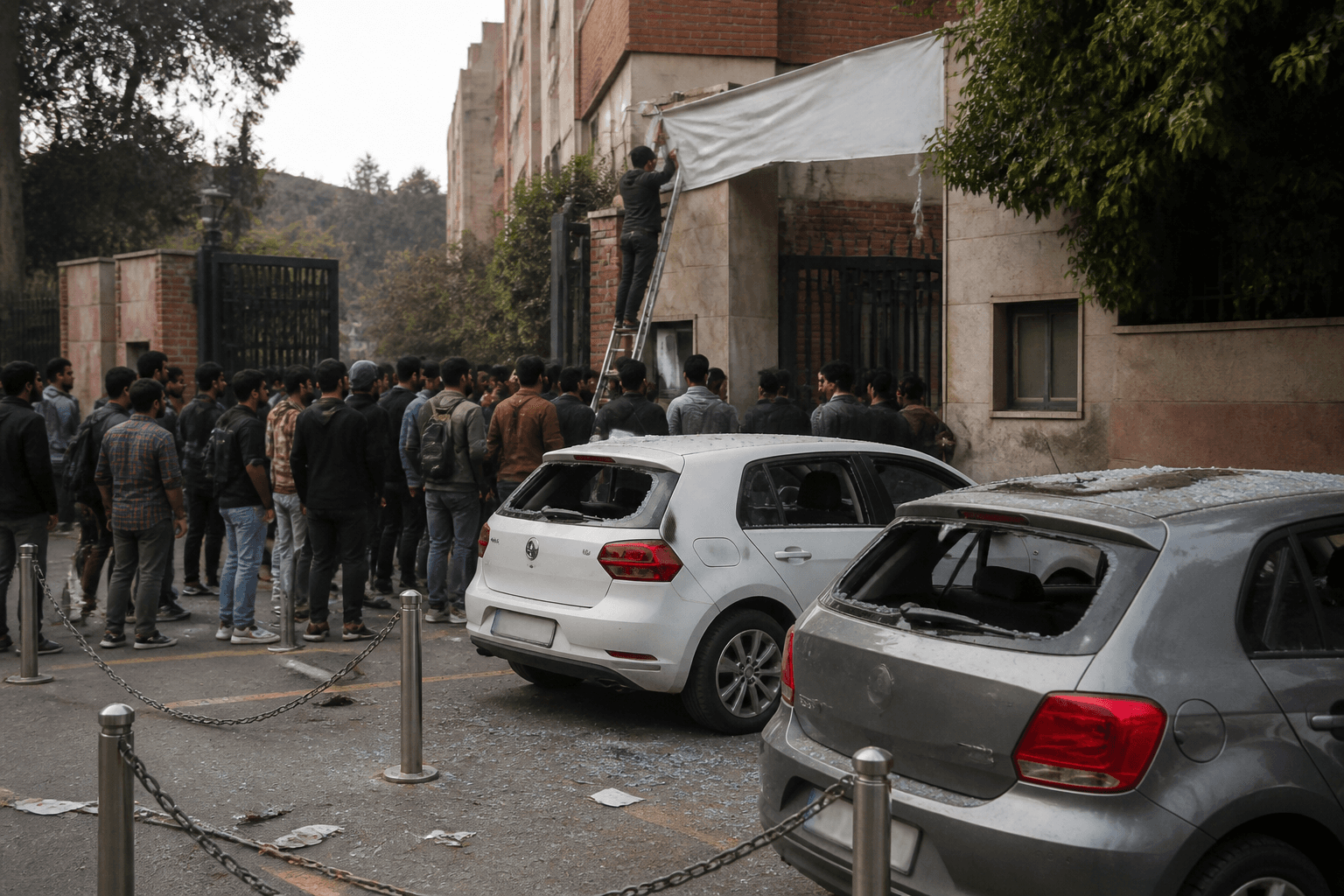
NSUI's presidential candidate Meena has accused the Delhi University Students' Union of fraudulent and forced voting, Rediff reports, raising questions about election integrity despite the official counting process. Congress leader Sandeep Dikshit separately criticized the counting process itself, claiming DailyHunt documented malpractice during tabulation and at polling centers. Meanwhile, NSUI national president Vinod Jakhar told News18 that the election "wasn't a fair contest" and vowed the organization would review its organizational shortcomings.
In contrast, Union Home Minister Amit Shah praised ABVP's strong performance as a "message to anti-national forces," News18 reported, injecting national political rhetoric into campus elections. The competing narratives — fraud allegations from NSUI versus nationalist framing from Modi's government — highlight how bitterly divided Indian student politics have become. Final results will determine whether these disputes trigger formal challenges or legal action.
Sentiment
Mostly NegativeNEGATIVENEUTRALPOSITIVE
Publishers
18
Articles
25
Reach
43
A
AnonymousAuthor