Hydrogen Port Equipment
Hyster Deploys Hydrogen-Powered ReachStackers at Ports in the UK and Netherlands
Anonymous
Key Points
1
The Tilbury ReachStacker is expected to reduce the port’s CO₂ emissions footprint by more than 79,600 pounds (about 36,100 kilograms) annually, based on estimated diesel use.
2
The Tilbury machine stores hydrogen in Type 3 tanks, which use an aluminum liner wrapped in a carbon-fiber/epoxy composite; another report says its onboard tanks hold 32 kilograms of hydrogen.
3
At Rotterdam, the machine is fitted with a specialized 45-foot spreader for handling open-top containers as well as other 45-foot loads. Dealer Heffiq will provide support through its service infrastructure and port-equipment expertise, with Hyster experts also working alongside the dealer and customer during the project.
4
Hyster and Nuvera refined the Tilbury fuel-cell system using lessons from earlier pilot programs, including a ReachStacker trial in Valencia that concluded in 2025.
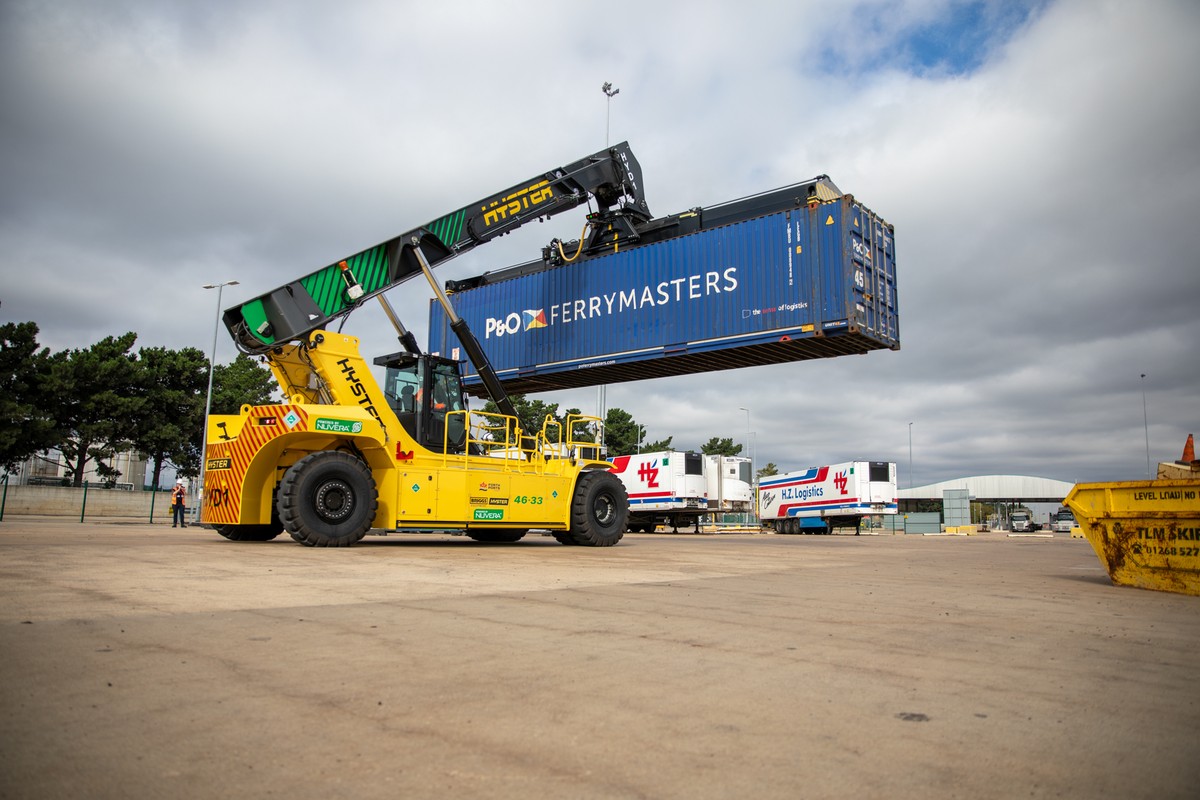
Hyster has deployed hydrogen fuel cell-powered ReachStackers at major ports in the UK and Netherlands, moving green container handling from pilot programs into real-world operations. AJOT reports that the Tilbury machine is the first hydrogen fuel cell container handler fully operational at a UK port, while Composites World notes Rotterdam's unit will handle 45-foot containers at one of Europe's busiest shortsea shipping hubs.
Both machines use a Nuvera 60-kilowatt fuel cell paired with a 130-kilowatt-hour lithium-ion battery to generate zero tailpipe emissions during intensive port work. The deployments represent a significant test of hydrogen technology's viability for heavy equipment, with backing from the EU's Just Transition Fund and national emissions-reduction targets.
Tilbury Machine Targets 36 Metric Tons of Annual CO₂ Cuts
The Port of Tilbury's hydrogen ReachStacker is projected to eliminate more than 36,100 kilograms of CO₂ annually compared to diesel operation, Composites World reports. The machine stores hydrogen in Type 3 tanks—aluminum liners wrapped in carbon-fiber composite—holding 32 kilograms of fuel. Hyster refined the fuel-cell system using lessons from earlier trials, including a 2025 pilot in Valencia.
The deployment aligns with the port's parent group commitment to reach net-zero greenhouse gas emissions by 2042. UK dealer Briggs Equipment supports the Tilbury installation, working with Hyster engineers to integrate the hydrogen system into active port operations.
Rotterdam Unit Built for Heavy Open-Top Container Work
Rotterdam's ReachStacker features a specialized 45-foot spreader designed to handle open-top containers and other oversized 45-foot loads, Market Screener reports. The same 60-kW fuel cell and battery system powers the unit, enabling rapid handling cycles in one of Europe's most congested shipping hubs. Dealer Heffiq provides service support through its port-equipment infrastructure and expertise.
Rotterdam's deployment is part of a five-year project co-funded by the Province of South Holland and the EU. The initiative includes plans for a modular hydrogen refueling station and a port-logistics field lab to study hydrogen adoption at scale.
Hydrogen Technology Moves From Test Sites to Daily Operations
These deliveries mark a milestone: hydrogen equipment is now handling real cargo at active European ports rather than sitting in controlled pilot zones. Both machines prove the fuel-cell concept can sustain the constant movement, heavy lifting, and energy demands of container terminals.
Success at Tilbury and Rotterdam could accelerate hydrogen adoption across European port systems. Hyster's willingness to refine designs based on field data—as it did after Valencia—suggests the company expects multiple deployments to follow these two flagship installations.
Sentiment
Mostly PositiveNEGATIVENEUTRALPOSITIVE
Publishers
10
Articles
31
Reach
41
A
AnonymousAuthor


