Protests Mar Xi Washington Visit
Clashes Erupt Between Pro-China and Tibetan Protesters During Xi Jinping's Washington Visit
Anonymous
Key Points
1
Some demonstrators mocked Xi by wearing Winnie-the-Pooh costumes, referencing comparisons between Xi and the character.
2
Protesters specifically called for the release of Tibet’s 11th Panchen Lama and other political prisoners.
3
Organizers included the Tibetan Youth Congress and Capital Area Tibetan Association, with prominent speakers expected to include their presidents, Tshering Chomphal and Tenzin Norbu, as well as Uyghur activist Omar Kanat and Hong Kong activist Frances Hui.
4
Xi’s visit was his first state visit to the United States since 2015 and his third meeting with Trump in the preceding year.
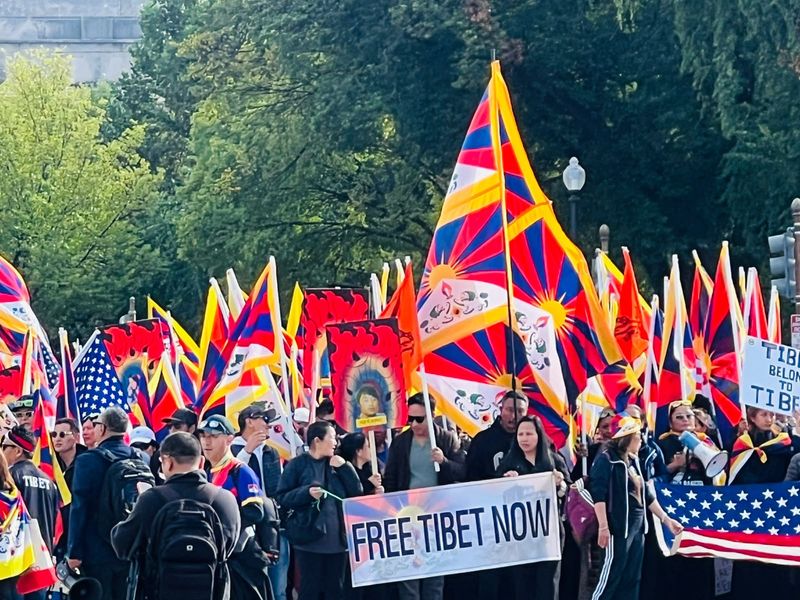
Thousands of Tibetans, Uyghurs, Hong Kongers, and other diaspora activists protested outside the Chinese Embassy in Washington on September 24 during President Xi Jinping's state visit. Awaz The Voice reported that over 2,000 demonstrators marched through Dupont Circle, calling for the release of political prisoners and an end to forced assimilation policies. Pro-Beijing counterprotesters clashed with anti-Xi marchers, attempting to seize flags and damage banners as Xi's motorcade passed through the city.
The protests, organized by groups including the Tibetan Youth Congress and Capital Area Tibetan Association, specifically demanded freedom for Tibet's 11th Panchen Lama, missing since 1995. Ommcom News reported that demonstrators held a candlelight vigil in Franklin Park and wore Winnie-the-Pooh costumes — a mocking reference banned in China — while urging President Trump to raise human rights concerns with Xi during their bilateral talks on trade, artificial intelligence, and Taiwan.
Coalition Demands End to Forced Assimilation
The multiethnic coalition united around a shared message: ending Beijing's control over their homelands. Awaz The Voice quoted Omer Kanat, Executive Director of the Uyghur Human Rights Project, saying: "The situation of Tibetans and Uyghurs is identical." Kanat highlighted how "the Chinese government imposed severe restrictions on religious practice" in Tibet and warned that "Uyghurs now face the same fate as the boarding school system expands."
Protesters carried signs reading "We want China out of Tibet" and called for renewed dialogue between Beijing and Tibetan representatives. Ommcom News reported that a coalition of 30 human rights organizations submitted an open letter before the visit urging Xi to end systemic repression. Organizers like Tsering Chomphel, president of Tibetan Youth Congress, framed the mobilization as a confrontation against authoritarian policies and cultural erasure.
Early Banner Arrest Signals Tight Security
Days before the embassy protests, law enforcement arrested a 20-year-old activist on Pennsylvania Avenue. Phayul reported that Tenzin Namgyal, a Students for a Free Tibet member, climbed a light pole near the Capitol on September 22 and unfurled a banner reading "Dictator Xi, Your Empire Will Fall! Free Tibet." Police closed the roadway and used a ladder truck to remove him.
The arrest underscored heightened security surrounding Xi's first state visit to Washington since 2015. Phayul noted this was Xi's third meeting with Trump in the preceding year, reflecting intense diplomatic engagement between the two powers amid escalating economic and technological competition.
Pro-Beijing Counterprotesters Attempt to Silence Dissent
Chinese government supporters mobilized to counter the anti-Xi demonstrations. Awaz The Voice reported that pro-Beijing groups waved Chinese flags and tried to drown out opposition chants as Xi's motorcade moved through Washington. Counterprotesters attempted to seize banners and physically disrupt demonstrations, creating tense confrontations along the protest route.
The clashes reflected Xi's broader strategy of exporting state repression beyond China's borders. Ommcom News noted that diaspora groups warn of aggressive monitoring and harassment by Beijing targeting dissidents living in Western nations. The physical confrontations during Xi's visit demonstrated how tensions between pro-China and pro-freedom movements now play out on American streets.
Spotlight on Human Rights During Trade Talks
Protesters urged Trump to condition negotiations on human rights improvement. Demonstrators called on the U.S. president to demand Xi's resignation and press him on detention of political prisoners, religious restrictions, and threats to cultural identity. Prominent speakers included Uyghur activist Omar Kanat and Hong Kong activist Frances Hui, who advocated for freedom across Chinese-controlled territories.
Sentiment
Mostly NegativeNEGATIVENEUTRALPOSITIVE
Publishers
30
Articles
56
Reach
86
A
AnonymousAuthor


