Rare Agave Death Bloom
Rare Agave at Kew Gardens Begins Spectacular Death Bloom After Two Decades
Anonymous
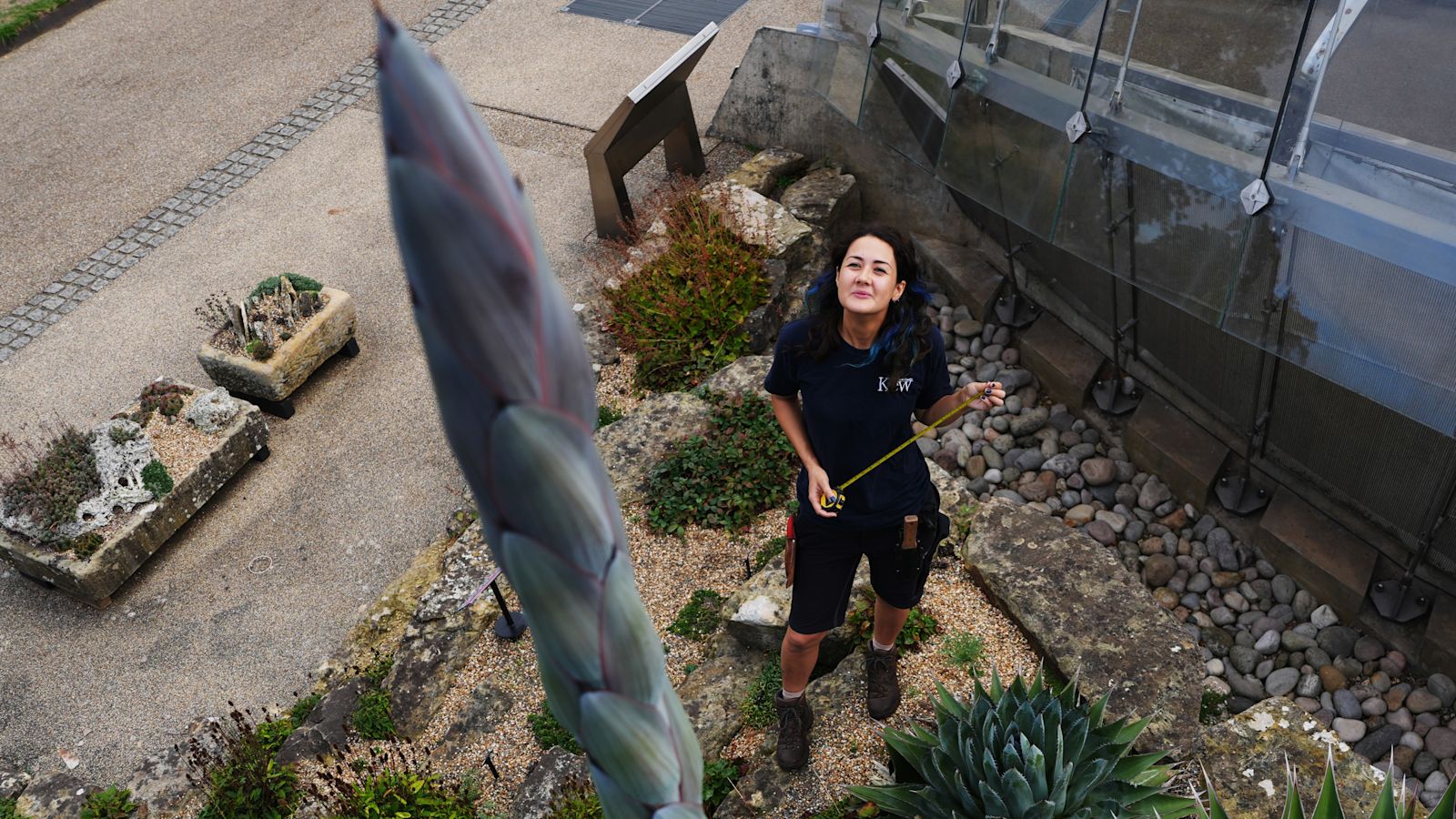
A rare Agave montana at Kew Gardens is preparing to flower after about 20 years, sending up a stalk that is growing roughly 10 centimeters a day and is expected to reach about five meters. After pausing for winter dormancy, it is expected to produce thousands of yellow and pink flowers next spring. Because the species is monocarpic, the plant will die after this single flowering and reproductive cycle. Kew is seeking viable pollen from other flowering agaves to try to cross-pollinate it, a rare opportunity in the UK. Kew staff say this summer’s record-breaking heat may have triggered the bloom, and view the event as a possible sign of how climate change could affect gardens and landscapes.
Key Points
1
Kew says the agave is using stored energy and nutrients to fuel its flower stalk, consuming its older leaves in the process.
2
In the wild, agaves can flower in synchrony—a phenomenon known as masting—which boosts the chances of cross-pollination and successful seed germination.
3
Kew horticulturist Anna Lim urged visitors to see the bloom when it opens, describing it as an event they may witness only once every couple of decades and a possible once-in-a-lifetime experience.
4
The agave’s drought tolerance is also highlighted: the mountainous succulents need no summer watering or winter assistance, making them suited to drought-like conditions in England.
5
Kew says monocarpic agaves invest accumulated resources in one large reproductive event; after those resources are transferred to the inflorescence, the plant has too little left to rebuild leaves or repair roots and cannot recover.
Sentiment
Mostly PositiveNEGATIVENEUTRALPOSITIVE
Publishers
6
Articles
50
Reach
56
A
AnonymousAuthor


