Climate-Driven Range Shift
Wasp Spider Reaches Cheshire in Latest Sign of Climate-Driven Range Shift
Anonymous
Key Points
1
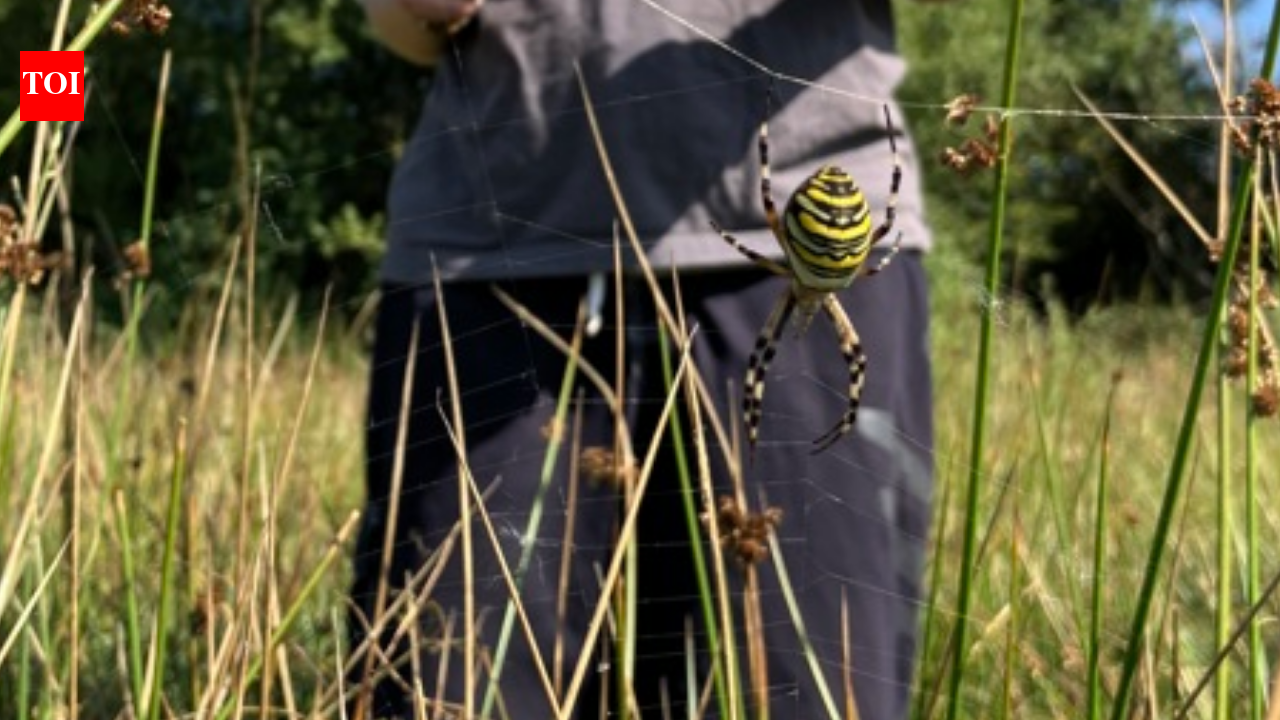
The species, Argiope bruennichi, is an orb-weaver found across Central and Northern Europe, parts of Asia and Africa, and the Azores; its yellow, white and black abdomen gives it a wasp-like appearance.
2
The Cheshire specimen was a fully grown female, with females reaching about 2cm in body length—making the species one of the largest spiders found in the UK.
3
Wasp spiders have unusual mating behaviour: males are far smaller than females, and studies suggest up to 80% die after their first mating attempt, while the female may cannibalise the male and use his body as protein for producing eggs.
4
The find came during a routine “bioblitz” monitoring biodiversity on 80 hectares of Chester Zoo land being set aside for nature; the wider 205-hectare estate includes wet meadows, ponds, reedbeds, grasslands, woodlands, orchards and hedgerows.
5
Scott Wilson of Chester Zoo said the spider’s arrival was part of a broader and “more worrying trend” linked to climate change, while warning that its spread into northern ecosystems could have consequences that are not yet understood: “We don’t know what the implications will be.”
A large yellow-and-black wasp spider has been spotted in Cheshire for the first time, marking a significant northward range shift for the species. Conservationists at Chester Zoo discovered the fully grown female, nicknamed Wendy, during a biodiversity survey on the zoo's 80-hectare nature reserve. SF Weekly reports that experts from the British Arachnological Society confirmed the specimen as Argiope bruennichi, a species previously concentrated in southern England that is now expanding northward as warming conditions reshape wildlife habitats across the UK.
The find underscores a broader climate-driven migration pattern affecting species across Britain. Scott Wilson of Chester Zoo described the spider's arrival as part of a "more worrying trend" linked to climate change, emphasizing that the ecological consequences of such range shifts remain unknown. The spider poses no threat to humans, but its spread into northern ecosystems raises questions about how new predators and prey species will reshape local ecological networks.
A Wasp-Like Appearance Disguises a Harmless Hunter
The wasp spider gets its name from its striking yellow, white, and black abdomen that closely resembles a wasp's markings. The Cheshire specimen was a fully grown female measuring about 2 centimeters in body length, making Argiope bruennichi one of the largest spider species found in the UK. Despite its intimidating appearance, the spider is completely harmless to humans and hunts small insects by building distinctive orb webs, a behavior that makes it relatively easy for researchers to spot and study.
Males Pay a Fatal Price for Reproduction
The wasp spider exhibits dramatic mating behavior driven by extreme size differences between males and females. Males are considerably smaller than their partners and face grim odds during reproduction. SF Weekly notes that studies suggest up to 80 percent of males die after their first mating attempt, and females sometimes cannibalize their mates to harvest protein for egg production. This brutal reproductive strategy is surprisingly common among spider species and reflects the harsh trade-offs in nature.
Climate Warming Opens Northern Routes for Southern Species
Argiope bruennichi originated across Central and Northern Europe, parts of Asia and Africa, and the Azores, but has historically remained scarce in northern Britain. As temperatures rise, species once confined to warmer southern regions are steadily expanding their ranges northward. The Cheshire discovery comes from routine monitoring of Chester Zoo's 205-hectare estate, which includes wet meadows, ponds, reedbeds, grasslands, woodlands, orchards, and hedgerows—habitat types that support diverse wildlife communities.
Scott Wilson warned that the spider's northward spread illustrates a pattern affecting many species but carries unknown risks. "We don't know what the implications will be," he said, pointing to uncertainty about how new species will interact with existing northern ecosystems. Conservationists stress the need to protect and create habitats that allow both native and expanding species to coexist as climate zones shift across the UK.
Sentiment
Mostly NegativeNEGATIVENEUTRALPOSITIVE
Publishers
14
Articles
127
Reach
141
Topics
A
AnonymousAuthor


