Military Officer Reductions
Defense Secretary Pete Hegseth Orders 20% Cut in Senior Military Officers
Anonymous
Key Points
1
Hegseth said the reductions had already included firing 10% of generals and admirals, with a further 10% cut to authorized positions. One article put the active-duty total at around 850 and said the criteria for reducing the ranks were more controversial than the question of how many senior officers there should be.
2
The drone-command announcement comes amid a contrast in the Army’s approach to drones: an Army unit in Europe specializing in drone warfare had recently been ordered to return to its role as a traditional infantry battalion.
3
Hegseth described the leaders he wants to bring forward as people who “think outside the box” and are “bold and violent.”
4
The address was an unusual public appearance for a Pentagon chief: the article notes that Hegseth’s predecessors generally addressed troops and senior officers in smaller or private settings.
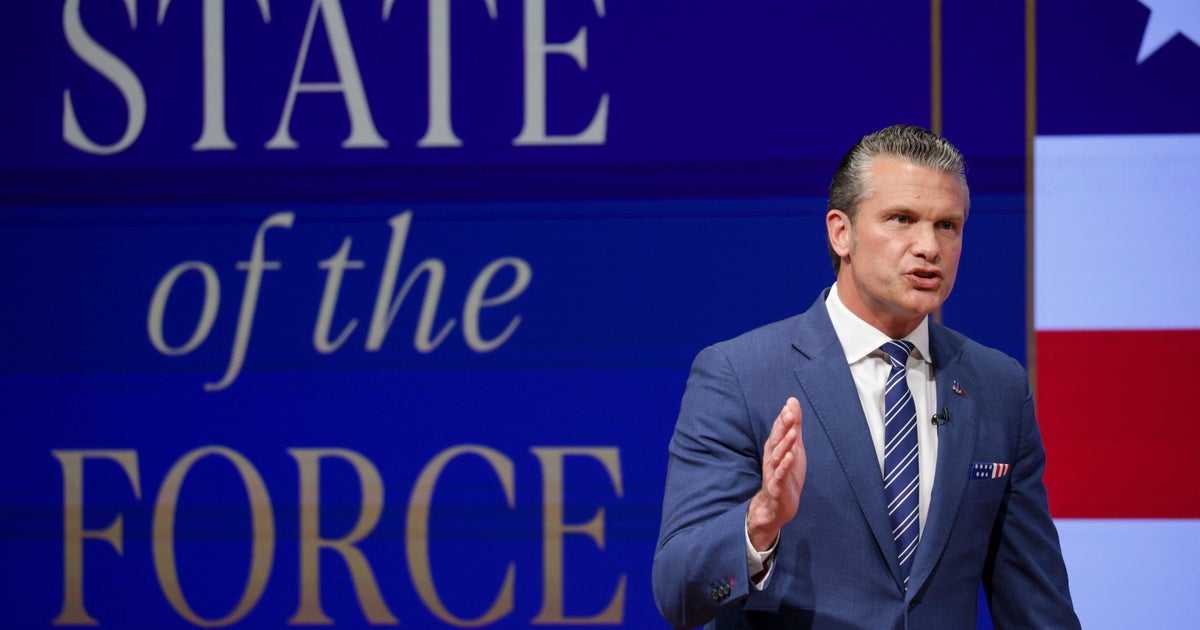
Defense Secretary Pete Hegseth ordered a 20% reduction in U.S. general and admiral positions by January 1, 2027, during a public address at Marine Corps Base Quantico. Head Topics reported that Hegseth framed the cuts as long-overdue accountability and part of a push to refocus the military on war-fighting. He said: "You can't change a culture with the same people who enabled it."
The cuts combine 10% of generals and admirals already fired with another 10% reduction in authorized senior officer positions. Good Morning America reported that Hegseth also announced a new four-star command for autonomous and robotic warfare, and named Elon Musk and Newt Gingrich to lead a study group on future military strategy.
Why Hegseth Wants Fewer Senior Officers
Hegseth says senior officer cuts are essential to strip away what he calls a risk-averse culture and replace it with leaders who think bold. He told the crowd at Quantico: "Less generals, more GIs." CTV News reported that the Defense Secretary views the reductions as removing people tied to policies he opposes, including diversity programs and women in combat roles.
The controversial part is not the total number of cuts but how they happen. One military analyst noted that roughly 850 active-duty general and flag officer positions exist, making a 20% cut affect around 170 top leaders. Critics worry that firing leaders without detailed explanations undermines trust and removes institutional knowledge during ongoing global tensions.
New Autonomous Warfare Command Takes Shape
Hegseth announced creation of a new four-star Autonomous Warfare Command to oversee robots, drones, and AI-powered strike systems. CP24 noted that the command is scheduled to become operational in October 2027. The move reflects Pentagon focus on uncrewed systems following lessons learned in Ukraine and the Middle East.
The strategic shift creates an odd tension in Army operations. One Army unit in Europe that specialized in drone warfare was recently ordered back to standard infantry duties. Meanwhile, the Pentagon's drone budget request jumped dramatically for fiscal 2027, showing leadership wants autonomous systems fielded faster and wider.
A Study Group Led by Musk and Gingrich
Hegseth named SpaceX CEO Elon Musk, former House Speaker Newt Gingrich, and Anduril co-founder Palmer Luckey to co-lead a study group on future warfare. This group will examine how new technology and doctrine should reshape military strategy and weapons development. The assignment underscores Hegseth's interest in outside-the-box thinking and private-sector innovation.
The public announcement at Quantico was itself unusual. Good Morning America reported that most Pentagon leaders address troops and senior officers in smaller, private settings. Hegseth's public "State of the Force" speech put his vision for military change on full display and signaled his willingness to reshape the institution's culture openly.
Concerns Over Speed and Stability
Military analysts and lawmakers have raised concerns that rapid, politically motivated purges strip away experienced commanders during active global conflicts. Removing 170 senior officers in less than a year could harm coordination in the Middle East, Eastern Europe, and the Indo-Pacific. Critics also worry that firing leaders without transparency politicizes what has long been a nonpartisan officer corps.
The former Army Secretary resigned partly due to frustration over abrupt dismissals and lack of clear criteria. While Hegseth calls the cuts accountability, opponents say the purge risks weakening military readiness at a fragile moment in global security. The debate over whether the cuts advance warfighting or hurt institutional stability will likely continue through 2027.
Sentiment
Mostly NegativeNEGATIVENEUTRALPOSITIVE
Publishers
37
Articles
323
Reach
360
A
AnonymousAuthor


