Schiff Warns SEC Tokenized Stocks Threaten Bitcoin
Schiff Warns SEC Tokenized Stocks Threaten Bitcoin
Anonymous
Key Points
1
The exemption applies to the trading venues rather than removing tokenized shares from securities regulation: the on-chain shares remain securities and are still subject to applicable investor protections.
2
Companies whose shares are tokenized must be notified before listing, and the issuer retains the ability to object to the listing.
3
Third-party wrappers must provide shareholders with proxy materials and issuer communications at no cost, reinforcing standard corporate-governance procedures for on-chain holders.
4
Tokenized stocks could give investors exposure to public companies through crypto-native infrastructure without requiring them to hold the underlying shares through a conventional brokerage account.
5
The SEC characterized the initiative as an innovation exemption carried out within existing statutory authority, rather than a permanent legislative overhaul of securities-market rules.
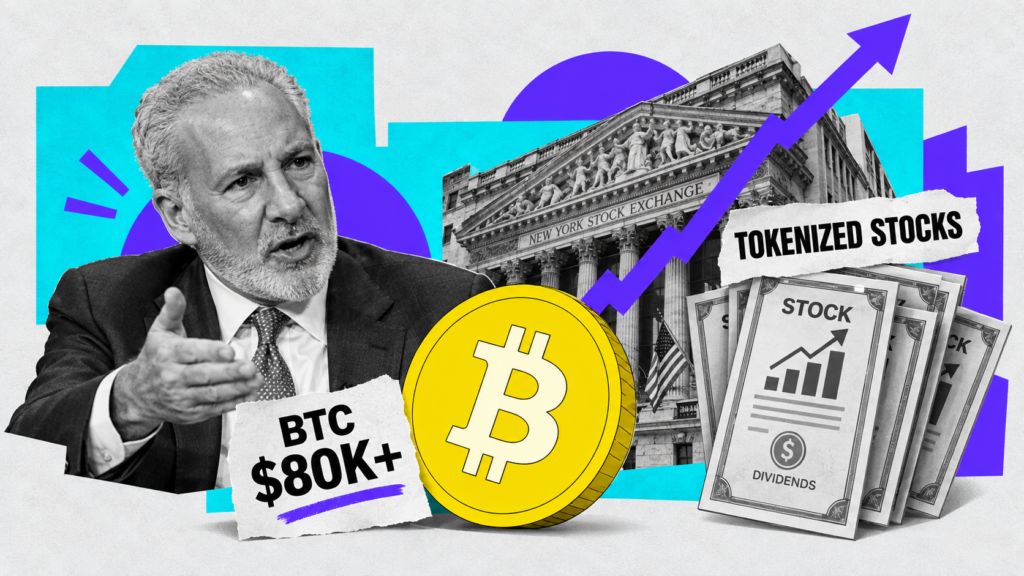
The SEC approved a five-year trial allowing tokenized stocks to trade on blockchain networks without requiring venues to register as traditional exchanges. CCN reported that Bitcoin surged above $80,000 after the announcement, but longtime skeptic Peter Schiff warned the rally was unfounded. He argued that tokenized shares would compete directly with Bitcoin for investor capital, offering dividends and earnings that Bitcoin cannot match.
The exemption keeps tokenized shares under full securities regulation while enabling blockchain-based trading infrastructure. Companies can block their shares from being tokenized, and shareholders retain voting rights and dividend payments on-chain. Crypto Briefing noted that the framework prevents purely synthetic substitutes while preserving investor protections.
Schiff's Case Against Bitcoin's Rally
Peter Schiff contends Bitcoin's jump makes no economic sense. CCN reports he believes tokenized stocks now pose a fundamental threat to Bitcoin's core investment thesis. Since dividend-paying shares generate real earnings and store value reliably, they outcompete an asset that produces no income. Blockchain's speed and transparency, which once favored Bitcoin, now favor tokenized equities instead.
How Tokenized Stocks Stay Regulated
The SEC's exemption applies only to trading venues, not to the securities themselves. Crypto Briefing explained that tokenized shares remain fully regulated securities subject to investor-protection rules. Companies receive advance notice before their shares go on-chain and can object to listings. Third-party wrappers must distribute proxy materials and issuer communications to shareholders for free, preserving standard corporate governance.
Robinhood's $146 Million Tokenized Bet
Robinhood Crypto Chain has already attracted $146 million in tokenized-stock trading before its free-transaction promotion expires. Yahoo Finance reports the network faces its first real test when gas fees resume on September 29. The critical question is whether traders will pay standard fees or migrate to cheaper alternatives.
The Broader Crypto Adoption Question
The debate hinges on whether tokenized equities expand blockchain adoption or drain capital from pure cryptocurrencies like Bitcoin. Tokenized stocks offer crypto-native investors exposure to public companies without traditional brokerage accounts. Yet Schiff's warning suggests that investor money moving to dividend-paying tokenized shares represents real competition for Bitcoin's store-of-value narrative. The next six months will clarify whether blockchain infrastructure strengthens or fragments the crypto ecosystem.
Sentiment
Mostly PositiveNEGATIVENEUTRALPOSITIVE
Publishers
17
Articles
6
Reach
23
A
AnonymousAuthor


