Expanding India's Biogas Sector
India launches ₹23,731 crore GOBARdhan scheme to boost domestic biogas production tenfold.
Anonymous
Key Points
1
The unified scheme specifically brings together the Sustainable Alternative Towards Affordable Transportation (SATAT) initiative, Market Development Assistance and Pipeline Infrastructure Development.
2
The scheme’s administered price of ₹2,110 per MMBTU is equivalent to about ₹105 per kilogram of CBG.
3
At the time of the Cabinet approval on 6 August 2026, 1,908 CBG and Bio-CNG plants were registered on the GOBARdhan Unified Registration Portal.
4
Petroleum Secretary Neeraj Mittal said India imports nearly half of its natural gas, highlighting the potential for CBG to use domestic organic waste as an energy resource.
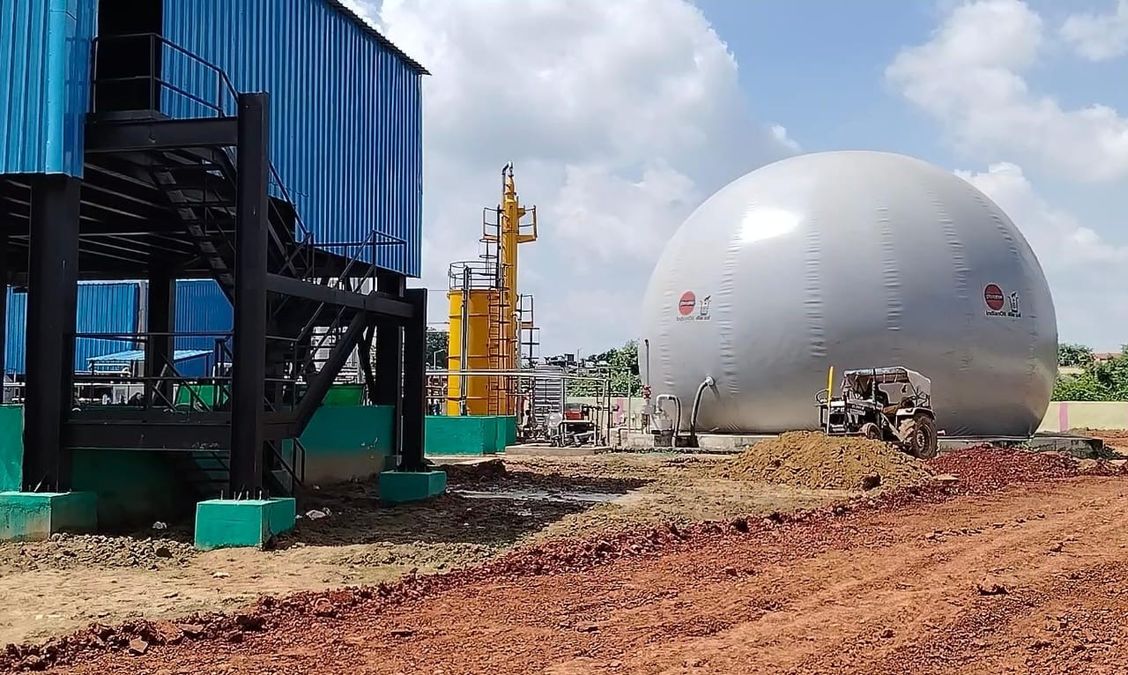
India launched the ₹23,731 crore GOBARdhan National Circular Bioenergy Scheme to transform the country's compressed biogas sector over the next decade. The program aims to increase domestic CBG production nearly tenfold to about 5 million standard cubic meters per day by FY 2035–36, Hindustan Times reported. The scheme combines existing bioenergy initiatives into one unified framework designed to turn agricultural waste, cattle dung, and municipal organic waste into clean fuel and fertilizer.
The initiative offers guaranteed support to producers, including a stable administered price of ₹2,110 per MMBTU for at least 10 years. Greater Kashmir noted that city gas distributors must blend CBG at 3% initially, rising to 5% by FY 2028–29. The scheme addresses India's dependency on imported natural gas, which accounts for nearly half of the country's supply. At the time of Cabinet approval on August 6, 1,908 CBG and Bio-CNG plants were already registered on the unified portal.
Combining Three Major Bioenergy Programs Into One
The GOBARdhan scheme consolidates three existing initiatives: the Sustainable Alternative Towards Affordable Transportation program, Market Development Assistance, and Pipeline Infrastructure Development. Daily Excelsior described this as a comprehensive framework to simplify applications and improve transparency. A new online portal and handbook now guide producers through the approval process. This unification reduces administrative complexity and creates a single entry point for all CBG project applications.
A Decade-Long Price Guarantee and Financial Support
Producers receive ₹2,110 per MMBTU—equivalent to about ₹105 per kilogram—locked in for 10 years minimum. Rising Kashmir reported that the scheme includes capital assistance for new projects, credit guarantees, and infrastructure support. This pricing stability reduces investment risk and encourages private sector participation. The administered price remains a key incentive designed to make CBG projects financially viable despite volatile market conditions.
City Gas Distributors Face Growing Blending Requirements
Starting in FY 2026–27, city gas distributors must blend 3% compressed biogas into their natural gas supply. Brighter Kashmir noted that this requirement increases to 5% from FY 2028–29 onward. These mandates force the energy sector to incorporate domestic biogas into the fuel mix. The blending targets create guaranteed demand for CBG producers, supporting market growth and reducing India's natural gas import burden.
Rural Economic Opportunity Through Organic Waste Conversion
The scheme transforms agricultural and animal waste into valuable energy products and organic fertilizer. Cattle dung, crop residue, apple pomace, municipal solid waste, and pine needles all become feedstocks for CBG plants. Petroleum Secretary Neeraj Mittal highlighted India's dependency on imported natural gas as a key driver. By monetizing waste streams, the initiative creates income opportunities for farmers and rural communities while reducing methane emissions and strengthening the circular economy.
Sentiment
Mostly PositiveNEGATIVENEUTRALPOSITIVE
Publishers
13
Articles
8
Reach
21
A
AnonymousAuthor


