Virgin Australia FY26 Dividend
Virgin Australia Reports Strong FY26 Earnings And Declares First Post-Relisting Dividend
Anonymous
Key Points
1
Underlying EBIT margin rose to 12.0% in FY26, with leverage of about 0.9x underlying EBITDA, placing leverage below the company’s target range.
2
Velocity Frequent Flyer program saw external billings up 12.4% and more than 800,000 new members joined in FY26, reinforcing its role as an earnings driver.
3
Virgin hedged both crude oil and jet-fuel refining margins, reducing fuel-cost exposure relative to Qantas amid volatile fuel prices.
4
Dividend timetable: ordinary dividend of AUD 0.076 per fully paid share; ex-dividend 14 September, record date 15 September, payment 15 October 2026.
5
For 1H FY27, underlying EBIT is forecast to be broadly in line with the prior period, with revenue per ASK expected to rise 6-8% and capex guidance of A$0.9–1.0 billion (including specific aircraft purchases).
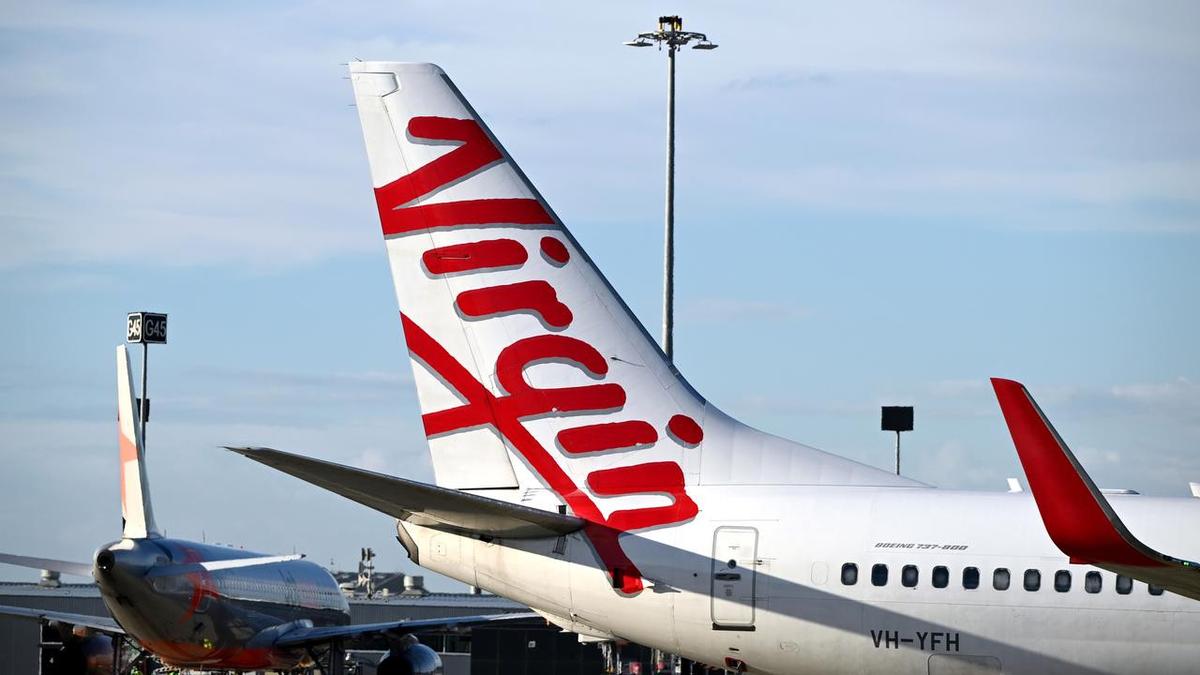
Virgin Australia posted a 13.4% jump in underlying earnings to AUD 753 million for FY26, marking its first dividend payout since relisting in 2025 Australian Financial Review. The airline paid 7.6 cents per share — fully franked — while shrinking net debt to AUD 1.2 billion and maintaining leverage of just 0.9x underlying EBITDA, well below its target range.
Strong fuel hedging, solid demand, and earnings from its Velocity Frequent Flyer program drove the result despite volatile jet fuel costs and geopolitical turbulence PerthNow. Virgin Australia also posted a net profit of AUD 501.2 million, up 4.7% year-on-year, while boasting the highest on-time performance and completion rates among major Australian carriers.
Fuel Hedging Shields Against Volatile Oil Markets
Virgin Australia hedged both crude oil and jet-fuel refining margins in FY26, protecting itself from price swings that hammered competitors Australian Financial Review. The strategy proved crucial as fuel costs surged due to geopolitical tensions, yet the airline's underlying EBIT margin still climbed to 12.0%.
This defensive positioning stands in sharp contrast to rivals facing full exposure to volatile fuel prices PerthNow. The airline's disciplined approach to hedging — locking in costs while competitors absorbed spikes — became a competitive advantage in an inflationary market.
Velocity Program Drives Earnings With 800,000 New Members
The Velocity Frequent Flyer program emerged as a key growth engine, with external billings jumping 12.4% and more than 800,000 new members joining in FY26 Australian Financial Review. This recurring revenue stream now represents one of Virgin's most valuable earnings levers.
Management flagged the loyalty program as central to sustaining profitability amid intense competition for market share. As a value carrier, Virgin relies on Velocity to deepen customer relationships and boost ancillary revenues beyond ticket sales.
Dividend Return Signals Confidence in Durability
The 7.6-cent fully franked ordinary dividend marks Virgin's first payout since relisting, signaling management confidence in sustained earnings Australian Financial Review. With AUD 1.6 billion in liquidity and net debt falling to AUD 1.2 billion, the airline has room to reward shareholders while investing in fleet renewal.
The payout reflects a disciplined capital strategy. Virgin plans capex of AUD 0.9–1.0 billion in the first half of FY27 to refresh and expand its aircraft fleet while maintaining financial flexibility amid ongoing competitive pressures.
FY27 Growth Forecast Built on Higher Yields
Management guided underlying EBIT for 1H FY27 to be broadly in line with the prior period, expecting revenue per available seat kilometer to rise 6–8% Australian Financial Review. This growth projection assumes continued demand strength and the benefits of operational improvements from the Transformation Program.
The airline's resilient recovery, combined with higher yields and its position as Australia's value carrier, sets it up for steady earnings momentum. On-time performance and completion rates — now the best among major domestic competitors — reinforce customer satisfaction and pricing power going forward.
Sentiment
Mostly PositiveNEGATIVENEUTRALPOSITIVE
Publishers
14
Articles
63
Reach
77
A
AnonymousAuthor